

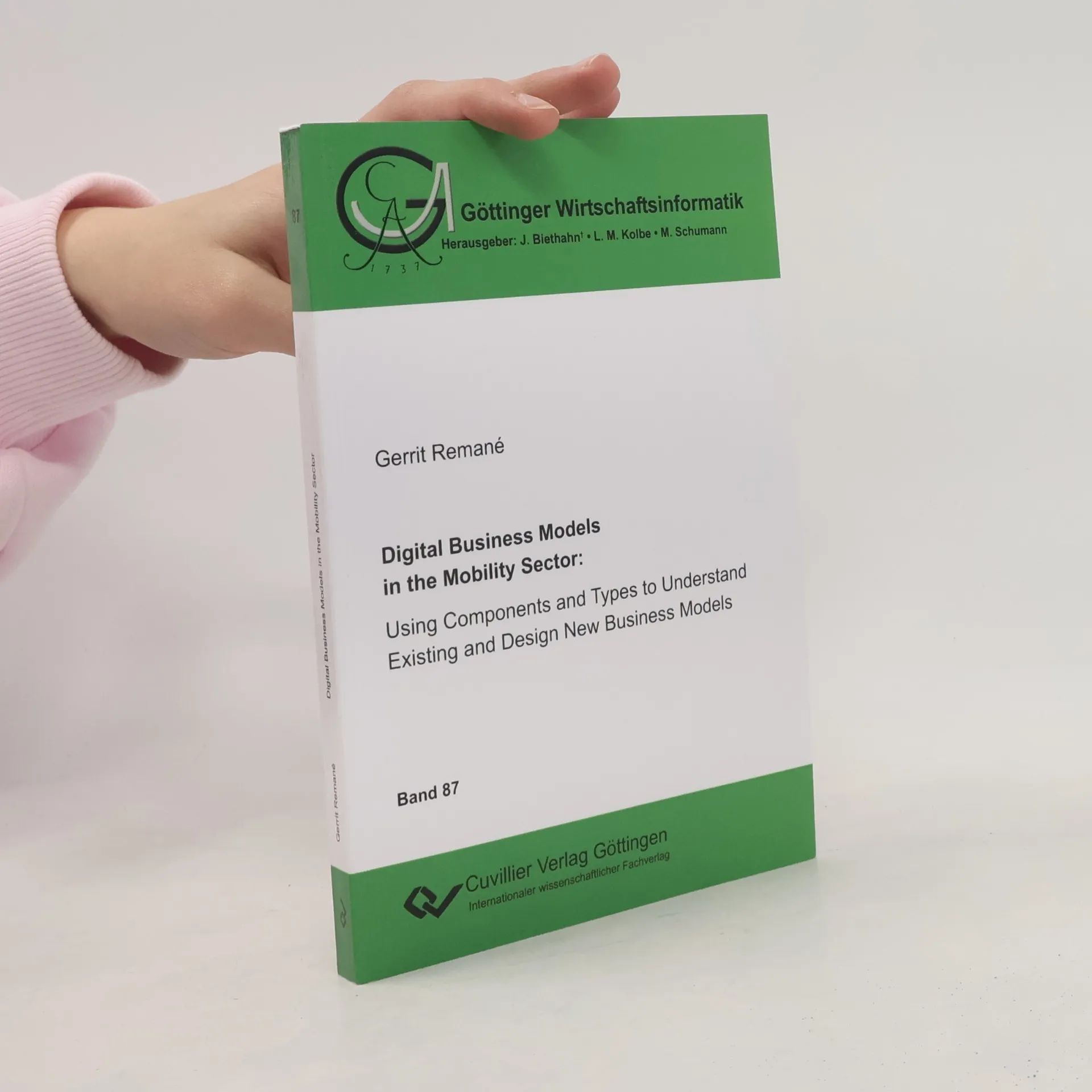


Digital Business Models in the Mobility Sector
Maggiori informazioni sul libro
Recent advances in digital technologies have initiated a fundamental digital transformation of the mobility sector. This shift means that managers must understand new digital business models such as carsharing, ridesharing, and crowd navigation. For research, the digital transformation of the mobility sector is an especially interesting phenomenon, as it is different from transformations in other sectors in the way that digital technologies must be combined with physical products. This thesis turns to the business model concept to increase the understanding of the above described phenomenon by investigating three research questions: (1) Along which business model components do existing products and services in the mobility sector differ? (2) What new types of digital business models have emerged in the mobility sector? (3) How can firms use business model components and business model types for business model innovation?
Acquisto del libro
Digital Business Models in the Mobility Sector, Johann M. Ph. Schumann, J. Biethahn, L. M. Kolbe, Gerrit Remané
- Lingua

- Pubblicato
- 2017
- Rilegatura
- (In brossura),
- Condizioni del libro
- In buone condizioni
- Prezzo
- 6,09 €
Metodi di pagamento
Ancora nessuna valutazione.
- Titolo
- Digital Business Models in the Mobility Sector
- Lingua
- Inglese
- Editore
- Cuvillier
- Pubblicato
- 2017
- Formato
- In brossura
- Pagine
- 204
- ISBN10
- 373699544X
- ISBN13
- 9783736995444
- Serie
- Descrizione
- Recent advances in digital technologies have initiated a fundamental digital transformation of the mobility sector. This shift means that managers must understand new digital business models such as carsharing, ridesharing, and crowd navigation. For research, the digital transformation of the mobility sector is an especially interesting phenomenon, as it is different from transformations in other sectors in the way that digital technologies must be combined with physical products. This thesis turns to the business model concept to increase the understanding of the above described phenomenon by investigating three research questions: (1) Along which business model components do existing products and services in the mobility sector differ? (2) What new types of digital business models have emerged in the mobility sector? (3) How can firms use business model components and business model types for business model innovation?