

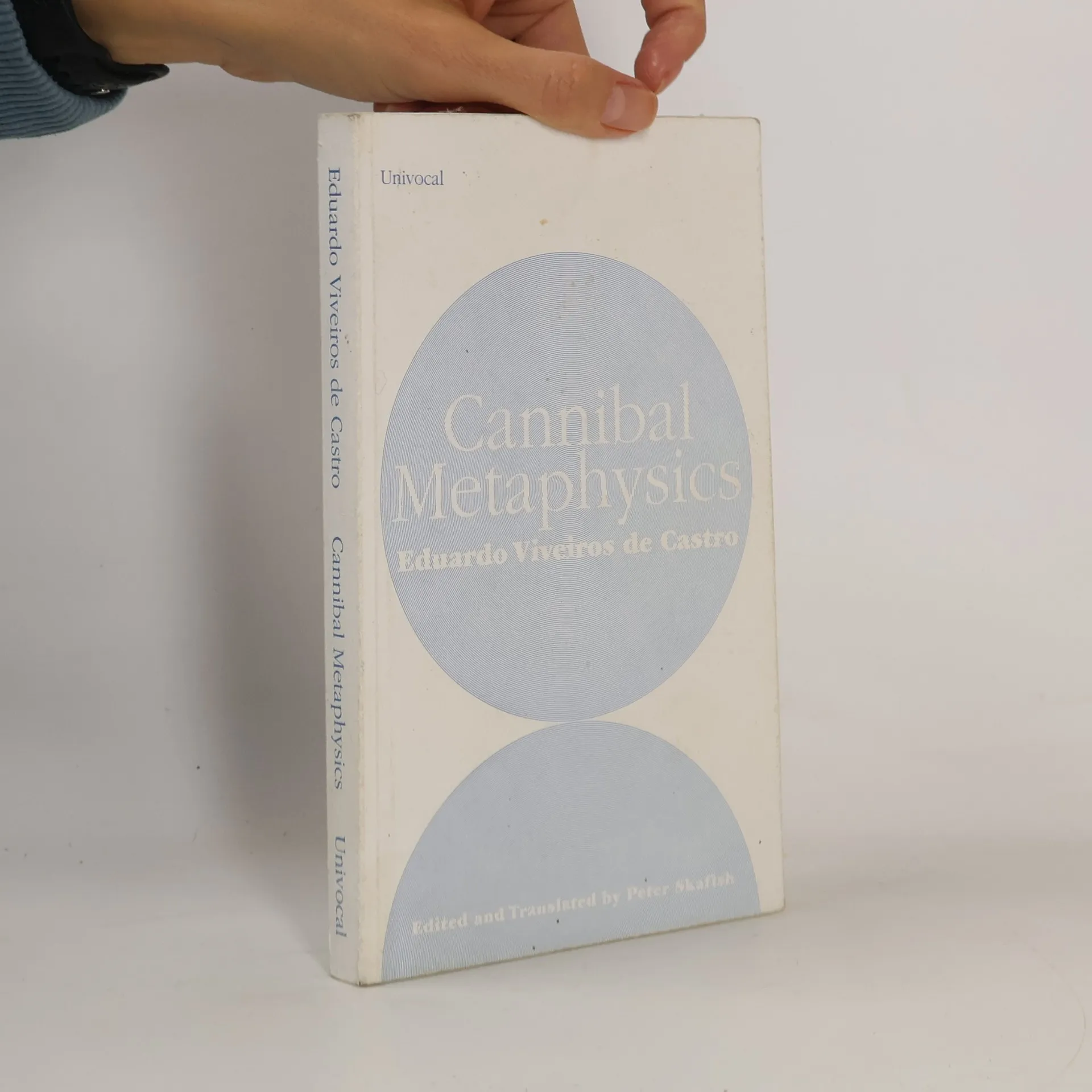



Cannibal Metaphysics
Maggiori informazioni sul libro
The iconoclastic Brazilian anthropologist and theoretician Eduardo Viveiros de Castro, well known in his discipline for helping initiate its “ontological turn,” offers a vision of anthropology as “the practice of the permanent decolonization of thought.” After showing that Amazonian and other Amerindian groups inhabit a radically different conceptual universe than ours—in which nature and culture, human and nonhuman, subject and object are conceived in terms that reverse our own—he presents the case for anthropology as the study of such “other” metaphysical schemes, and as the corresponding critique of the concepts imposed on them by the human sciences. Along the way, he spells out the consequences of this anthropology for thinking in general via a major reassessment of the work of Claude Lévi-Strauss, arguments for the continued relevance of Deleuze and Guattari, dialogues with the work of Philippe Descola, Bruno Latour, and Marilyn Strathern, and inventive treatments of problems of ontology, translation, and transformation. Bold, unexpected, and profound, <i>Cannibal Metaphysics</i> is one of the chief works marking anthropology’s current return to the theoretical center stage.
Acquisto del libro
Cannibal Metaphysics, Peter Skafish, Eduardo Batalha Viveiros de Castro
- Lingua

- Pubblicato
- 2014
- Rilegatura
- (In brossura),
- Condizioni del libro
- Danneggiato
- Prezzo
- 42,99 €
Metodi di pagamento
Ancora nessuna valutazione.
- Titolo
- Cannibal Metaphysics
- Lingua
- Inglese
- Editore
- Univocal Publishing LLC
- Pubblicato
- 2014
- Formato
- In brossura
- Pagine
- 229
- ISBN10
- 1937561216
- ISBN13
- 9781937561215
- Serie
- Tag
- Tematica filosofica, USA, Teorie Scientifiche, Metafisica, Tribù indigene, Etnologia, Brasile, Antropologia filosofica
- Descrizione
- The iconoclastic Brazilian anthropologist and theoretician Eduardo Viveiros de Castro, well known in his discipline for helping initiate its “ontological turn,” offers a vision of anthropology as “the practice of the permanent decolonization of thought.” After showing that Amazonian and other Amerindian groups inhabit a radically different conceptual universe than ours—in which nature and culture, human and nonhuman, subject and object are conceived in terms that reverse our own—he presents the case for anthropology as the study of such “other” metaphysical schemes, and as the corresponding critique of the concepts imposed on them by the human sciences. Along the way, he spells out the consequences of this anthropology for thinking in general via a major reassessment of the work of Claude Lévi-Strauss, arguments for the continued relevance of Deleuze and Guattari, dialogues with the work of Philippe Descola, Bruno Latour, and Marilyn Strathern, and inventive treatments of problems of ontology, translation, and transformation. Bold, unexpected, and profound, <i>Cannibal Metaphysics</i> is one of the chief works marking anthropology’s current return to the theoretical center stage.