



The Shape of the River
Long-Term Consequences of Considering Race in College and University Admissions
Parametri
- 512pagine
- 18 ore di lettura
Maggiori informazioni sul libro
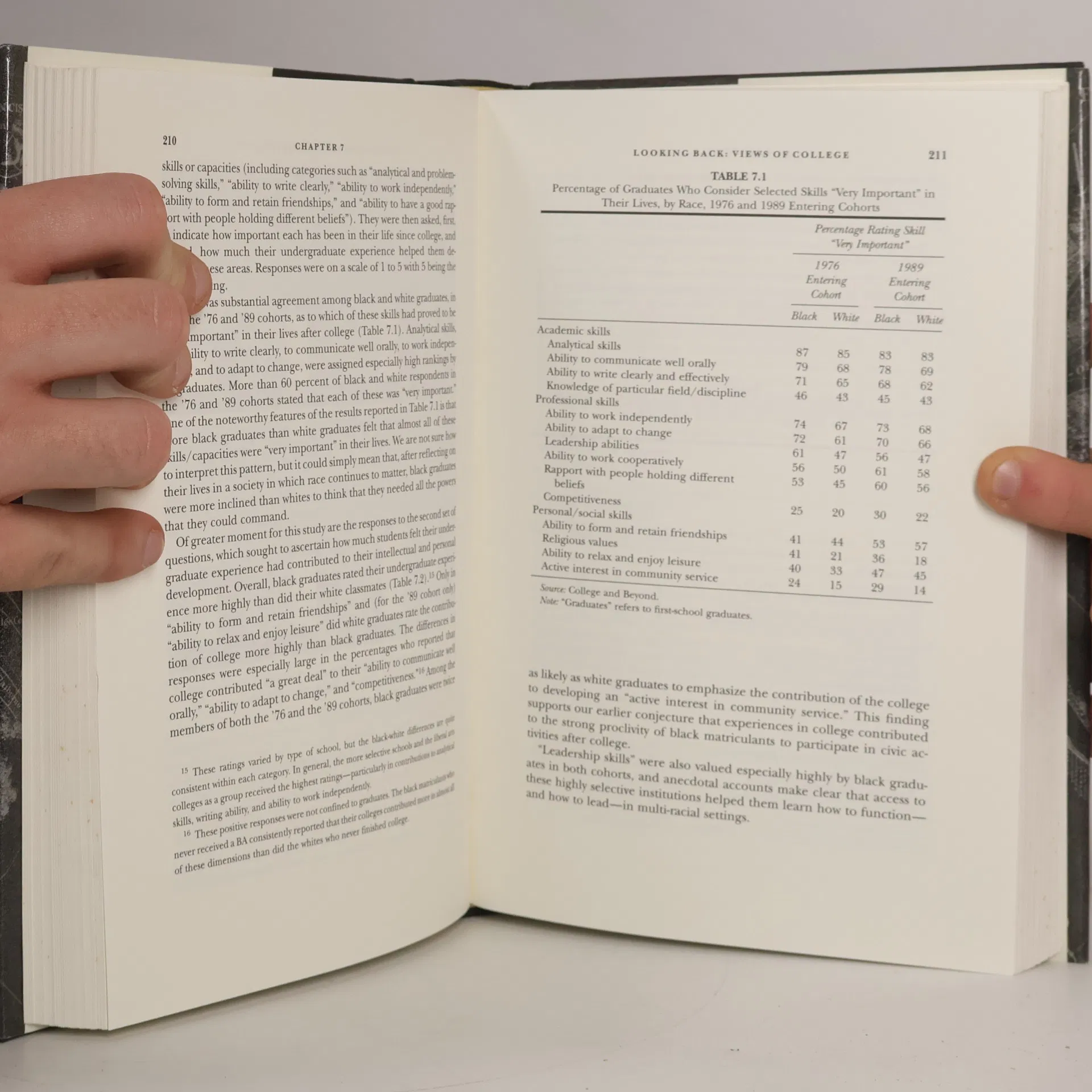
This is the book that has forever changed the debate on affirmative action in America. <i>The Shape of the River</i> is the most far-reaching and comprehensive study of its kind. It brings a wealth of empirical evidence to bear on how race-sensitive admissions policies actually work and clearly defines the effects they have had on over 45,000 students of different races. Its conclusions mark a turning point in national discussions of affirmative action--anything less than factual evidence will no longer suffice in any serious debate of this vital question. Glenn Loury's new foreword revisits the basic logic behind race-sensitive policies, asserting that since individuals use race to conceptualize themselves, we must be conscious of race as we try to create rules for a just society. Loury underscores the need for confronting opinion with fact so we can better see the distinction between the morality of color-blindness and the morality of racial justice. -- "The New York Times"
Acquisto del libro
The Shape of the River, Derek Bok, William G. Bowen, James L. Shulman
- Lingua

- Pubblicato
- 1998
- Rilegatura
- (Copertina rigida),
- Condizioni del libro
- In buone condizioni
- Prezzo
- 6,09 €
Metodi di pagamento
Ancora nessuna valutazione.
- Titolo
- The Shape of the River
- Sottotitolo
- Long-Term Consequences of Considering Race in College and University Admissions
- Lingua
- Inglese
- Editore
- Princeton University Press
- Pubblicato
- 1998
- Formato
- Copertina rigida
- Pagine
- 512
- ISBN10
- 0691002746
- ISBN13
- 9780691002743
- Serie
- Categoria
- Tag
- USA, Educazione, istruzione, Letteratura Americana, Società, Razza, Razzismo, Giustizia sociale, Casuistiche, Discriminazione, Etnia
- Descrizione
- This is the book that has forever changed the debate on affirmative action in America. <i>The Shape of the River</i> is the most far-reaching and comprehensive study of its kind. It brings a wealth of empirical evidence to bear on how race-sensitive admissions policies actually work and clearly defines the effects they have had on over 45,000 students of different races. Its conclusions mark a turning point in national discussions of affirmative action--anything less than factual evidence will no longer suffice in any serious debate of this vital question. Glenn Loury's new foreword revisits the basic logic behind race-sensitive policies, asserting that since individuals use race to conceptualize themselves, we must be conscious of race as we try to create rules for a just society. Loury underscores the need for confronting opinion with fact so we can better see the distinction between the morality of color-blindness and the morality of racial justice. -- "The New York Times"