



Maggiori informazioni sul libro
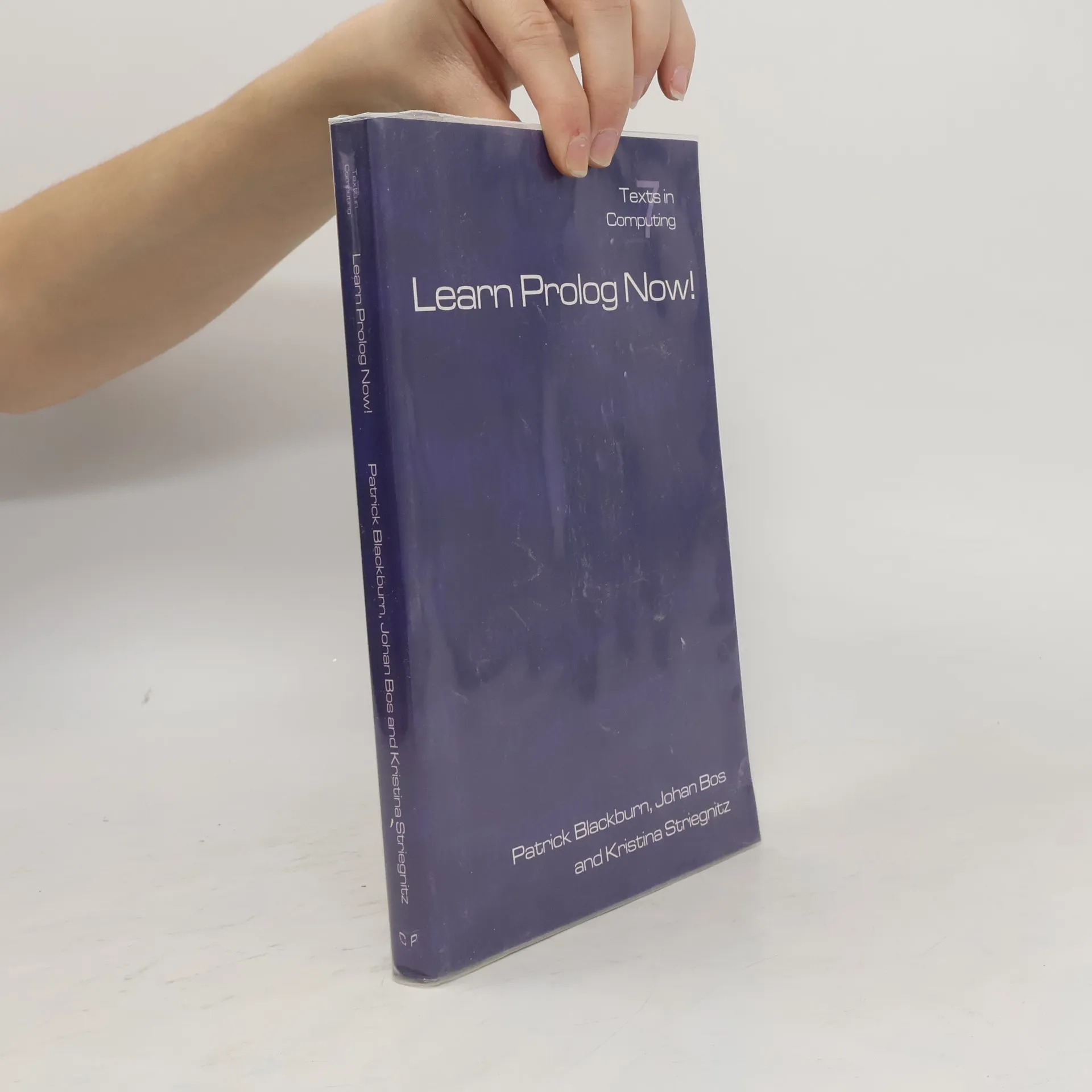
Prolog is a programming language, but an unusual one. The term "Prolog" is short for "Programming with Logic," and its relationship with logic gives Prolog its special profile. At its core is a surprising idea: not telling the computer what to do. Instead, relevant situations are described, and computation occurs when questions are asked. Prolog deduces new facts about the described situations and returns these deductions as answers. Why learn Prolog? Firstly, its motto "state what the problem is instead of how to solve it" makes it a high-level language suitable for applications with complex knowledge structures, such as artificial intelligence, natural language processing, and semantic web. By studying Prolog, the reader will see how sophisticated tasks can be solved computationally. Furthermore, Prolog requires a different type of reasoning. Problems must be viewed from a different perspective, declaratively rather than procedurally. Acquiring this mindset and learning to appreciate the relationships between logic and programming make the study of Prolog challenging and rewarding.
Acquisto del libro
Learn Prolog Now!, P Blackburn, J Bos, K Striegnitz
- Lingua

- Pubblicato
- 2006
- Rilegatura
- (In brossura)
Metodi di pagamento
Qui potrebbe esserci la tua recensione.
- Titolo
- Learn Prolog Now!
- Lingua
- Inglese
- Autori
- P Blackburn, J Bos, K Striegnitz
- Editore
- College Publications
- Pubblicato
- 2006
- Formato
- In brossura
- Pagine
- 284
- ISBN10
- 1904987176
- ISBN13
- 9781904987178
- Serie
- Tag
- Valutazione
- 3,65 su 5
- Descrizione
- Prolog is a programming language, but an unusual one. The term "Prolog" is short for "Programming with Logic," and its relationship with logic gives Prolog its special profile. At its core is a surprising idea: not telling the computer what to do. Instead, relevant situations are described, and computation occurs when questions are asked. Prolog deduces new facts about the described situations and returns these deductions as answers. Why learn Prolog? Firstly, its motto "state what the problem is instead of how to solve it" makes it a high-level language suitable for applications with complex knowledge structures, such as artificial intelligence, natural language processing, and semantic web. By studying Prolog, the reader will see how sophisticated tasks can be solved computationally. Furthermore, Prolog requires a different type of reasoning. Problems must be viewed from a different perspective, declaratively rather than procedurally. Acquiring this mindset and learning to appreciate the relationships between logic and programming make the study of Prolog challenging and rewarding.