



Maggiori informazioni sul libro
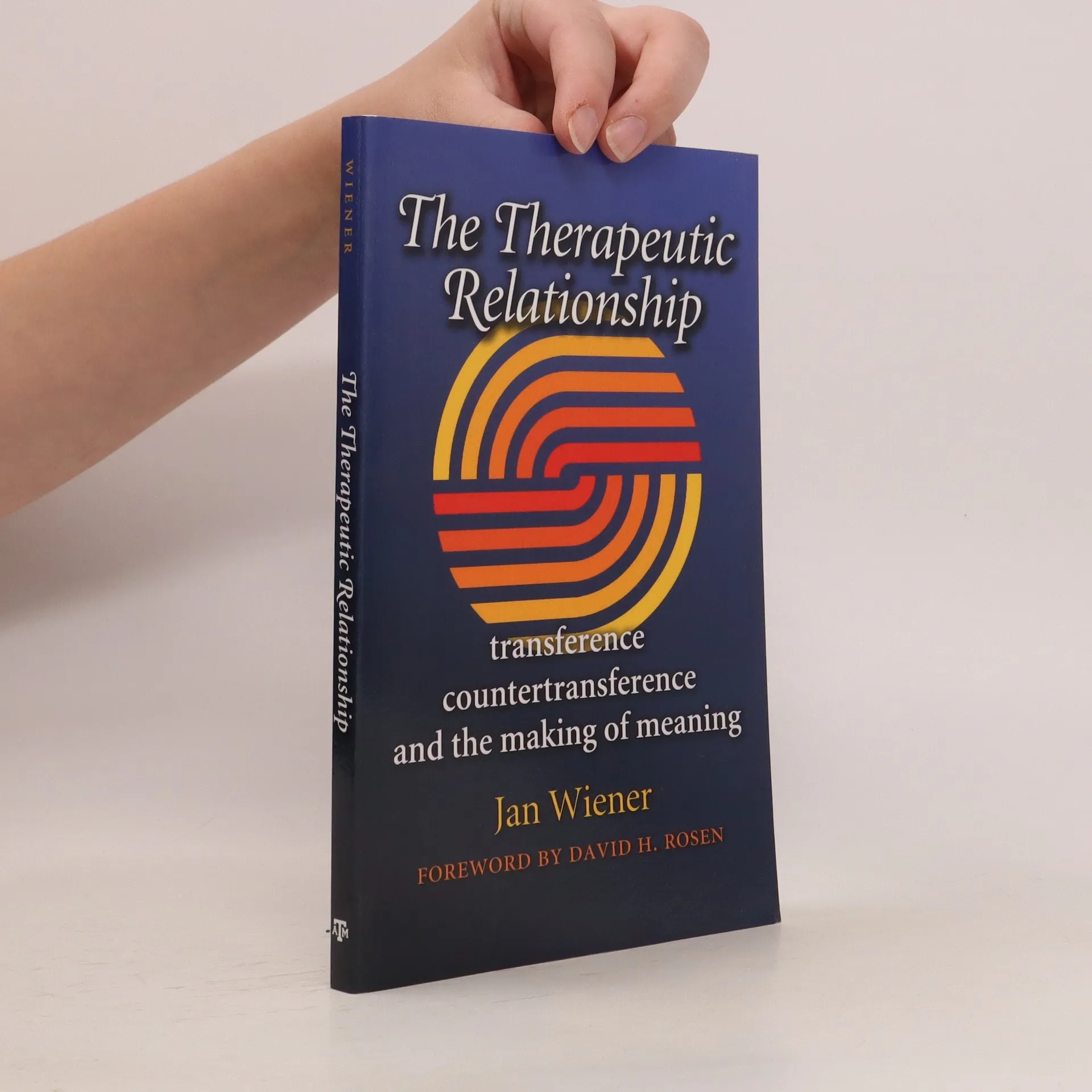
" Her aim in this important book is to lay the groundwork for the development of a "more contemporary Jungian approach" to working with transference and countertransference dynamics within the therapeutic relationship. Her work is also informed by knowledge from other fields, such as philosophy, infant development, neuroscience, and the arts. In The Therapeutic Relationship, Wiener makes a central distinction between working "in" the transference and working "with" the transference, advocating a flexible approach that takes account of the different kinds of attachment patients can make to their therapists. She develops her own concept of the transference matrix, a model that honors one of Jung’s core beliefs in the development of a symbolic capacity as an essential task of psychotherapy, but at the same time acknowledges that a capacity to symbolize can only emerge through relationship.
Acquisto del libro
The Therapeutic Relationship, Jan Wiener
- Lingua

- Pubblicato
- 2017
- Rilegatura
- (In brossura)
Metodi di pagamento
Qui potrebbe esserci la tua recensione.
- Titolo
- The Therapeutic Relationship
- Lingua
- Inglese
- Autori
- Jan Wiener
- Editore
- Texas A&M University Press
- Pubblicato
- 2017
- Formato
- In brossura
- Pagine
- 168
- ISBN10
- 1623495482
- ISBN13
- 9781623495480
- Serie
- Categoria
- Tag
- Valutazione
- 4 su 5
- Descrizione
- " Her aim in this important book is to lay the groundwork for the development of a "more contemporary Jungian approach" to working with transference and countertransference dynamics within the therapeutic relationship. Her work is also informed by knowledge from other fields, such as philosophy, infant development, neuroscience, and the arts. In The Therapeutic Relationship, Wiener makes a central distinction between working "in" the transference and working "with" the transference, advocating a flexible approach that takes account of the different kinds of attachment patients can make to their therapists. She develops her own concept of the transference matrix, a model that honors one of Jung’s core beliefs in the development of a symbolic capacity as an essential task of psychotherapy, but at the same time acknowledges that a capacity to symbolize can only emerge through relationship.