

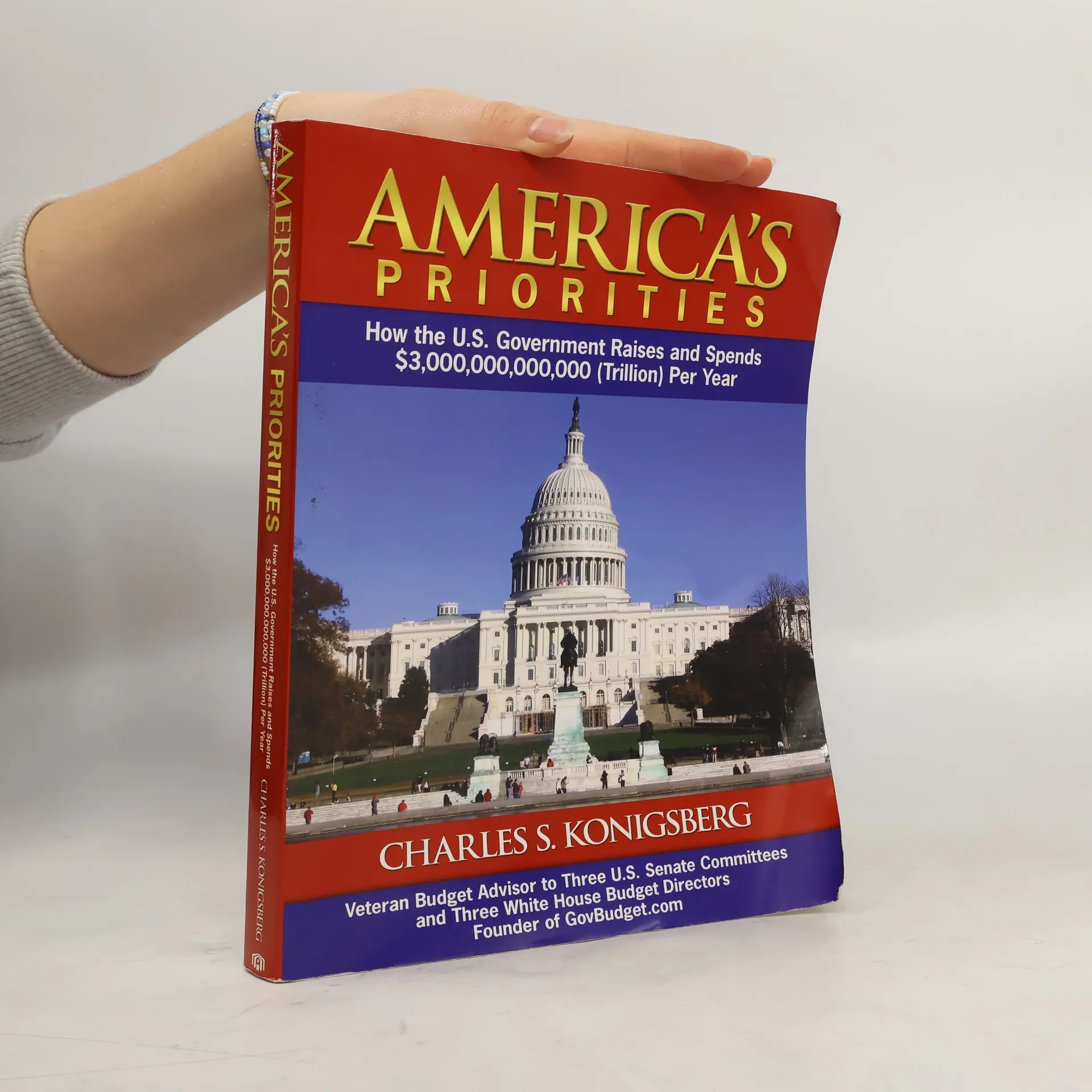
America's Priorities
How the U.S. Government Raises and Spends $3,000,000,000,000 (Trillion) Per Year
Autori
Maggiori informazioni sul libro
America's Priorities explains in clear, concise, nonpartisan language how the U.S. government raises and spends $3 trillion per year. The book provides plain English explanations of the budget process, major Federal spending programs, Federal taxes, and the reasons for the major swing from deficits in the 1980s to surpluses in the late 1990s and back to rapidly increasing debt in the current decade. A broad spectrum of readers will value the book as a vital journalists, political and financial commentators, the government and financial sectors, the academic community, and voters looking for a nonpartisan explanation of how our elected officials are prioritizing public resources.
Acquisto del libro
America's Priorities, Charles S. Konigsberg
- Lingua

- Pubblicato
- 2007
- Rilegatura
- (In brossura)
Metodi di pagamento
Ancora nessuna valutazione.
- Titolo
- America's Priorities
- Sottotitolo
- How the U.S. Government Raises and Spends $3,000,000,000,000 (Trillion) Per Year
- Lingua
- Inglese
- Autori
- Charles S. Konigsberg
- Editore
- AuthorHouse
- Pubblicato
- 2007
- Formato
- In brossura
- Pagine
- 452
- ISBN10
- 143436013X
- ISBN13
- 9781434360137
- Serie
- Categoria
- Descrizione
- America's Priorities explains in clear, concise, nonpartisan language how the U.S. government raises and spends $3 trillion per year. The book provides plain English explanations of the budget process, major Federal spending programs, Federal taxes, and the reasons for the major swing from deficits in the 1980s to surpluses in the late 1990s and back to rapidly increasing debt in the current decade. A broad spectrum of readers will value the book as a vital journalists, political and financial commentators, the government and financial sectors, the academic community, and voters looking for a nonpartisan explanation of how our elected officials are prioritizing public resources.