

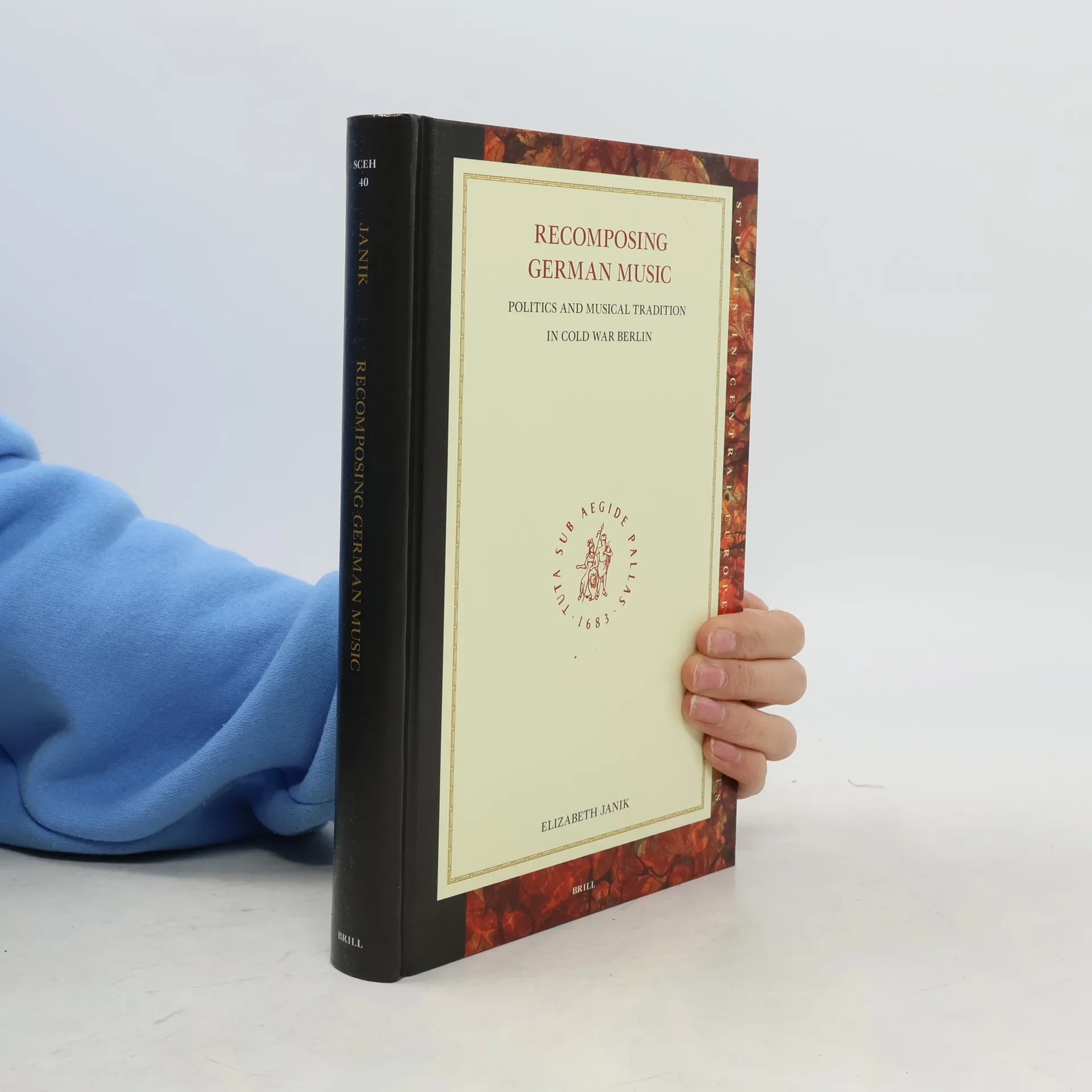


Maggiori informazioni sul libro
Recomposing German Music illuminates the tangled relationship between music and politics in 20th-century Germany. Focusing on the reconstruction and division of Berlin’s musical community after 1945, author Elizabeth Janik demonstrates how military occupation and Cold War rivalry transformed the city’s elite musical institutions. Berlin became a crucible for competing interpretations of German musical tradition. Cultural authorities in East and West Berlin disputed the social authority responsible for defining and upholding musical standards, the appropriate relationship between art and the state, the definition of musical progress, and finally, the nature and purpose of music itself. This study is an important contribution to the social history of 20th-century music and the comparative cultural history of the two Cold War Germanys.
Acquisto del libro
Studies in Central European Histories - 40: Recomposing German Music, Elizabeth Janik
- Lingua

- Pubblicato
- 2005
- Rilegatura
- (Copertina rigida)
Metodi di pagamento
Ancora nessuna valutazione.
- Titolo
- Studies in Central European Histories - 40: Recomposing German Music
- Sottotitolo
- Politics and Musical Tradition in Cold War Berlin
- Lingua
- Inglese
- Autori
- Elizabeth Janik
- Editore
- Brill
- Pubblicato
- 2005
- Formato
- Copertina rigida
- Pagine
- 354
- ISBN10
- 900414661X
- ISBN13
- 9789004146617
- Serie
- Tag
- Arte, Tematica musicale, Germania, Cultura e Società, Berlino, Storia d'Europa, Inverno, freddo, Storia sociale
- Descrizione
- Recomposing German Music illuminates the tangled relationship between music and politics in 20th-century Germany. Focusing on the reconstruction and division of Berlin’s musical community after 1945, author Elizabeth Janik demonstrates how military occupation and Cold War rivalry transformed the city’s elite musical institutions. Berlin became a crucible for competing interpretations of German musical tradition. Cultural authorities in East and West Berlin disputed the social authority responsible for defining and upholding musical standards, the appropriate relationship between art and the state, the definition of musical progress, and finally, the nature and purpose of music itself. This study is an important contribution to the social history of 20th-century music and the comparative cultural history of the two Cold War Germanys.