



Maggiori informazioni sul libro
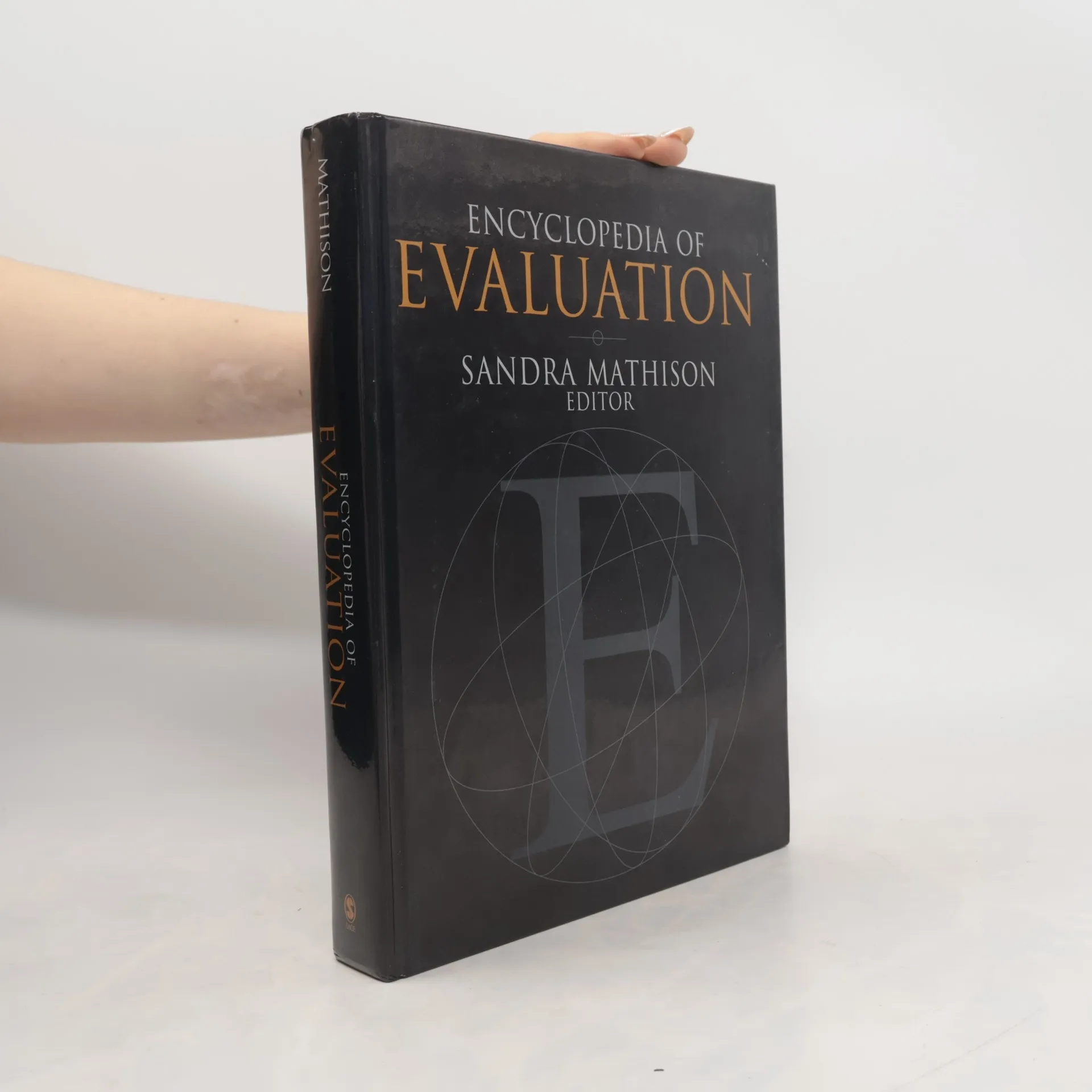
The Encyclopedia of Evaluation is an authoritative, first-of-its-kind who, what, where, why, and how of the field of evaluation. Covering professional practice as well as academia, this volume chronicles the development of the field―its history, key figures, theories, approaches, and goals. From the leading publisher in the field of evaluation, this work is a must-have for all social science libraries, departments that offer courses in evaluation, and students and professional evaluators around the world. The entries in this Encyclopedia capture the essence of evaluation as a practice (methods, techniques, roles, people), as a profession (professional obligations, shared knowledge, ethical imperatives, events, places) and as a discipline (theories and models of evaluation, ontological and epistemological issues).
Acquisto del libro
Encyclopedia of Evaluation, Sandra Mathison
- Lingua

- Pubblicato
- 2004
- Rilegatura
- (Copertina rigida)
Metodi di pagamento
Qui potrebbe esserci la tua recensione.
- Titolo
- Encyclopedia of Evaluation
- Lingua
- Inglese
- Autori
- Sandra Mathison
- Editore
- SAGE Publications, Inc
- Pubblicato
- 2004
- Formato
- Copertina rigida
- Pagine
- 520
- ISBN10
- 0761926097
- ISBN13
- 9780761926092
- Serie
- Valutazione
- 4,35 su 5
- Descrizione
- The Encyclopedia of Evaluation is an authoritative, first-of-its-kind who, what, where, why, and how of the field of evaluation. Covering professional practice as well as academia, this volume chronicles the development of the field―its history, key figures, theories, approaches, and goals. From the leading publisher in the field of evaluation, this work is a must-have for all social science libraries, departments that offer courses in evaluation, and students and professional evaluators around the world. The entries in this Encyclopedia capture the essence of evaluation as a practice (methods, techniques, roles, people), as a profession (professional obligations, shared knowledge, ethical imperatives, events, places) and as a discipline (theories and models of evaluation, ontological and epistemological issues).