

Parametri
- 460pagine
- 17 ore di lettura
Maggiori informazioni sul libro
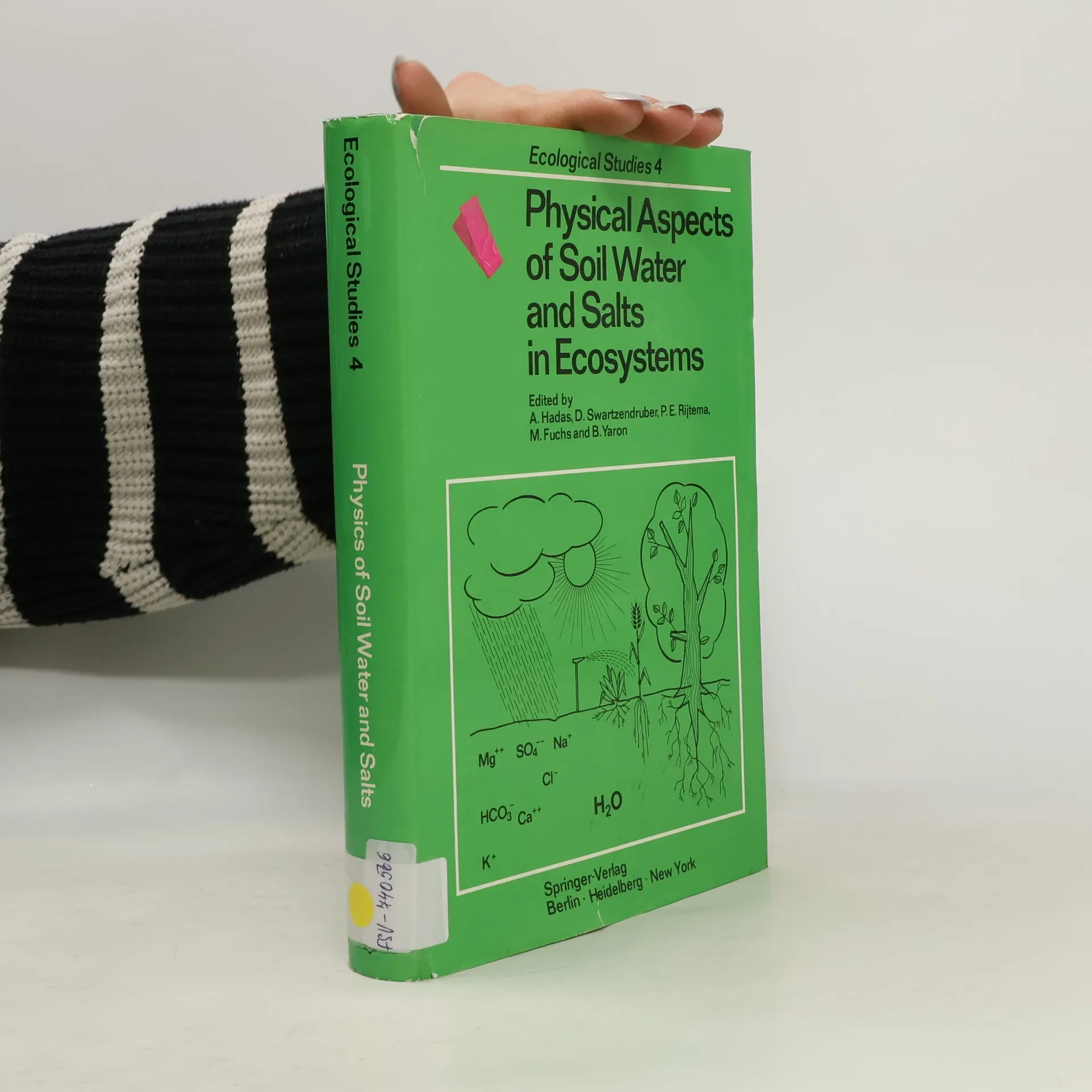
The papers collected in this book were given and discussed at the symposium on "Soil water physics and technology," which was held in Rehovot, Israel, from August 19th-September 4th, 1971. The subjects covered in this book are the theoretical and practical aspects of the following topics: water movement in soils, soil-water interactions, evaporation from soil and plants, water requirements of crops, ion activity and migration in soils, soil-water management and salinity. These contributions represent ideas and subjects considered important by the authors and debaters. In science, one often finds a gap between basic research and practical application. If reading this book creates a feeling of an apparent lack of balance between theory and practice, this represents the state of our science today, and the thoughtful reader can and will recognize that much remains to be done.
Acquisto del libro
Physical Aspects of Soil Water and Salts in Ecosystems, A. Hadas, D. Swartzendruber, P. E. Rijtema, M Fuchs, B. Yaron
- Lingua

- Pubblicato
- 1973
- Rilegatura
- (Copertina rigida)
Metodi di pagamento
Ancora nessuna valutazione.
- Titolo
- Physical Aspects of Soil Water and Salts in Ecosystems
- Lingua
- Inglese
- Autori
- A. Hadas, D. Swartzendruber, P. E. Rijtema, M Fuchs, B. Yaron
- Editore
- Springer-Verlag
- Pubblicato
- 1973
- Formato
- Copertina rigida
- Pagine
- 460
- ISBN10
- 3540061096
- ISBN13
- 9783540061090
- Serie
- Descrizione
- The papers collected in this book were given and discussed at the symposium on "Soil water physics and technology," which was held in Rehovot, Israel, from August 19th-September 4th, 1971. The subjects covered in this book are the theoretical and practical aspects of the following topics: water movement in soils, soil-water interactions, evaporation from soil and plants, water requirements of crops, ion activity and migration in soils, soil-water management and salinity. These contributions represent ideas and subjects considered important by the authors and debaters. In science, one often finds a gap between basic research and practical application. If reading this book creates a feeling of an apparent lack of balance between theory and practice, this represents the state of our science today, and the thoughtful reader can and will recognize that much remains to be done.