

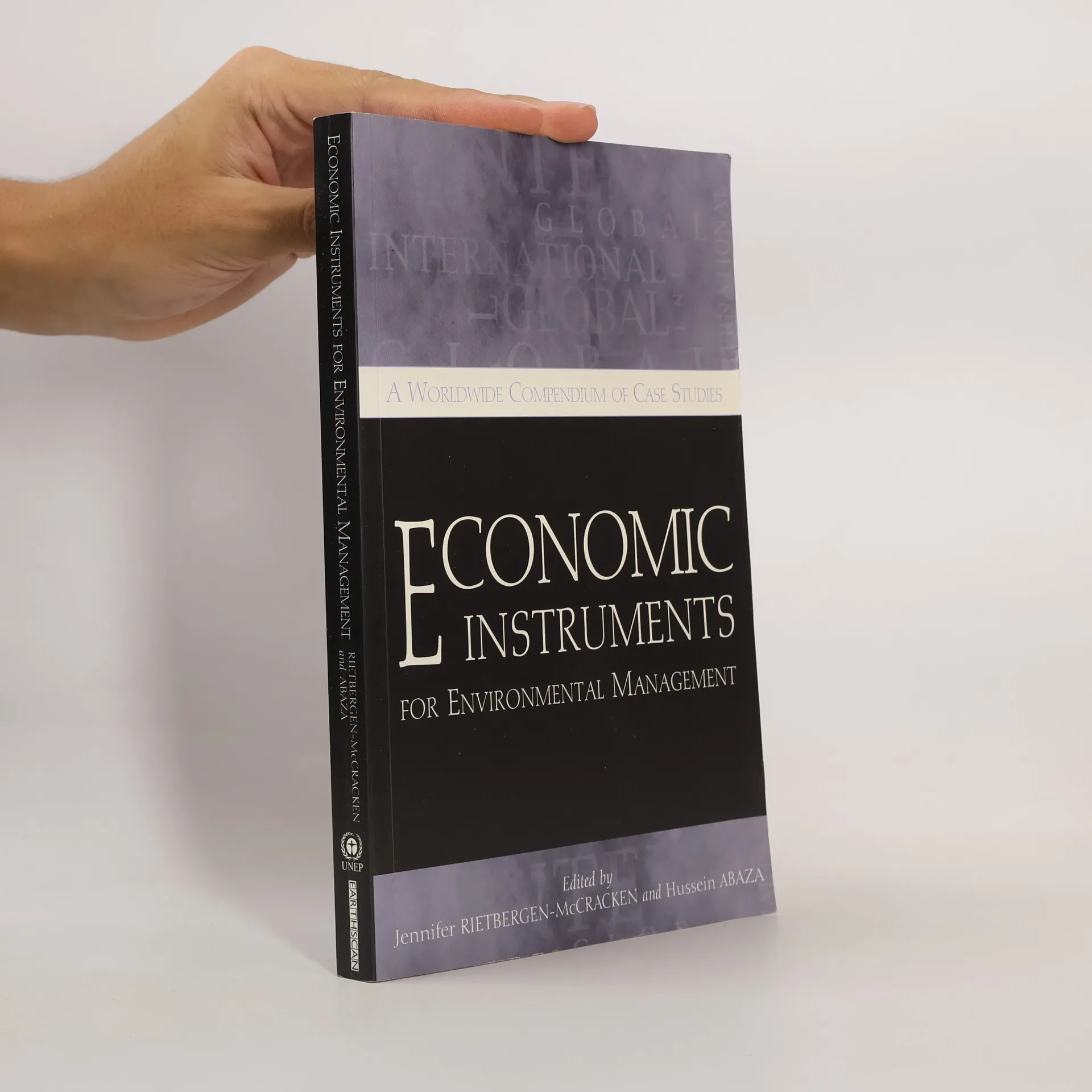


Economic Instruments for Environmental Management
A Worldwide Compendium of Case Studies
Valutazione del libro
Parametri
- 256pagine
- 9 ore di lettura
Maggiori informazioni sul libro
This volume presents the results of a three-year collaborative effort involving research institutions in Africa, Asia, Europe and Latin America. Case studies demonstrate the diversity of environmental problems to which a variety of economic instruments can be applied - air and water pollution, packaging, deforestation, over-grazing, wildlife. They also show what is needed for them to work successfully and the pitfalls to avoid in introducing them, providing guidance for future applications. Written to be accessible to non-economists, the book offers source material for students and academic economists, as well as for professionals working with economic instruments.
Acquisto del libro
Economic Instruments for Environmental Management, Hussein Abaza, Jennifer Rietbergen-McCracken
- Lingua

- Pubblicato
- 2000
- Rilegatura
- (In brossura)
Metodi di pagamento
Qui potrebbe esserci la tua recensione.
- Titolo
- Economic Instruments for Environmental Management
- Sottotitolo
- A Worldwide Compendium of Case Studies
- Lingua
- Inglese
- Editore
- Routledge
- Pubblicato
- 2000
- Formato
- In brossura
- Pagine
- 256
- ISBN10
- 1853836907
- ISBN13
- 9781853836909
- Serie
- Tag
- Commercio, Natura, Scienza, Tecnologia, Tematica ecologica, Letteratura specialistica, Sostenibilità, Sviluppo, Acqua, Casuistiche, Risorse naturali, Paesi in via di sviluppo, Economia ambientale
- Valutazione
- 3 su 5
- Descrizione
- This volume presents the results of a three-year collaborative effort involving research institutions in Africa, Asia, Europe and Latin America. Case studies demonstrate the diversity of environmental problems to which a variety of economic instruments can be applied - air and water pollution, packaging, deforestation, over-grazing, wildlife. They also show what is needed for them to work successfully and the pitfalls to avoid in introducing them, providing guidance for future applications. Written to be accessible to non-economists, the book offers source material for students and academic economists, as well as for professionals working with economic instruments.