


Maggiori informazioni sul libro
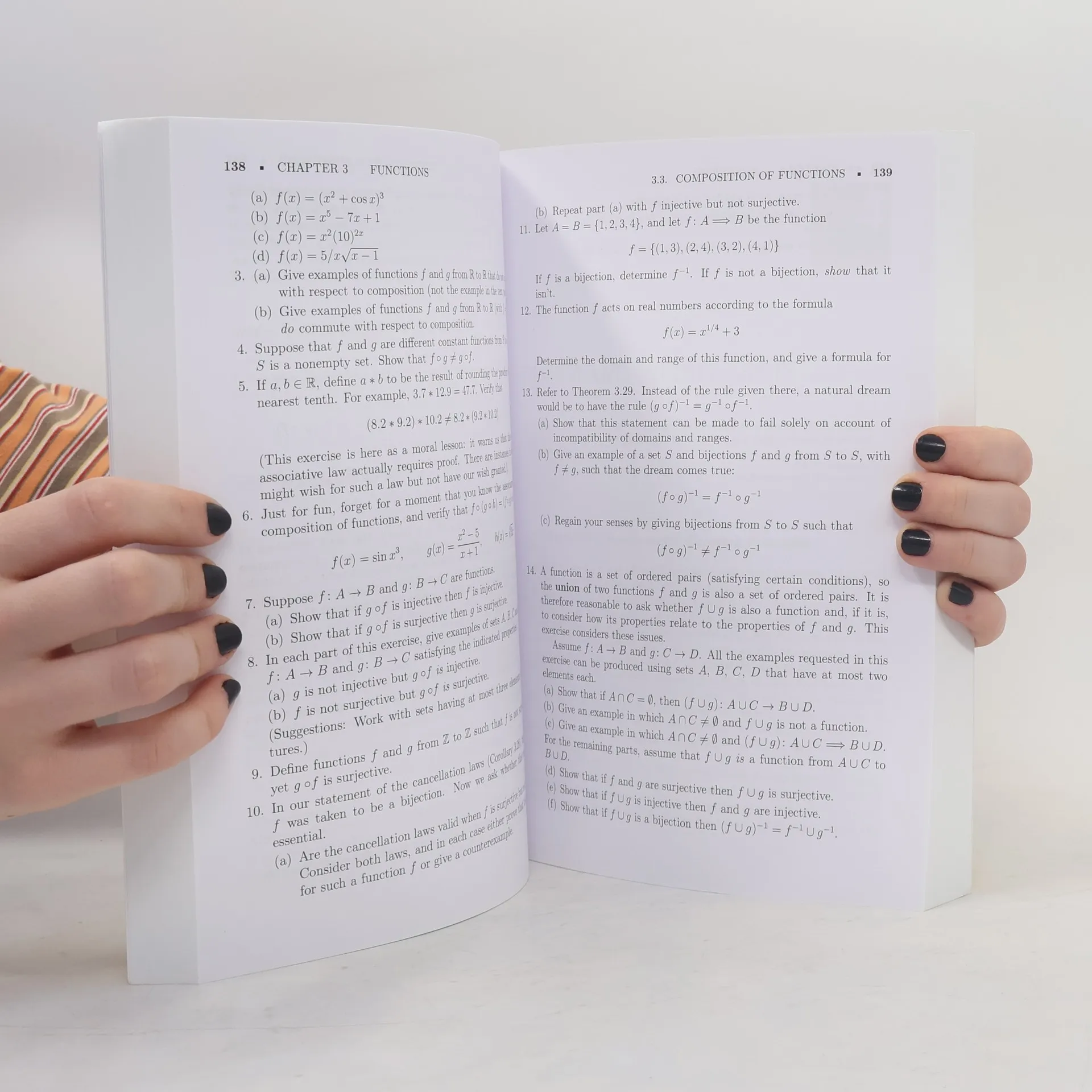
Gerstein aims to gently guide his students in developing critical thinking skills, encouraging them to tackle sophisticated problems rather than relying on rote solutions. He emphasizes the importance of constructing proofs from statements, fostering a deeper understanding of mathematical concepts. His engaging writing style is likely to resonate with students, as seen in sections like "Languages and Finite Automata," where he connects abstract ideas to relatable problems. For example, he playfully explores how a machine could assess the legitimacy of a French sentence, making complex topics more accessible. The textbook serves as an introduction to essential concepts for a one-term course, bridging the gap between lower-division calculus and more advanced subjects such as linear and abstract algebra, real and complex analysis, number theory, topology, and combinatorics. It combines clear explanations of fundamental notions with key theorems, examples, and exercises, ensuring that beginning students can grasp the material easily. Additionally, a solutions manual is available for instructors, enhancing the learning experience. Overall, students who engage with this textbook will acquire valuable mathematical techniques and knowledge.
Acquisto del libro
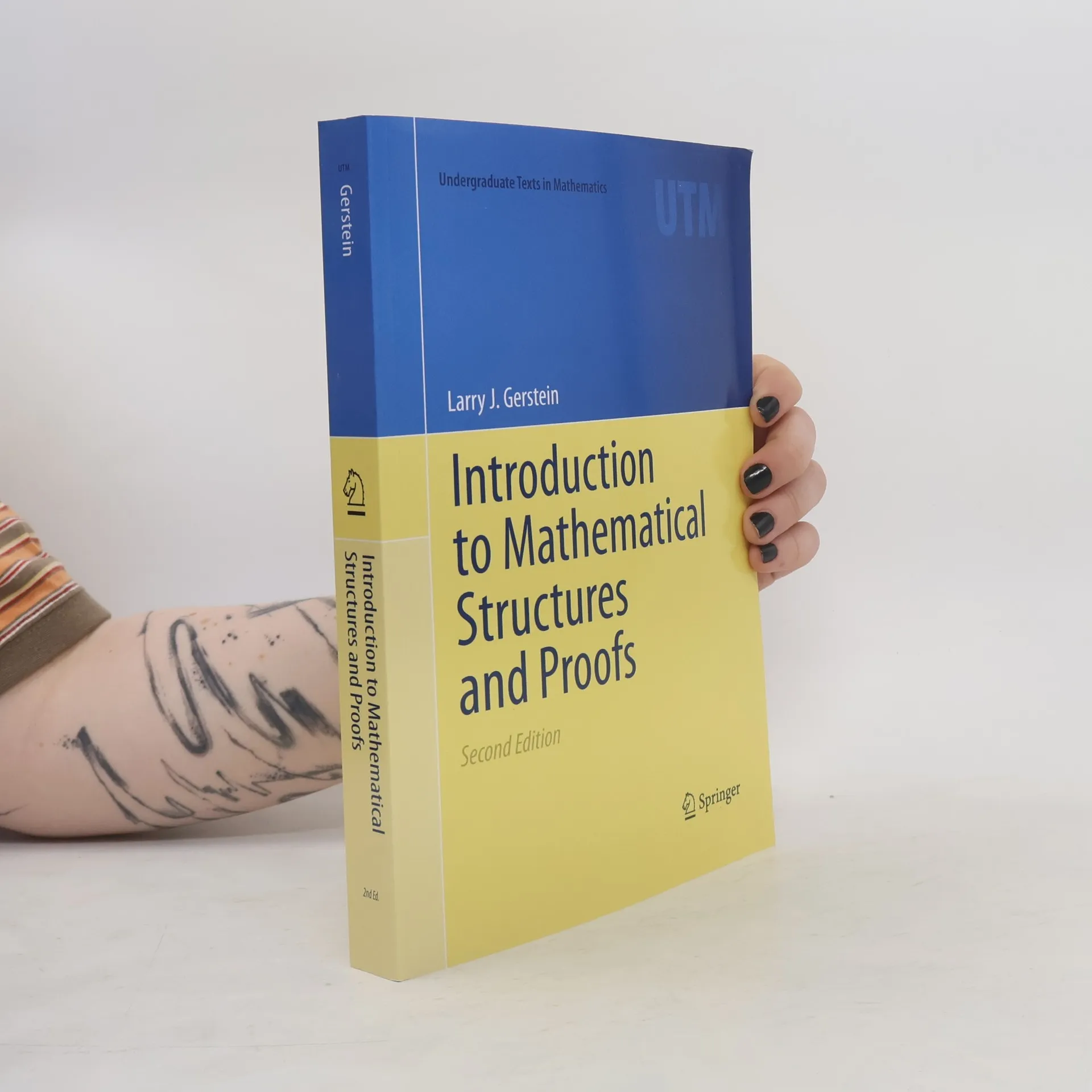
Undergraduate Texts in Mathematics: Introduction to Mathematical Structures and Proofs, Larry J. Gerstein
- Lingua

- Pubblicato
- 2016
- Rilegatura
- (In brossura)
Metodi di pagamento
Ancora nessuna valutazione.
- Titolo
- Undergraduate Texts in Mathematics: Introduction to Mathematical Structures and Proofs
- Sottotitolo
- Second Edition
- Lingua
- Inglese
- Autori
- Larry J. Gerstein
- Editore
- Springer New York
- Pubblicato
- 2016
- Formato
- In brossura
- Pagine
- 401
- ISBN10
- 1493951467
- ISBN13
- 9781493951468
- Serie
- Descrizione
- Gerstein aims to gently guide his students in developing critical thinking skills, encouraging them to tackle sophisticated problems rather than relying on rote solutions. He emphasizes the importance of constructing proofs from statements, fostering a deeper understanding of mathematical concepts. His engaging writing style is likely to resonate with students, as seen in sections like "Languages and Finite Automata," where he connects abstract ideas to relatable problems. For example, he playfully explores how a machine could assess the legitimacy of a French sentence, making complex topics more accessible. The textbook serves as an introduction to essential concepts for a one-term course, bridging the gap between lower-division calculus and more advanced subjects such as linear and abstract algebra, real and complex analysis, number theory, topology, and combinatorics. It combines clear explanations of fundamental notions with key theorems, examples, and exercises, ensuring that beginning students can grasp the material easily. Additionally, a solutions manual is available for instructors, enhancing the learning experience. Overall, students who engage with this textbook will acquire valuable mathematical techniques and knowledge.