

Maggiori informazioni sul libro
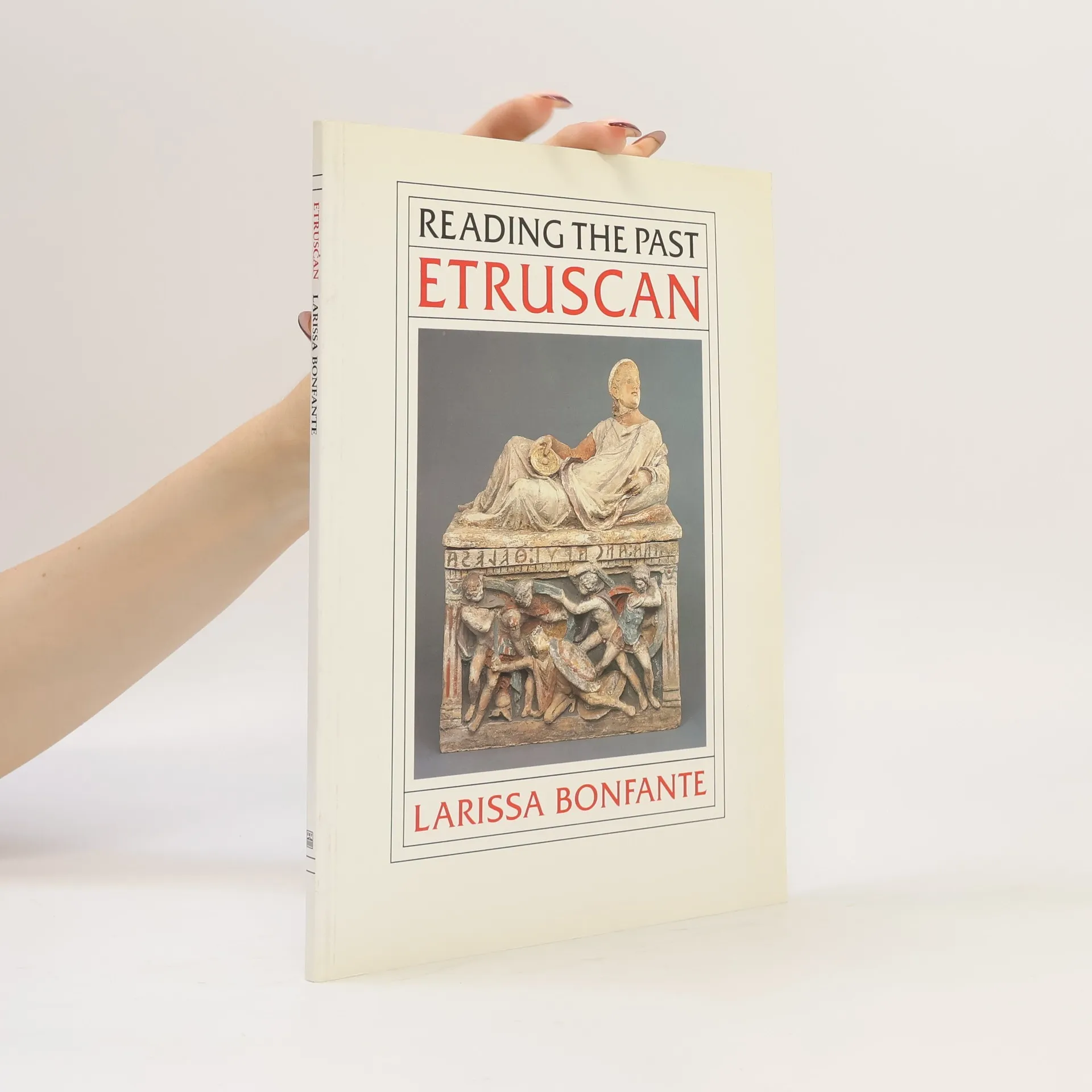
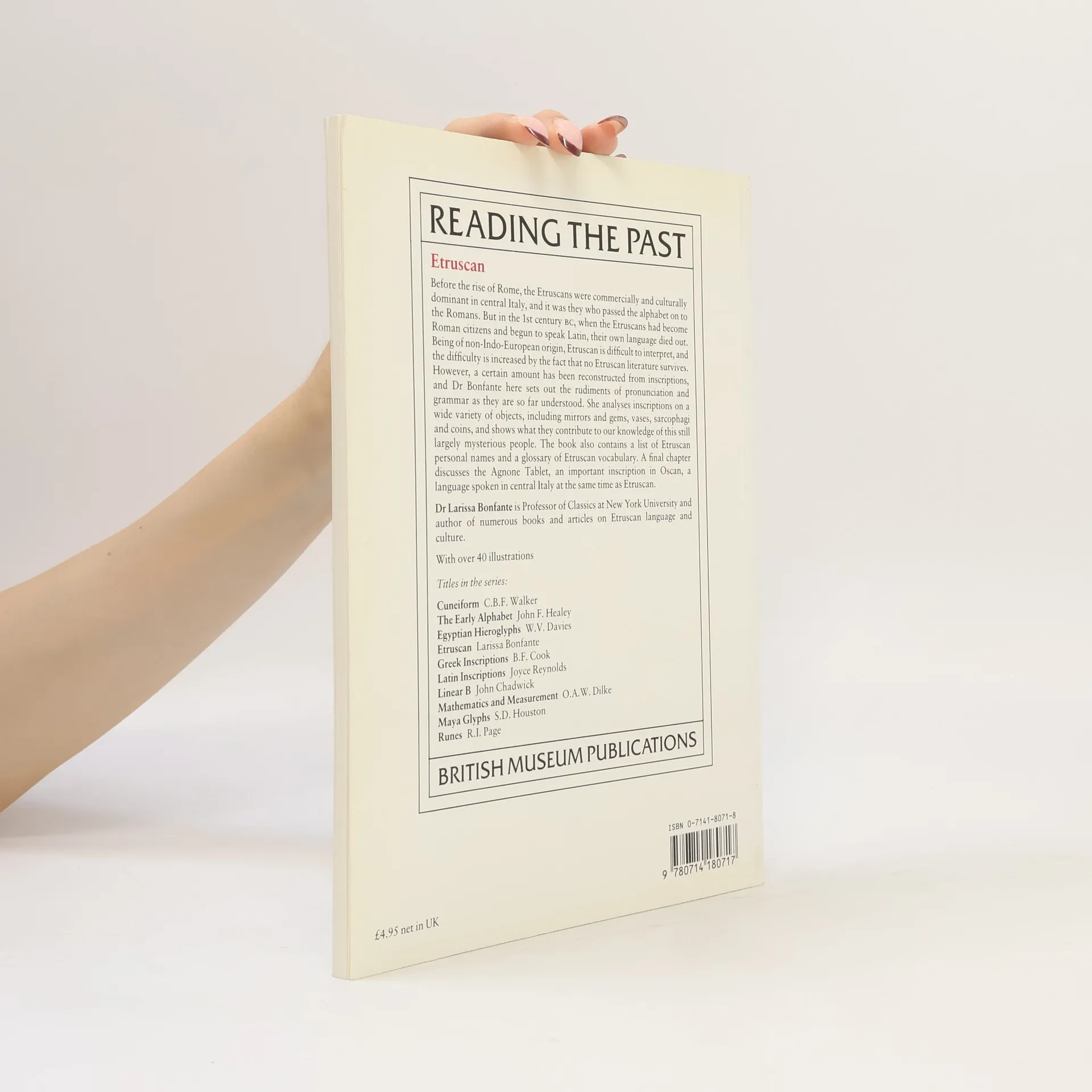
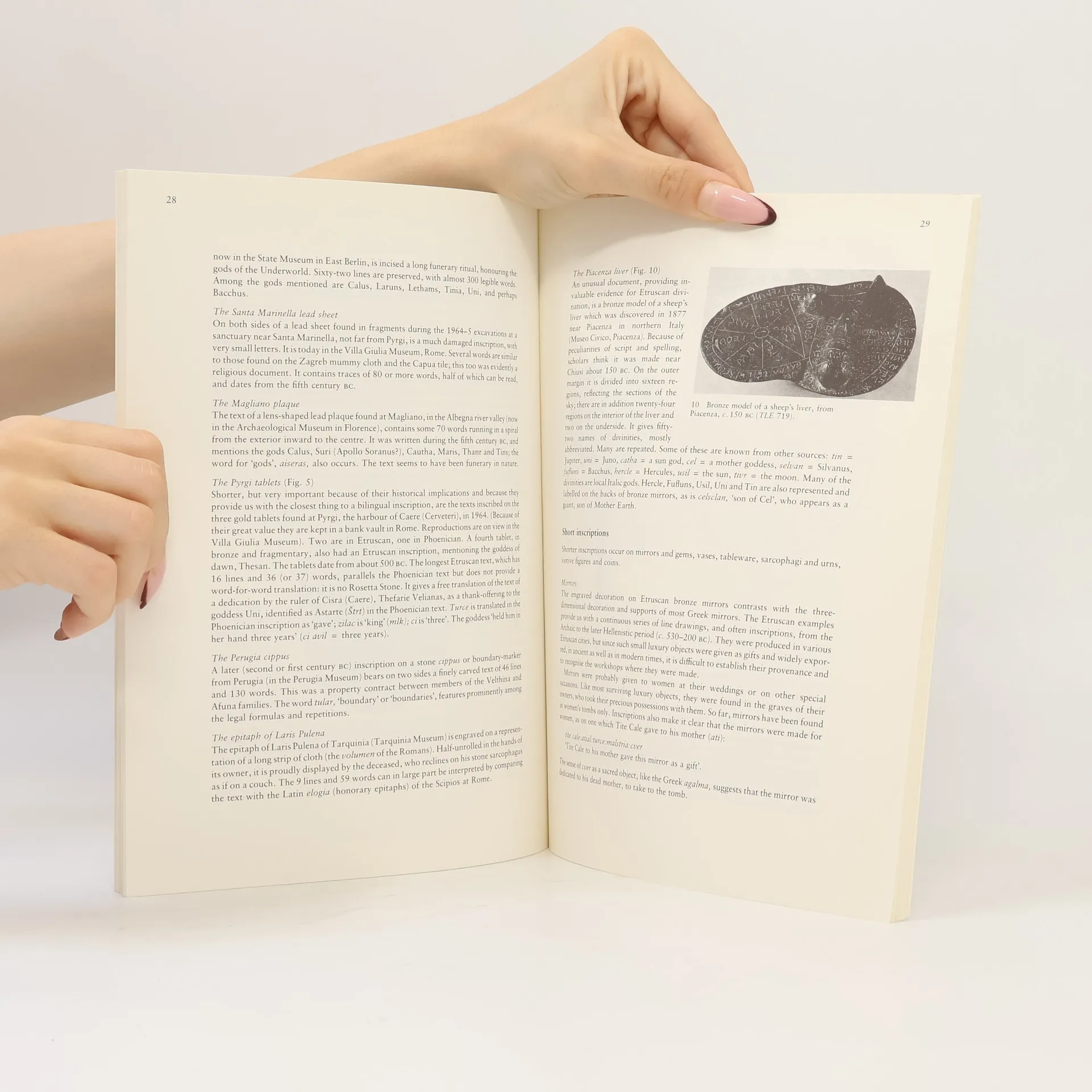
Before the rise of Rome, the Etruscans dominated central Italy commercially and culturally. Significantly, it was the Etruscans who passed the alphabet on to the Romans. But in the first century B.C., when they had become Roman citizens and begun to speak Latin, their own language died out. Being of non-Indo-European origin, Etruscan is extremely difficult to interpret, and the difficulty is increased by the fact that no Etruscan literature survives. A certain amount has, however, been reconstructed from inscriptions. Here Dr. Bonfante sets out the rudiments of pronunciation and grammar as they are understood so far. Analyzing inscriptions on a wide variety of objects, including mirrors and gems, vases, sarcophagi and coins, she shows what these fragmentary writings contribute to our knowledge of this still largely mysterious people. The book also contains a list of Etruscan personal names and a glossary of Etruscan vocabulary. A final chapter discusses the Agnone Tablet, an important inscription in Oscan, which was spoken in central Italy at the same time as Etruscan.
Acquisto del libro
Etruscan, Larissa Bonfante
- Lingua

- Pubblicato
- 1990
- Rilegatura
- (In brossura)
Metodi di pagamento
Ancora nessuna valutazione.
- Titolo
- Etruscan
- Lingua
- Inglese
- Autori
- Larissa Bonfante
- Editore
- British Museum Press
- Pubblicato
- 1990
- Formato
- In brossura
- Pagine
- 64
- ISBN10
- 0714180718
- ISBN13
- 9780714180717
- Serie
- Categoria
- Descrizione
- Before the rise of Rome, the Etruscans dominated central Italy commercially and culturally. Significantly, it was the Etruscans who passed the alphabet on to the Romans. But in the first century B.C., when they had become Roman citizens and begun to speak Latin, their own language died out. Being of non-Indo-European origin, Etruscan is extremely difficult to interpret, and the difficulty is increased by the fact that no Etruscan literature survives. A certain amount has, however, been reconstructed from inscriptions. Here Dr. Bonfante sets out the rudiments of pronunciation and grammar as they are understood so far. Analyzing inscriptions on a wide variety of objects, including mirrors and gems, vases, sarcophagi and coins, she shows what these fragmentary writings contribute to our knowledge of this still largely mysterious people. The book also contains a list of Etruscan personal names and a glossary of Etruscan vocabulary. A final chapter discusses the Agnone Tablet, an important inscription in Oscan, which was spoken in central Italy at the same time as Etruscan.