

Maggiori informazioni sul libro
Organizations that successfully integrate their applications and data sources gain a competitive edge through enhanced efficiency and profitability. However, IT managers face significant challenges, including disparate legacy systems, varied hardware and networking technologies, and proprietary applications. Enterprise Application Integration (EAI) addresses this pressing need by enabling seamless communication between business processes and data across applications. This comprehensive examination of EAI covers its goals, approaches, and the technologies that support it, along with a roadmap for implementation. The book details the four major integration types: data-level, application interface-level, method-level, and user interface-level. It explores various middleware models and technologies, including application servers (such as Enterprise JavaBeans and ActiveX), message-oriented middleware (MOM), remote procedure calls (RPCs), distributed objects (CORBA and COM), database-oriented middleware (ODBC, JDBC, OLE DB), Java middleware standards, message brokers, and new process automation technologies. This practical guide walks readers through the major steps of implementing an EAI solution, from identifying data sources and building the enterprise metadata model to process integration and maintenance. Key topics also include integrating packaged applications like SAP R/3 and PeopleSoft, supply chain integration, the role
Acquisto del libro
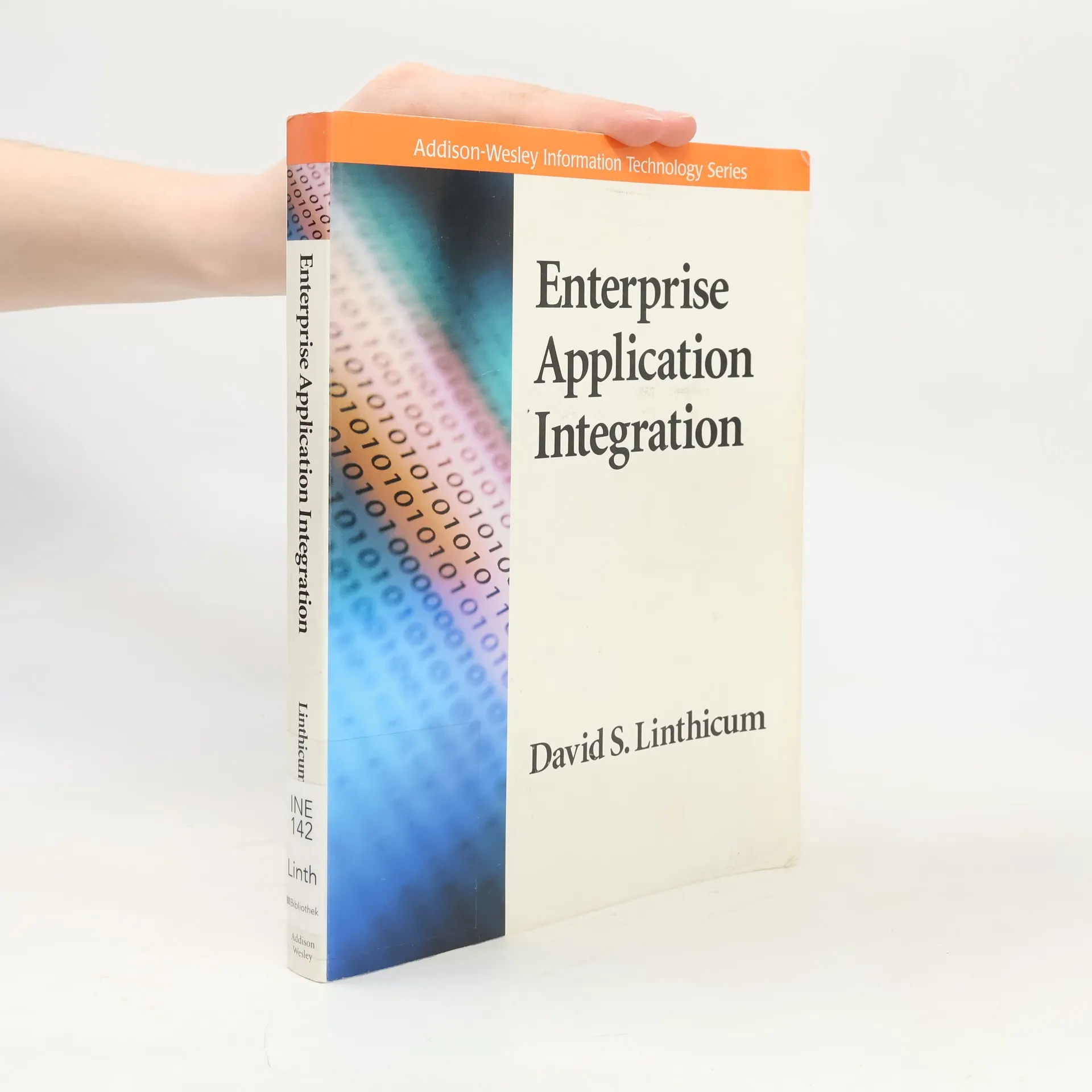
Enterprise Application Integration, David S. Linthicum
- Lingua

- Pubblicato
- 1999
- Rilegatura
- (In brossura)
Metodi di pagamento
Ancora nessuna valutazione.
- Titolo
- Enterprise Application Integration
- Lingua
- Inglese
- Autori
- David S. Linthicum
- Editore
- Addison-Wesley Professional
- Pubblicato
- 1999
- Formato
- In brossura
- Pagine
- 400
- ISBN10
- 0201615835
- ISBN13
- 9780201615838
- Serie
- Categoria
- Descrizione
- Organizations that successfully integrate their applications and data sources gain a competitive edge through enhanced efficiency and profitability. However, IT managers face significant challenges, including disparate legacy systems, varied hardware and networking technologies, and proprietary applications. Enterprise Application Integration (EAI) addresses this pressing need by enabling seamless communication between business processes and data across applications. This comprehensive examination of EAI covers its goals, approaches, and the technologies that support it, along with a roadmap for implementation. The book details the four major integration types: data-level, application interface-level, method-level, and user interface-level. It explores various middleware models and technologies, including application servers (such as Enterprise JavaBeans and ActiveX), message-oriented middleware (MOM), remote procedure calls (RPCs), distributed objects (CORBA and COM), database-oriented middleware (ODBC, JDBC, OLE DB), Java middleware standards, message brokers, and new process automation technologies. This practical guide walks readers through the major steps of implementing an EAI solution, from identifying data sources and building the enterprise metadata model to process integration and maintenance. Key topics also include integrating packaged applications like SAP R/3 and PeopleSoft, supply chain integration, the role