

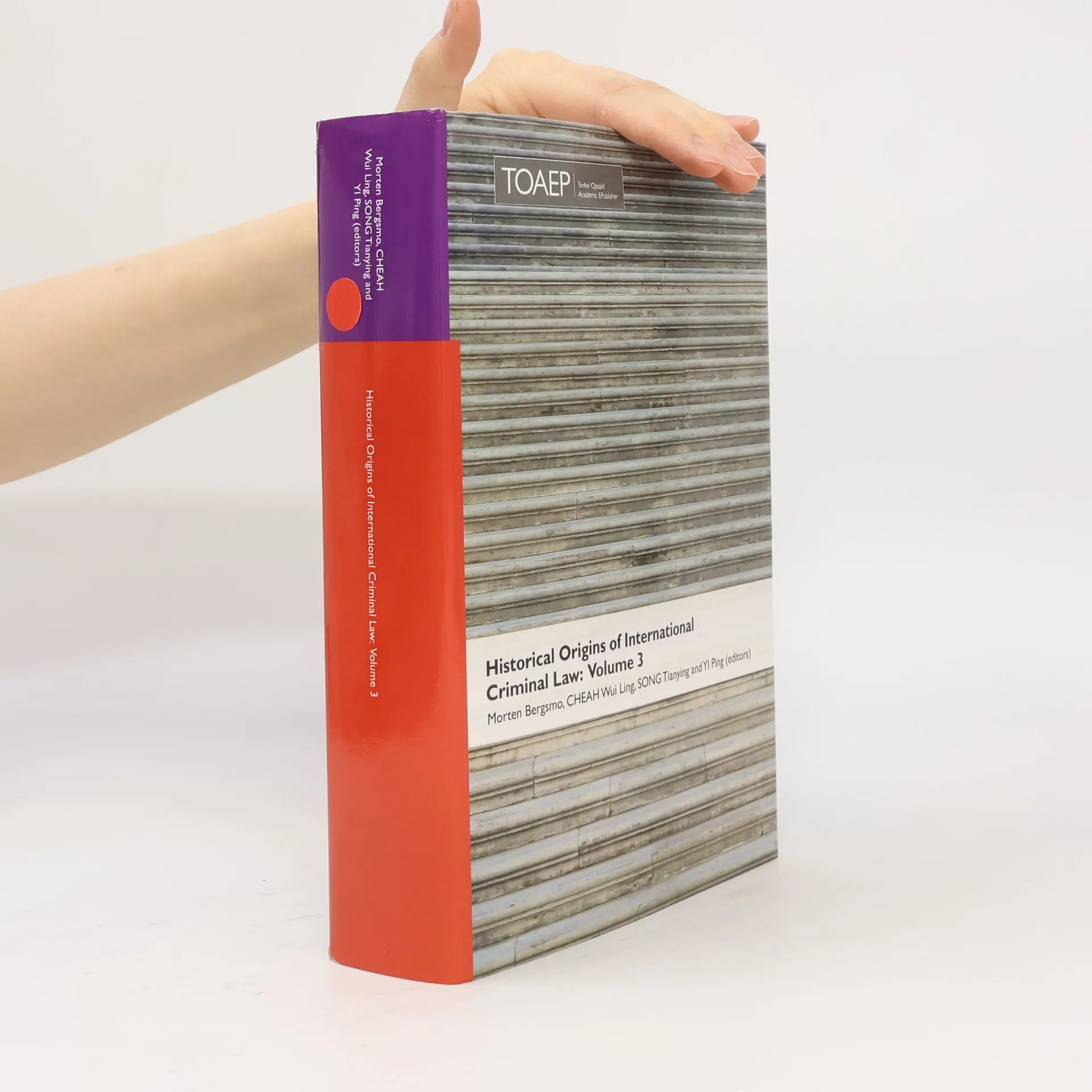


Parametri
- 846pagine
- 30 ore di lettura
Maggiori informazioni sul libro
This volume continues the critical mapping of international criminal law's origins initiated in earlier works. Twenty-seven authors delve into the evolution of legal doctrines and significant historical events, aiming to enhance contemporary theory and practice. Contributors include notable scholars such as Narinder Singh, Eivind S. Homme, and William Schabas, among others. Part 1 broadens the understanding of international criminal law by examining its geographical, temporal, and conceptual diversity in early forms. Parts 2 and 3 focus on the origins and development of specific doctrines. Part 2 investigates four core international crimes: war crimes, crimes against humanity, genocide, and aggression. Part 3 addresses doctrines related to individual criminal liability, defenses, and sentencing criteria. This doctrine-based approach fosters vertical consolidation within concepts, while the chapters highlight enduring tensions in international criminal law, reflective of ongoing challenges. The work provides essential parameters for assessment and action in the field, contributing to a deeper understanding of the complexities and evolution of international criminal law.
Acquisto del libro
Historical Origins of International Criminal Law, Morten Bergsmo, Cheah Wui Ling, Song Tianying, Ping Yi
- Lingua

- Pubblicato
- 2015
- Rilegatura
- (Copertina rigida),
- Condizioni del libro
- In buone condizioni
- Prezzo
- 4,79 €
Metodi di pagamento
Ancora nessuna valutazione.
- Titolo
- Historical Origins of International Criminal Law
- Sottotitolo
- Volume 3
- Lingua
- Inglese
- Autori
- Morten Bergsmo, Cheah Wui Ling, Song Tianying, Ping Yi
- Pubblicato
- 2015
- Formato
- Copertina rigida
- Pagine
- 846
- ISBN10
- 8283480154
- ISBN13
- 9788283480153
- Serie
- Descrizione
- This volume continues the critical mapping of international criminal law's origins initiated in earlier works. Twenty-seven authors delve into the evolution of legal doctrines and significant historical events, aiming to enhance contemporary theory and practice. Contributors include notable scholars such as Narinder Singh, Eivind S. Homme, and William Schabas, among others. Part 1 broadens the understanding of international criminal law by examining its geographical, temporal, and conceptual diversity in early forms. Parts 2 and 3 focus on the origins and development of specific doctrines. Part 2 investigates four core international crimes: war crimes, crimes against humanity, genocide, and aggression. Part 3 addresses doctrines related to individual criminal liability, defenses, and sentencing criteria. This doctrine-based approach fosters vertical consolidation within concepts, while the chapters highlight enduring tensions in international criminal law, reflective of ongoing challenges. The work provides essential parameters for assessment and action in the field, contributing to a deeper understanding of the complexities and evolution of international criminal law.