



Parametri
- 322pagine
- 12 ore di lettura
Maggiori informazioni sul libro
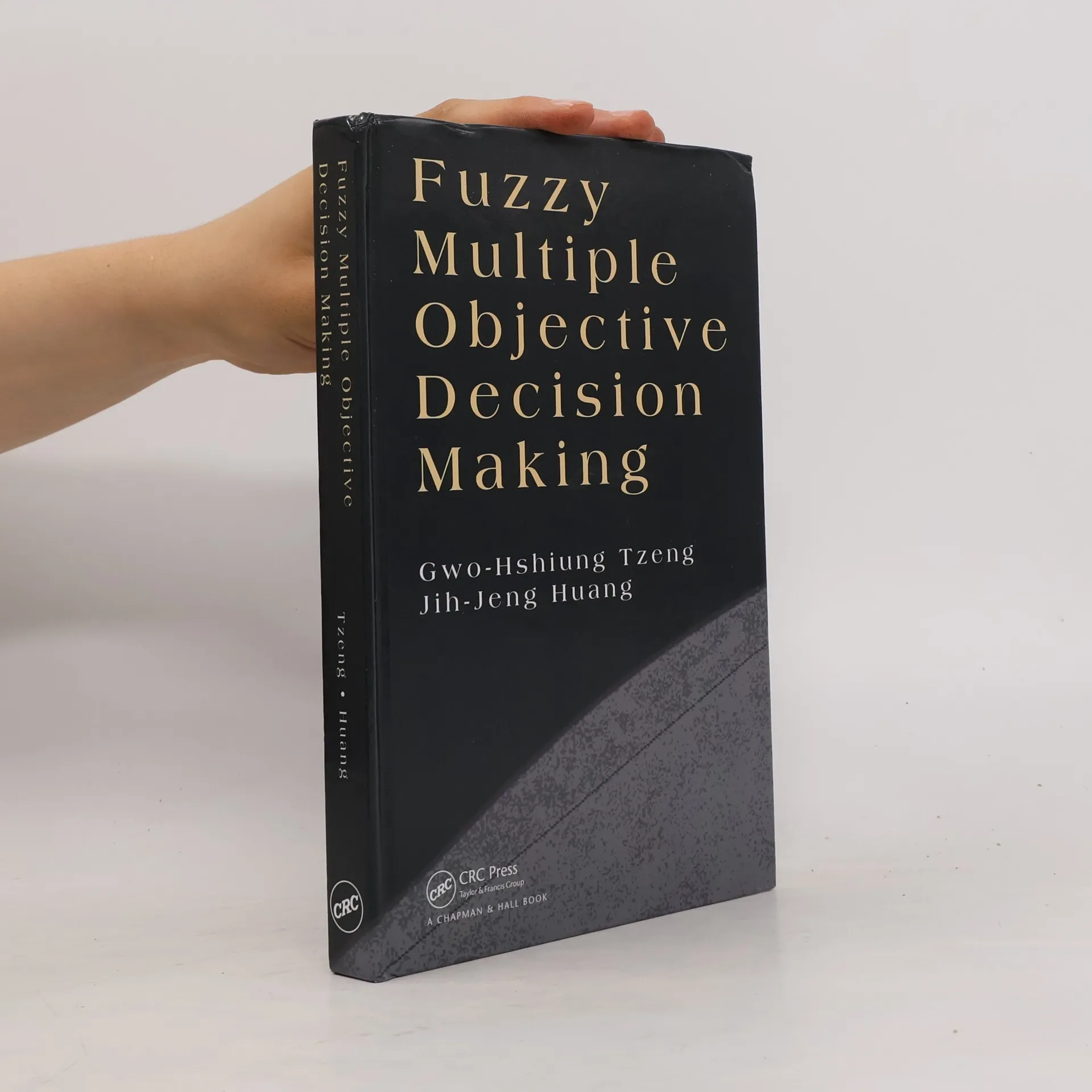
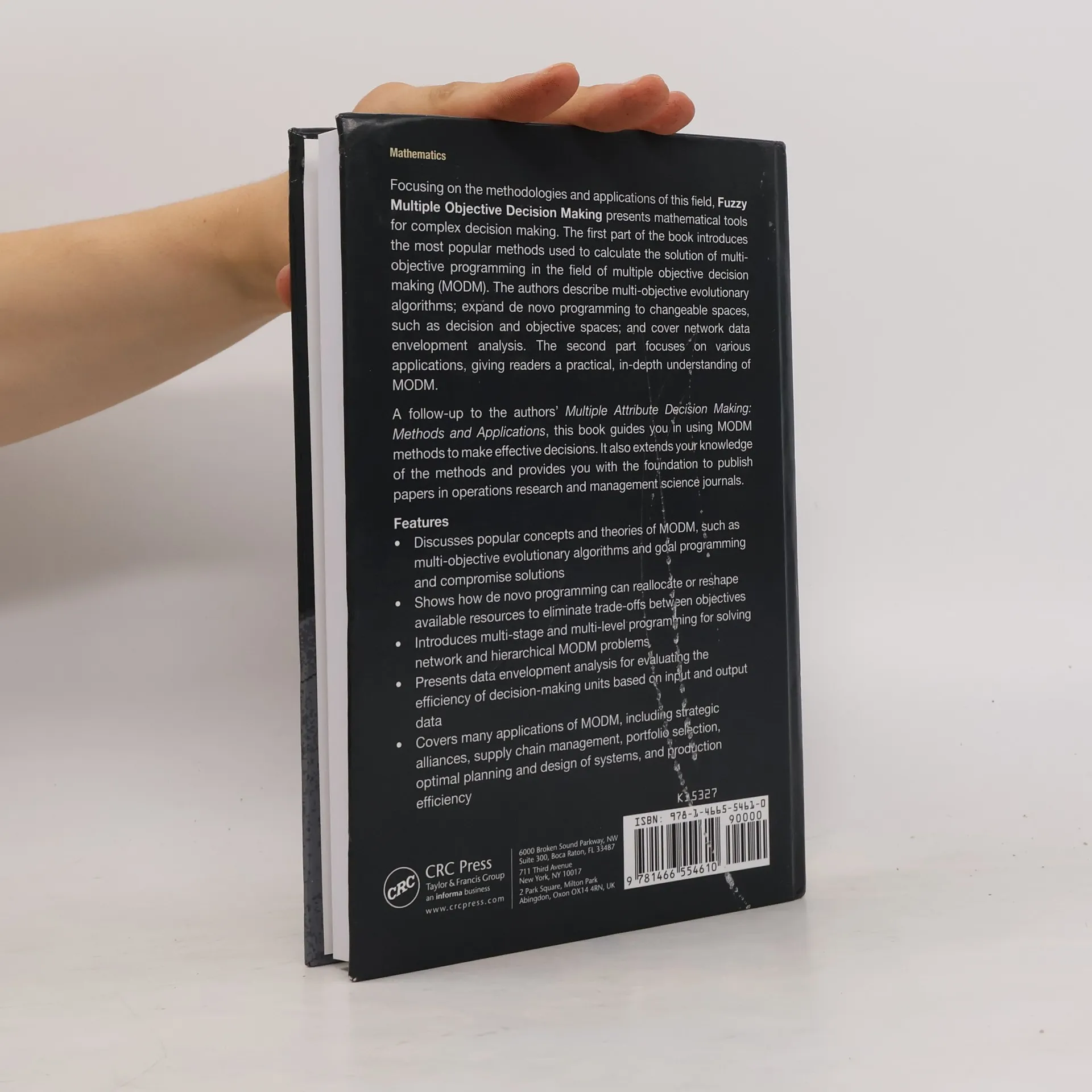
Multi-objective programming (MOP) can simultaneously optimize multi-objectives in mathematical programming models, but the optimization of multi-objectives triggers the issue of Pareto solutions and complicates the derived answers. To address these problems, researchers often incorporate the concepts of fuzzy sets and evolutionary algorithms into MOP models. Focusing on the methodologies and applications of this field, Fuzzy Multiple Objective Decision Making presents mathematical tools for complex decision making. The first part of the book introduces the most popular methods used to calculate the solution of MOP in the field of multiple objective decision making (MODM). The authors describe multi-objective evolutionary algorithms; expand de novo programming to changeable spaces, such as decision and objective spaces; and cover network data envelopment analysis. The second part focuses on various applications, giving readers a practical, in-depth understanding of MODM. A follow-up to the authors' Multiple Attribute Decision Making: Methods and Applications , this book guides practitioners in using MODM methods to make effective decisions. It also extends students' knowledge of the methods and provides researchers with the foundation to publish papers in operations research and management science journals.
Acquisto del libro
Fuzzy Multiple Objective Decision Making, Gwo-Hshiung Tzeng, Jih-Jeng Huang
- Lingua

- Pubblicato
- 2013
- Rilegatura
- (Copertina rigida)
Metodi di pagamento
Ancora nessuna valutazione.
- Titolo
- Fuzzy Multiple Objective Decision Making
- Lingua
- Inglese
- Autori
- Gwo-Hshiung Tzeng, Jih-Jeng Huang
- Editore
- Chapman and Hall/CRC
- Pubblicato
- 2013
- Formato
- Copertina rigida
- Pagine
- 322
- ISBN10
- 1466554614
- ISBN13
- 9781466554610
- Serie
- Categoria
- Descrizione
- Multi-objective programming (MOP) can simultaneously optimize multi-objectives in mathematical programming models, but the optimization of multi-objectives triggers the issue of Pareto solutions and complicates the derived answers. To address these problems, researchers often incorporate the concepts of fuzzy sets and evolutionary algorithms into MOP models. Focusing on the methodologies and applications of this field, Fuzzy Multiple Objective Decision Making presents mathematical tools for complex decision making. The first part of the book introduces the most popular methods used to calculate the solution of MOP in the field of multiple objective decision making (MODM). The authors describe multi-objective evolutionary algorithms; expand de novo programming to changeable spaces, such as decision and objective spaces; and cover network data envelopment analysis. The second part focuses on various applications, giving readers a practical, in-depth understanding of MODM. A follow-up to the authors' Multiple Attribute Decision Making: Methods and Applications , this book guides practitioners in using MODM methods to make effective decisions. It also extends students' knowledge of the methods and provides researchers with the foundation to publish papers in operations research and management science journals.