

Maggiori informazioni sul libro
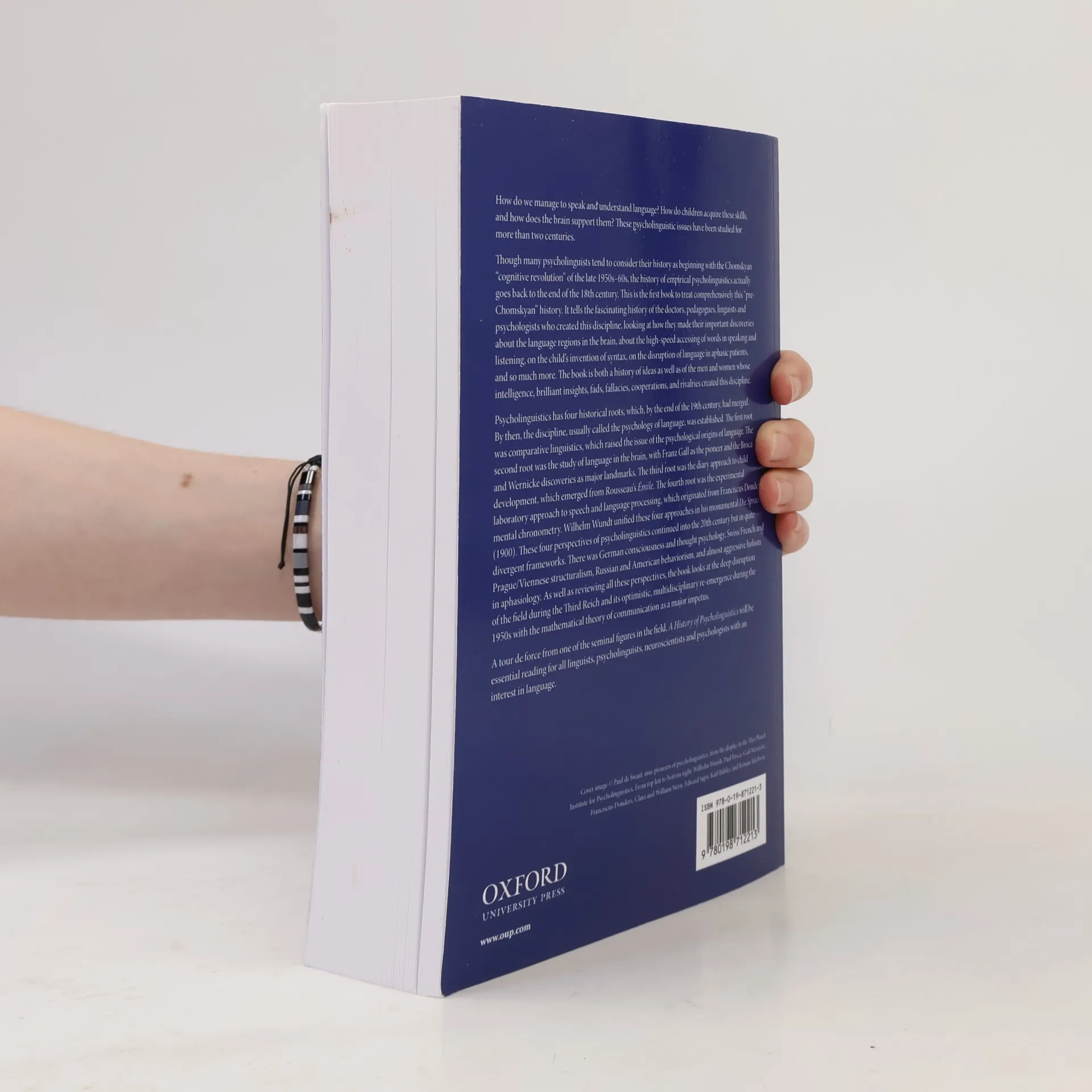
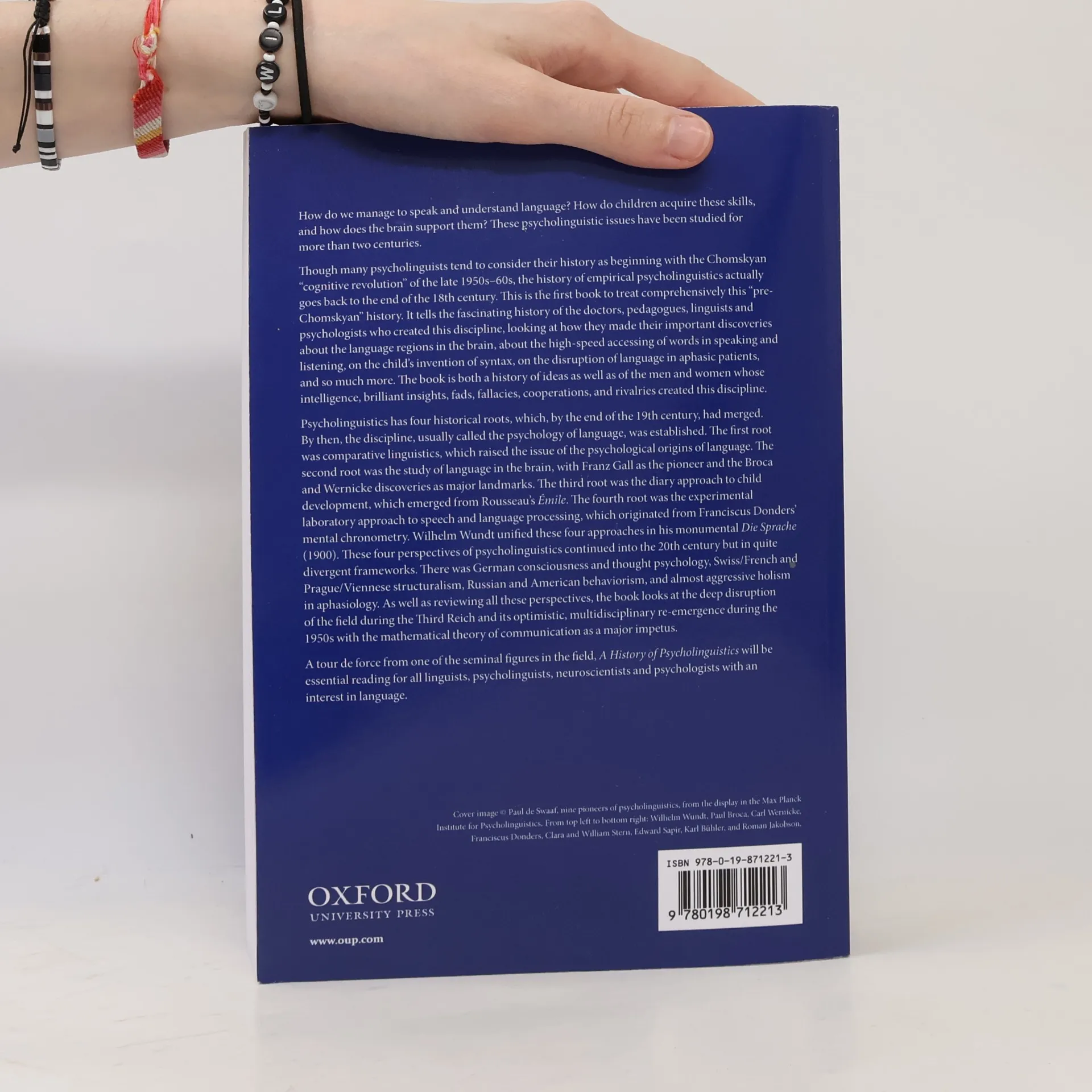
How do we manage to speak and understand language? How do children acquire these skills, and how does the brain support them? These psycholinguistic issues have been explored for over two centuries. While many Psycholinguists trace their field's origins to the Chomskyan "cognitive revolution" of the late 1950s and 1960s, empirical psycholinguistics actually dates back to the late 18th century. This book comprehensively covers this "pre-Chomskyan" history, detailing the contributions of doctors, pedagogues, linguists, and psychologists who shaped the discipline. It examines key discoveries about brain language regions, word access in speaking and listening, children's syntax invention, and language disruption in aphasia. The narrative intertwines the history of ideas with the lives of those whose insights, fads, fallacies, and rivalries contributed to the field. By the end of the 19th century, psycholinguistics had established itself, merging four historical roots: comparative linguistics, brain language studies, child development diaries, and experimental approaches to speech processing. These perspectives evolved into divergent frameworks throughout the 20th century, influenced by various psychological schools. The book also addresses the field's disruption during the Third Reich and its resurgence in the 1950s, driven by the mathematical theory of communication. This essential reading is a tour de force from a seminal figure
Acquisto del libro
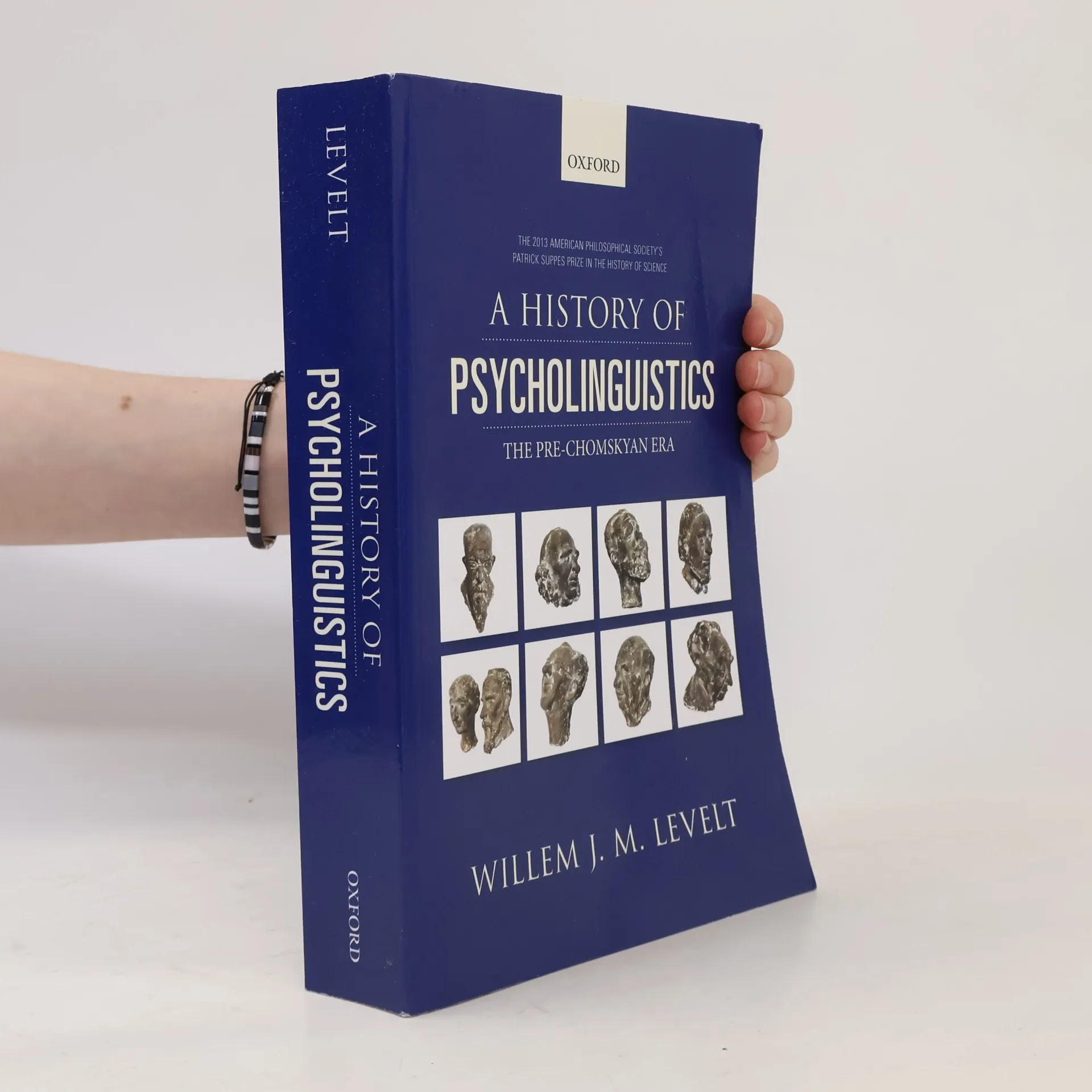
A History of Psycholinguistics, Willem J. M. Levelt
- Lingua

- Pubblicato
- 2013
- Rilegatura
- (In brossura)
Metodi di pagamento
Ancora nessuna valutazione.
- Titolo
- A History of Psycholinguistics
- Sottotitolo
- The Pre-Chomskyan Era
- Lingua
- Inglese
- Autori
- Willem J. M. Levelt
- Editore
- Oxford University Press
- Pubblicato
- 2013
- Formato
- In brossura
- Pagine
- 672
- ISBN10
- 0198712219
- ISBN13
- 9780198712213
- Serie
- Categoria
- Tag
- Tema stórico, Temi psicologici, Scienza, Linguistica, Storia della Scienza, Psicolinguistica, Psicologia sperimentale
- Descrizione
- How do we manage to speak and understand language? How do children acquire these skills, and how does the brain support them? These psycholinguistic issues have been explored for over two centuries. While many Psycholinguists trace their field's origins to the Chomskyan "cognitive revolution" of the late 1950s and 1960s, empirical psycholinguistics actually dates back to the late 18th century. This book comprehensively covers this "pre-Chomskyan" history, detailing the contributions of doctors, pedagogues, linguists, and psychologists who shaped the discipline. It examines key discoveries about brain language regions, word access in speaking and listening, children's syntax invention, and language disruption in aphasia. The narrative intertwines the history of ideas with the lives of those whose insights, fads, fallacies, and rivalries contributed to the field. By the end of the 19th century, psycholinguistics had established itself, merging four historical roots: comparative linguistics, brain language studies, child development diaries, and experimental approaches to speech processing. These perspectives evolved into divergent frameworks throughout the 20th century, influenced by various psychological schools. The book also addresses the field's disruption during the Third Reich and its resurgence in the 1950s, driven by the mathematical theory of communication. This essential reading is a tour de force from a seminal figure