




Maggiori informazioni sul libro
Psychologists and economists often explore similar questions about human behavior, yet their differing methodologies have hindered collaborative research. This volume features contributions from leading experts in both fields, addressing their distinct approaches. Psychologists critique the formalism in economic modeling, while economists lament the lack of a cohesive psychological framework. Additionally, the absence of a unified vocabulary complicates communication between the disciplines. The editors advocate for leveraging the strengths of both fields: psychologists' experimental skills and understanding of emotions, alongside economists' expertise in normative frameworks. The contributions are organized around key themes in behavioral study: 1) the causes and consequences of irrational behavior; 2) the impact of information and imperfect self-knowledge on decision-making; 3) the influence of memory on current choices; 4) the relationship between time and utility, introducing new theories on anticipation and memory; and 5) guidance on conducting controlled experiments for hypothesis testing. This engaging volume serves as an excellent entry point for those interested in the intersection of economics and psychology.
Acquisto del libro
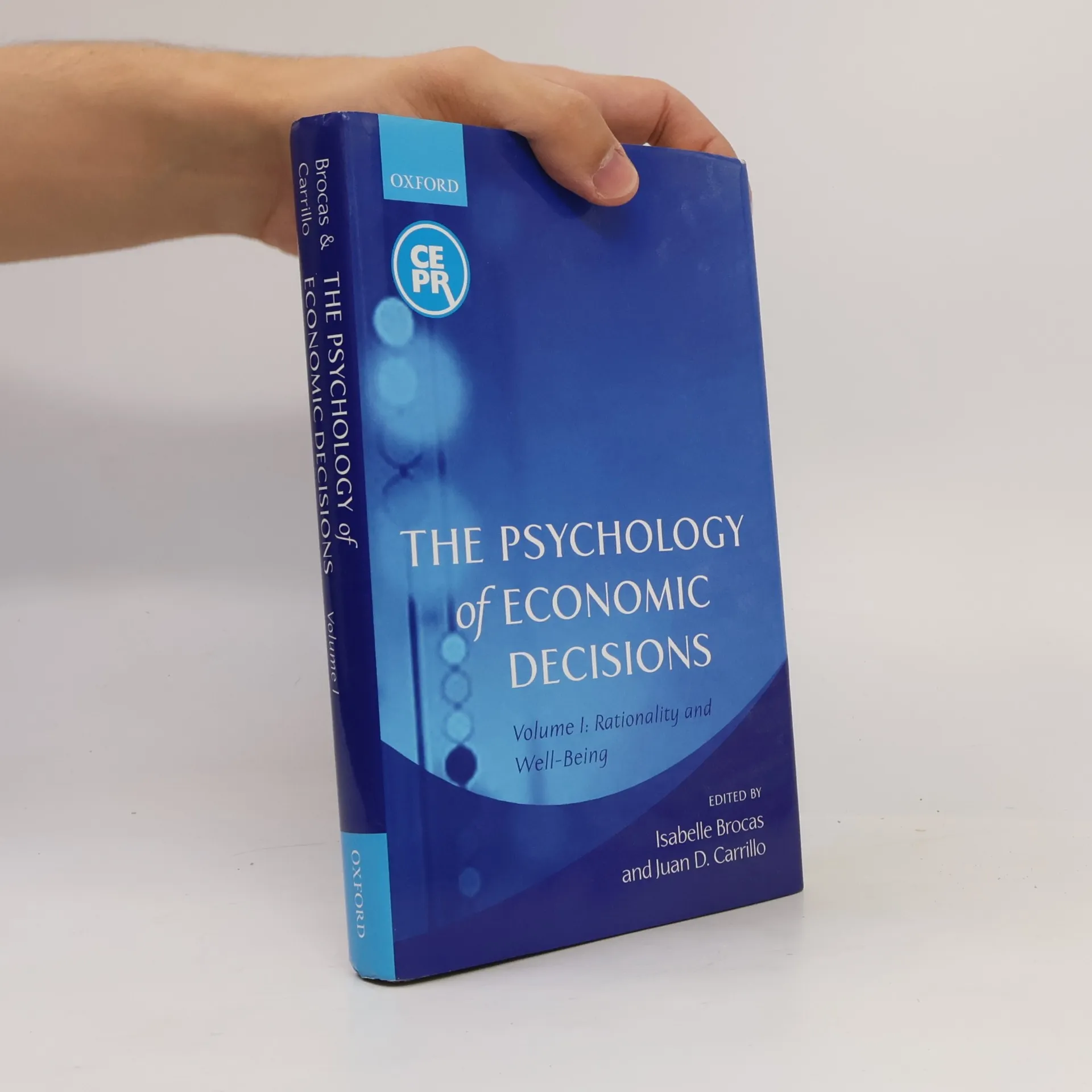
The Psychology of Economic Decisions Volume I, Isabelle Brocas, Juan D. Carrillo
- Lingua

- Pubblicato
- 2003
- Rilegatura
- (Copertina rigida),
- Condizioni del libro
- In buone condizioni
- Prezzo
- 15,99 €
Metodi di pagamento
Ancora nessuna valutazione.
- Titolo
- The Psychology of Economic Decisions Volume I
- Sottotitolo
- Rationality and Well-Being
- Lingua
- Inglese
- Autori
- Isabelle Brocas, Juan D. Carrillo
- Editore
- Oxford University Press
- Pubblicato
- 2003
- Formato
- Copertina rigida
- ISBN10
- 0199251061
- ISBN13
- 9780199251063
- Serie
- Categoria
- Descrizione
- Psychologists and economists often explore similar questions about human behavior, yet their differing methodologies have hindered collaborative research. This volume features contributions from leading experts in both fields, addressing their distinct approaches. Psychologists critique the formalism in economic modeling, while economists lament the lack of a cohesive psychological framework. Additionally, the absence of a unified vocabulary complicates communication between the disciplines. The editors advocate for leveraging the strengths of both fields: psychologists' experimental skills and understanding of emotions, alongside economists' expertise in normative frameworks. The contributions are organized around key themes in behavioral study: 1) the causes and consequences of irrational behavior; 2) the impact of information and imperfect self-knowledge on decision-making; 3) the influence of memory on current choices; 4) the relationship between time and utility, introducing new theories on anticipation and memory; and 5) guidance on conducting controlled experiments for hypothesis testing. This engaging volume serves as an excellent entry point for those interested in the intersection of economics and psychology.