



Parametri
- 551pagine
- 20 ore di lettura
Maggiori informazioni sul libro
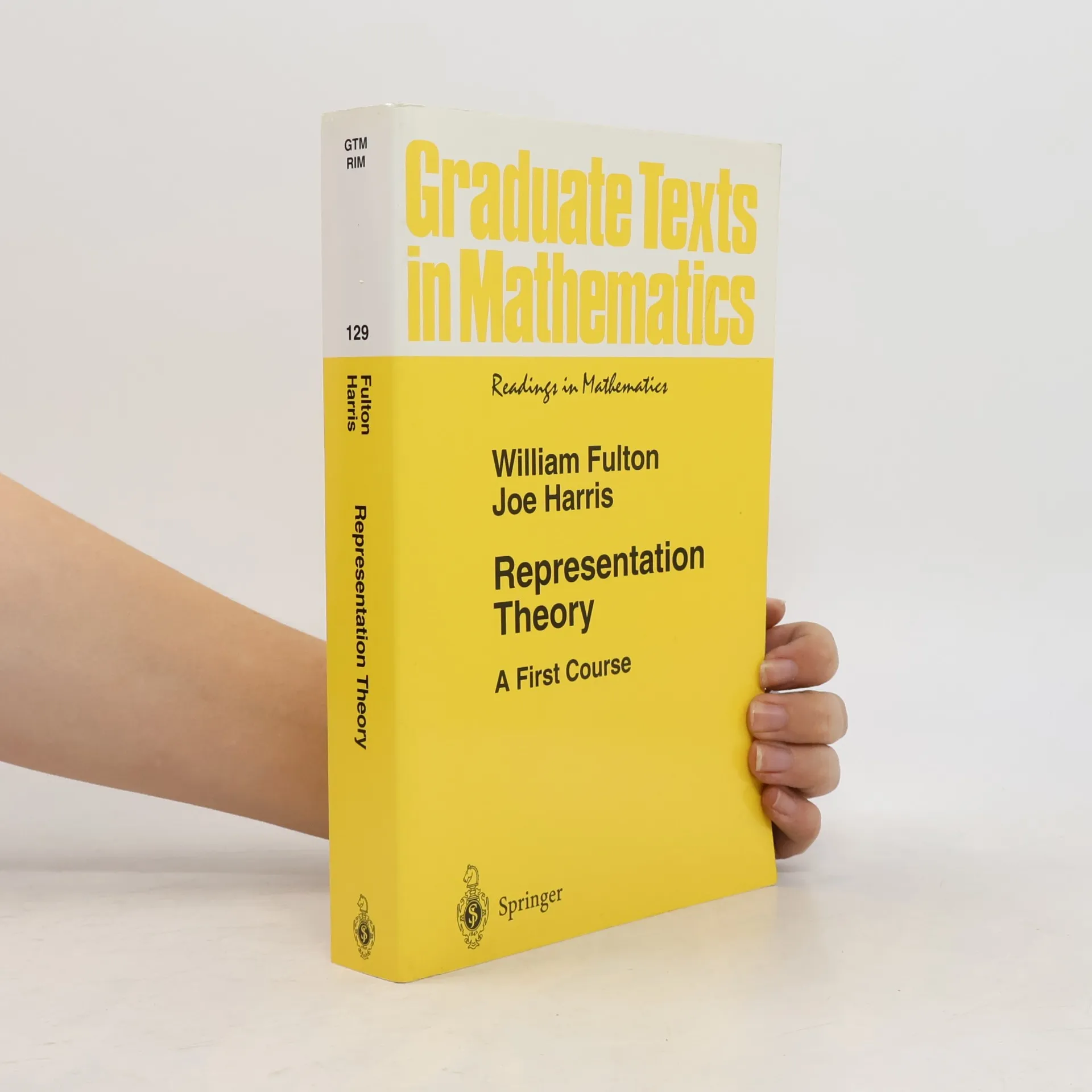
The primary goal of these lectures is to introduce a beginner to the finite-dimensional representations of Lie groups and Lie algebras. Intended to serve non-specialists, the concentration of the text is on examples. The general theory is developed sparingly, and then mainly as useful and unifying language to describe phenomena already encountered in concrete cases. The book begins with a brief tour through representation theory of finite groups, with emphasis determined by what is useful for Lie groups. The focus then turns to Lie groups and Lie algebras and finally to the heart of the course: working out the finite dimensional representations of the classical groups. The goal of the last portion of the book is to make a bridge between the example-oriented approach of the earlier parts and the general theory.
Acquisto del libro
Representation Theory, William Fulton, Joe Harris
- Lingua

- Pubblicato
- 1991
- Rilegatura
- (In brossura)
Metodi di pagamento
Ancora nessuna valutazione.
- Titolo
- Representation Theory
- Sottotitolo
- A First Course
- Lingua
- Inglese
- Autori
- William Fulton, Joe Harris
- Editore
- Springer
- Pubblicato
- 1991
- Formato
- In brossura
- Pagine
- 551
- ISBN10
- 0387974954
- ISBN13
- 9780387974958
- Serie
- Descrizione
- The primary goal of these lectures is to introduce a beginner to the finite-dimensional representations of Lie groups and Lie algebras. Intended to serve non-specialists, the concentration of the text is on examples. The general theory is developed sparingly, and then mainly as useful and unifying language to describe phenomena already encountered in concrete cases. The book begins with a brief tour through representation theory of finite groups, with emphasis determined by what is useful for Lie groups. The focus then turns to Lie groups and Lie algebras and finally to the heart of the course: working out the finite dimensional representations of the classical groups. The goal of the last portion of the book is to make a bridge between the example-oriented approach of the earlier parts and the general theory.