



Maggiori informazioni sul libro
AWS Lambda enables the rapid development and execution of applications on the AWS cloud, automatically running code in response to events. It simplifies back-end tasks, such as generating thumbnails or processing mobile app requests, while eliminating the need to manage scalability and availability. Each interaction between resources can trigger an event processed in near real-time by a Lambda-hosted function. This event-driven model allows developers to concentrate on creating unique features without worrying about infrastructure management. AWS Lambda encourages a reactive architecture by dividing applications into small functions, making it ideal for adopting microservices. The tutorial provides an example-driven approach to building event-driven applications. It begins with an overview of AWS Lambda's functionality and progresses to exposing functions as web APIs using Amazon API Gateway. After covering security considerations, the book presents common examples and patterns for invoking Lambda functions from web pages or mobile apps. The latter part of the book integrates these smaller examples into larger applications. It also explores how AWS Lambda can manage AWS resources, respond to notifications from other services, and deploy additional Lambda functions, fostering a new type of Continuous Integration. By the end, readers will be equipped to leverage AWS Lambda for high availability, security, performance, and scala
Acquisto del libro
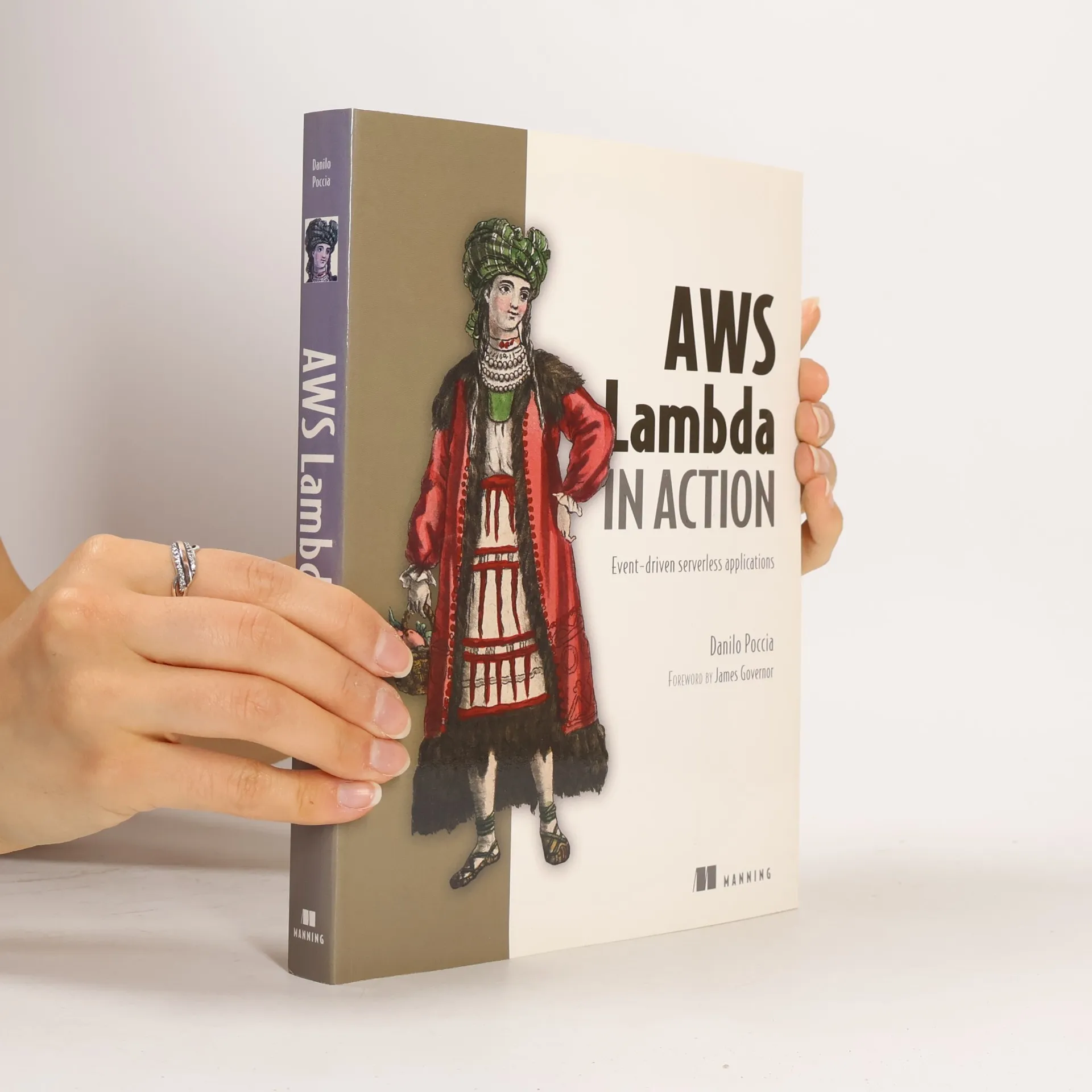
AWS Lambda in Action, Danilo Poccia, James Governor
- Lingua

- Pubblicato
- 2016
- Rilegatura
- (In brossura),
- Condizioni del libro
- In ottime condizioni
- Prezzo
- 6,89 €
Metodi di pagamento
Ancora nessuna valutazione.
- Titolo
- AWS Lambda in Action
- Sottotitolo
- Event-Driven Serverless Applications
- Lingua
- Inglese
- Autori
- Danilo Poccia, James Governor
- Editore
- Manning Publications
- Pubblicato
- 2016
- Formato
- In brossura
- Pagine
- 384
- ISBN10
- 1617293717
- ISBN13
- 9781617293719
- Serie
- Tag
- Tecnologia
- Descrizione
- AWS Lambda enables the rapid development and execution of applications on the AWS cloud, automatically running code in response to events. It simplifies back-end tasks, such as generating thumbnails or processing mobile app requests, while eliminating the need to manage scalability and availability. Each interaction between resources can trigger an event processed in near real-time by a Lambda-hosted function. This event-driven model allows developers to concentrate on creating unique features without worrying about infrastructure management. AWS Lambda encourages a reactive architecture by dividing applications into small functions, making it ideal for adopting microservices. The tutorial provides an example-driven approach to building event-driven applications. It begins with an overview of AWS Lambda's functionality and progresses to exposing functions as web APIs using Amazon API Gateway. After covering security considerations, the book presents common examples and patterns for invoking Lambda functions from web pages or mobile apps. The latter part of the book integrates these smaller examples into larger applications. It also explores how AWS Lambda can manage AWS resources, respond to notifications from other services, and deploy additional Lambda functions, fostering a new type of Continuous Integration. By the end, readers will be equipped to leverage AWS Lambda for high availability, security, performance, and scala