

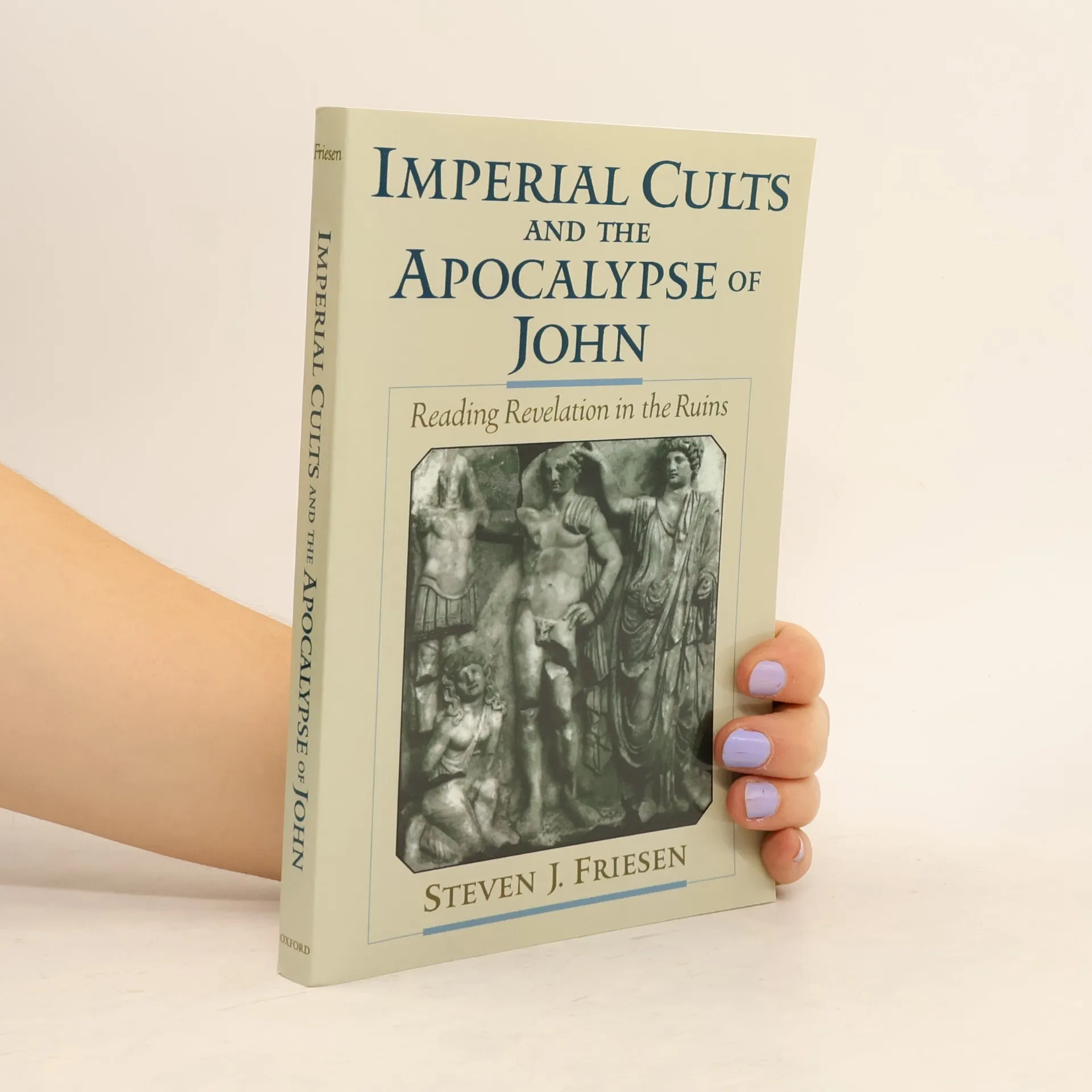


Imperial Cults and the Apocalypse of John
Reading Revelation in the Ruins
Autori
Maggiori informazioni sul libro
After more than a century of debate about the significance of imperial cults for the interpretation of Revelation, this is the first study to examine both the archaeological evidence and the Biblical text in depth. Friesen argues that a detailed analysis of imperial cults as they were practiced in the first century CE in the region where John was active allows us to understand John's criticism of his society's dominant values. He demonstrates the importance of imperial cults for society at the time when Revelation was written, and shows the ways in which John refuted imperial cosmology through his use of vision, myth, and eschatological expectation.
Acquisto del libro
Imperial Cults and the Apocalypse of John, Steven J. Friesen
- Lingua

- Pubblicato
- 2001
- Rilegatura
- (In brossura)
Metodi di pagamento
Ancora nessuna valutazione.
- Titolo
- Imperial Cults and the Apocalypse of John
- Sottotitolo
- Reading Revelation in the Ruins
- Lingua
- Inglese
- Autori
- Steven J. Friesen
- Editore
- Oxford University Press
- Pubblicato
- 2001
- Formato
- In brossura
- Pagine
- 304
- ISBN10
- 0195188217
- ISBN13
- 9780195188219
- Serie
- Tag
- Tema stórico, Temi religiosi, Temi cristiani, Teologia, Tempi antichi, Etica, Roma, Nuovo Testamento, Settori e Culto
- Descrizione
- After more than a century of debate about the significance of imperial cults for the interpretation of Revelation, this is the first study to examine both the archaeological evidence and the Biblical text in depth. Friesen argues that a detailed analysis of imperial cults as they were practiced in the first century CE in the region where John was active allows us to understand John's criticism of his society's dominant values. He demonstrates the importance of imperial cults for society at the time when Revelation was written, and shows the ways in which John refuted imperial cosmology through his use of vision, myth, and eschatological expectation.