

Maggiori informazioni sul libro
This comprehensive textbook emphasizes the difference between models and the physical signals and systems they represent. Beginning with continuous-time topics and progressing to discrete-time materials, yet flexible for courses that treat them in parallel, Signals, Systems, and Transforms: introduces signals and systems and describes several physical continuous-time and discrete-time systems; covers the Fourier series, the Fourier transform for continuous-time signals and systems, the Laplace transform, and state variables for continuous-time systems; develops the z-transform with the discrete-time Fourier transform and the discrete Fourier transform, and gives state variables for discrete-time systems. In addition, the authors integrate the software tool MATLAB as much as possible in examples and homework problems.
Acquisto del libro
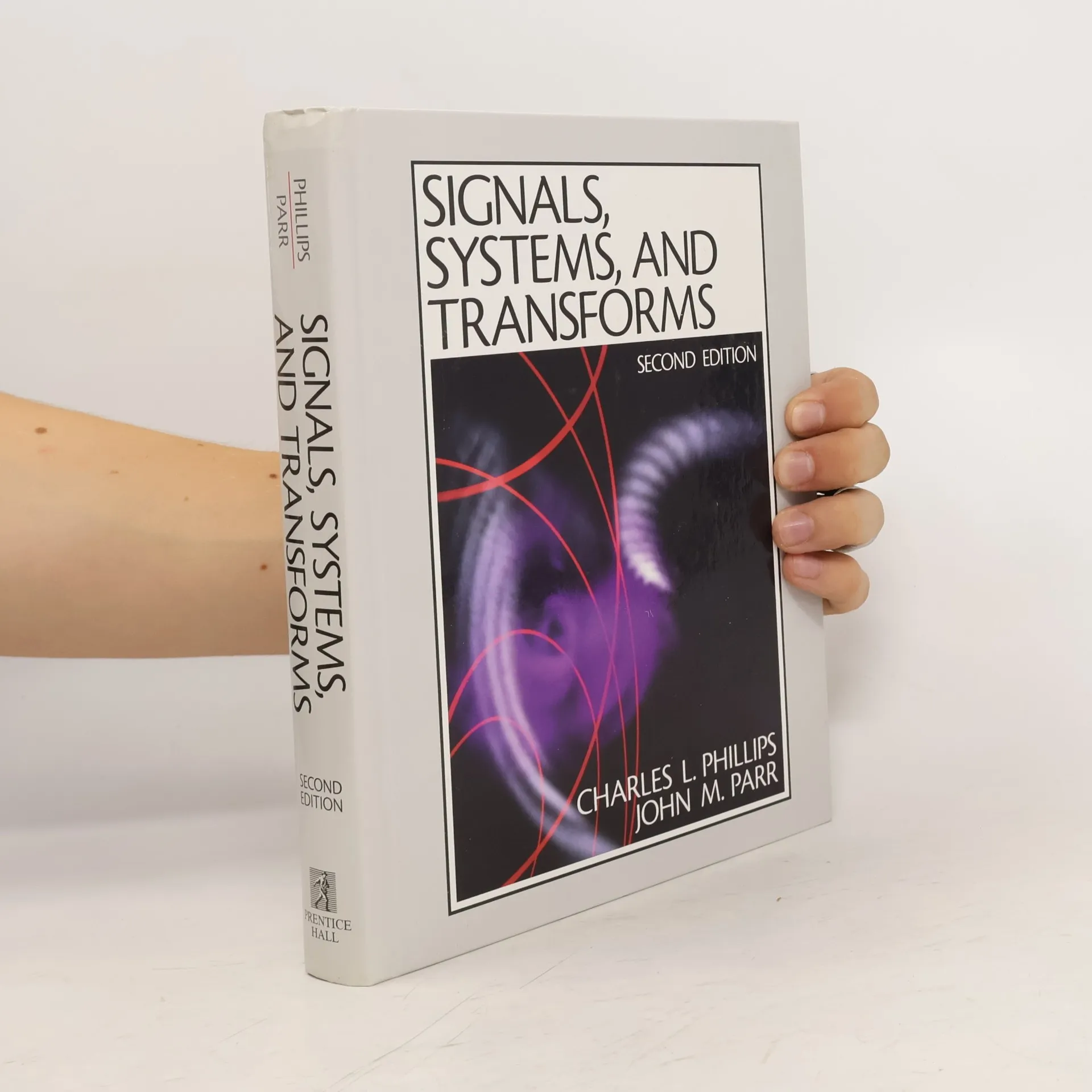
Signals, Systems and Transforms - Second Edition, Charles L. Phillips, John M. Parr
- Lingua

- Pubblicato
- 1999
- Rilegatura
- (Copertina rigida)
Metodi di pagamento
Ancora nessuna valutazione.
- Titolo
- Signals, Systems and Transforms - Second Edition
- Lingua
- Inglese
- Autori
- Charles L. Phillips, John M. Parr
- Editore
- Prentice Hall
- Pubblicato
- 1999
- Formato
- Copertina rigida
- Pagine
- 688
- ISBN10
- 0130953229
- ISBN13
- 9780130953223
- Serie
- Descrizione
- This comprehensive textbook emphasizes the difference between models and the physical signals and systems they represent. Beginning with continuous-time topics and progressing to discrete-time materials, yet flexible for courses that treat them in parallel, Signals, Systems, and Transforms: introduces signals and systems and describes several physical continuous-time and discrete-time systems; covers the Fourier series, the Fourier transform for continuous-time signals and systems, the Laplace transform, and state variables for continuous-time systems; develops the z-transform with the discrete-time Fourier transform and the discrete Fourier transform, and gives state variables for discrete-time systems. In addition, the authors integrate the software tool MATLAB as much as possible in examples and homework problems.