



Maggiori informazioni sul libro
There is a great deal of current philosophical and scientific interest in emotional feelings. However, many of the feelings that people struggle to express in their everyday lives do not appear on standard lists of emotions. For example, there are feelings of unreality, heightened existence, surreality, familiarity, unfamiliarity, estrangement, strangeness, isolation, emptiness, belonging, being at home in the world, being at one with things, significance, insignificance, and the list goes on. Such feelings might be referred to as 'existential' because they comprise a changeable sense of being part of a world. Existential feelings have not been systematically explored until now, despite the important role that they play in our lives and the devastating effects that disturbances of existential feeling can have in psychiatric illness.Feelings of Being is the first ever philosophical account of the nature, role and variety of existential feelings in psychiatric illness and in everyday life. In this book, Matthew Ratcliffe proposes that existential feelings form a distinctive group by virtue of three characteristics: they are bodily feelings, they constitute ways of relating to the world as a whole, and they are responsible for our sense of reality. The book explains how something can be a bodily feeling and, at the same time, a sense of reality and belonging. It then explores the role of changed feeling in psychiatric illness, showing how an account of existential feeling can help us to understand experiential changes that occur in a range of conditions, including depression, circumscribed delusions, depersonalisation and schizophrenia. The book also addresses the contribution made by existential feelings to religious experience and to philosophical thought.Written in a clear, non-technical style throughout, it will be valuable for philosophers, clinicians, students, and researchers working in a wide range of disciplines.
Acquisto del libro
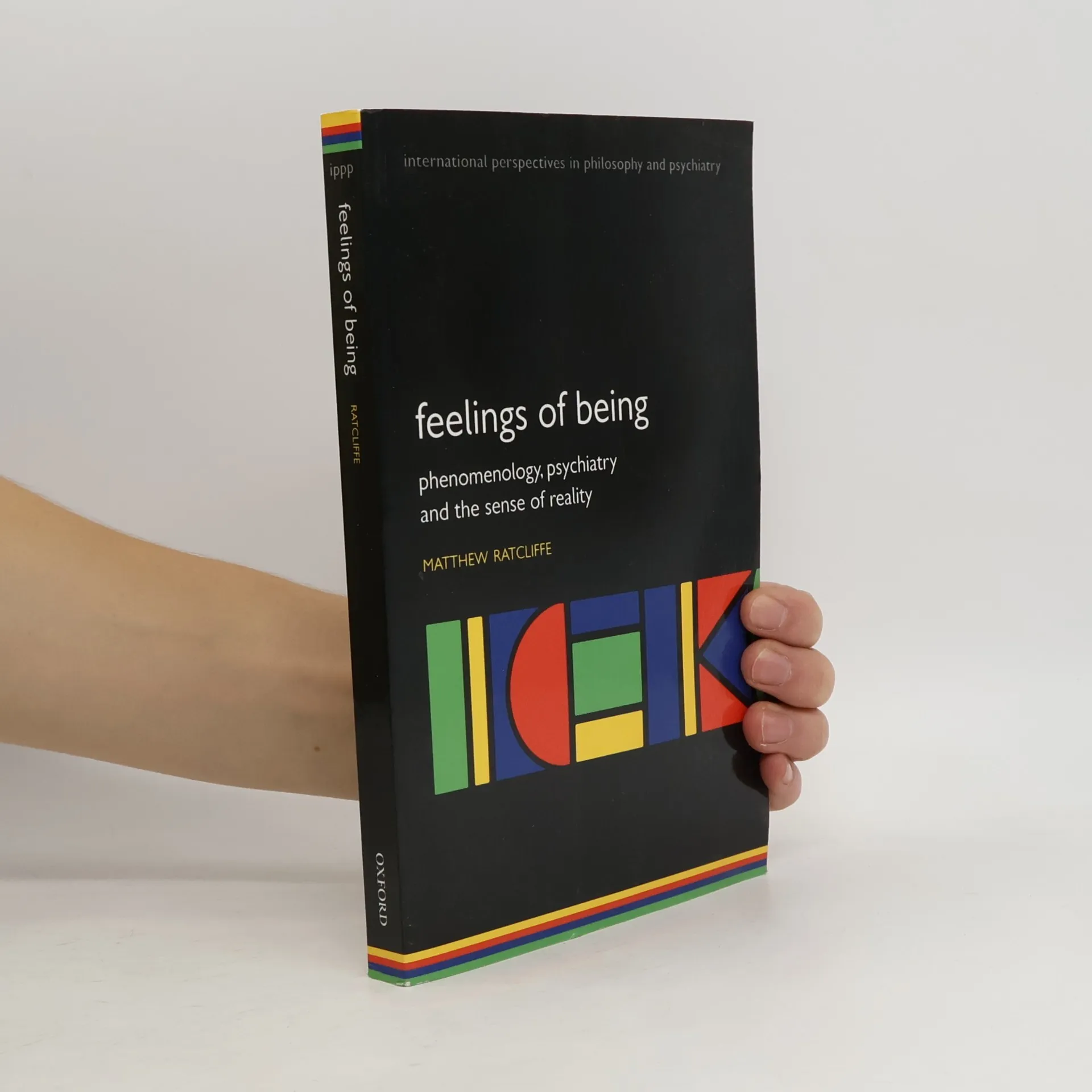
International Perspectives in Philosophy and Psychiatry: Feelings of Being, Matthew Ratcliffe
- Lingua

- Pubblicato
- 2008
- Rilegatura
- (In brossura),
- Condizioni del libro
- In buone condizioni
- Prezzo
- 55,99 €
Metodi di pagamento
Ancora nessuna valutazione.
- Titolo
- International Perspectives in Philosophy and Psychiatry: Feelings of Being
- Sottotitolo
- Phenomenology, Psychiatry and the Sense of Reality
- Lingua
- Inglese
- Autori
- Matthew Ratcliffe
- Editore
- Oxford University Press
- Pubblicato
- 2008
- Formato
- In brossura
- Pagine
- 309
- ISBN10
- 0199206465
- ISBN13
- 9780199206469
- Serie
- Tag
- Temi psicologici, Manuali e guide, Tematica filosofica, Medicina, Emozioni, Psichiatria, Disturbi Mentali, Esistenzialismo, Fenomenologia
- Descrizione
- There is a great deal of current philosophical and scientific interest in emotional feelings. However, many of the feelings that people struggle to express in their everyday lives do not appear on standard lists of emotions. For example, there are feelings of unreality, heightened existence, surreality, familiarity, unfamiliarity, estrangement, strangeness, isolation, emptiness, belonging, being at home in the world, being at one with things, significance, insignificance, and the list goes on. Such feelings might be referred to as 'existential' because they comprise a changeable sense of being part of a world. Existential feelings have not been systematically explored until now, despite the important role that they play in our lives and the devastating effects that disturbances of existential feeling can have in psychiatric illness.Feelings of Being is the first ever philosophical account of the nature, role and variety of existential feelings in psychiatric illness and in everyday life. In this book, Matthew Ratcliffe proposes that existential feelings form a distinctive group by virtue of three characteristics: they are bodily feelings, they constitute ways of relating to the world as a whole, and they are responsible for our sense of reality. The book explains how something can be a bodily feeling and, at the same time, a sense of reality and belonging. It then explores the role of changed feeling in psychiatric illness, showing how an account of existential feeling can help us to understand experiential changes that occur in a range of conditions, including depression, circumscribed delusions, depersonalisation and schizophrenia. The book also addresses the contribution made by existential feelings to religious experience and to philosophical thought.Written in a clear, non-technical style throughout, it will be valuable for philosophers, clinicians, students, and researchers working in a wide range of disciplines.