
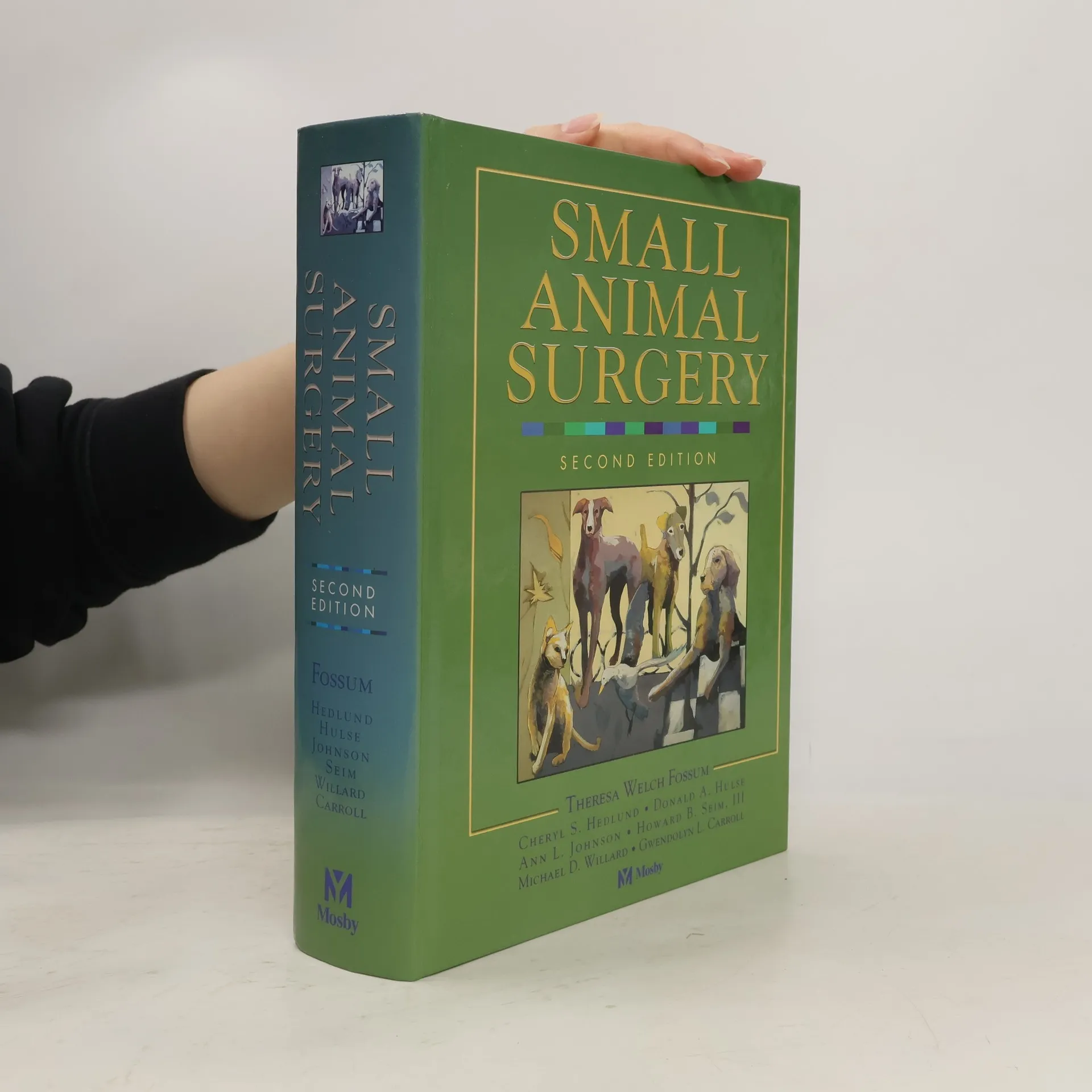
The fourth edition of Small Animal Surgery serves as a one-stop resource for authoritative information on all aspects of small animal surgery. Coverage includes basic procedures such as spays, castrations, and declaws, as well as more advanced surgeries like craniotomy, ventral slots, and lung lobectomy. New contributors bring a fresh perspective and discuss the latest advances in key areas such as imaging modalities, regenerative medicine, minimally invasive surgery, and neurology. Access to a companion website provides a fully searchable version of the book, bi-monthly content updates, videos, aftercare instructions, case presentations, and a fracture planner.
Heres a handy reference that provides the most salient information students and practitioners need to know about common surgeries. Following the text chapter by chapter and providing page cross references to corresponding sections in the parent text, the manual is largely in outline form, supplemented with over 100 summary tables. Content emphasis will be primarily on general considerations for preoperative, intraoperative, and postoperative care.* Includes hundreds of tables and boxes, highlighting important information. * Provides page cross references to corresponding sections in parent text for more in-depth discussion of anatomy, pathophysiology and surgical variations. * Presents specific disorders with discussions of assessment, diagnosis, medical management and surgical treatment. * Emphasizes general considerations for preoperative, intraoperative, and postoperative care, Definitions, Preoperative concerns, Anesthetic considerations, Antibiotics, Surgical anatomy considerations, General techniques used, Wound healing, Suture materials/instruments, Postoperative care, Complications, Age and breed considerations * Includes anesthesia and drug protocols highlighted throughout for easy access.
This widely used surgical text concisely explains and demonstrates common surgical procedures in veterinary practice. It covers general surgical principles such as asepsis, the surgical environment, patient and team preparation, instrumentation, suturing, postoperative care, and pain management. Five new chapters on endoscopy address essential principles and techniques for this popular procedure, alongside new sections on brain and peripheral nerve surgery. The book is organized into distinct areas focusing on soft tissue, orthopedics, and neurology.
It offers concise treatment of over 300 frequently performed surgical procedures and a strong foundation in key surgical principles. Detailed techniques are illustrated in color for practical use in the operating room, complemented by over 1500 illustrations and photographs—75% in full color. Over 1000 boxed notes highlight key concepts, while hundreds of color-coded tables provide quick access to vital information, including formulas, clinical signs, and special surgical considerations.
The text integrates patient and owner preparation with ethical considerations and emphasizes age-related variations in treatment for pediatric and geriatric patients. New sections cover endoscopy, brain surgery, peripheral nerve surgery, and ophthalmologic procedures. Updated pharmacologic information, including protocols for antibiotics, anesthesia, and pain management, is included, along wit