
This seminal study explores the financial condition of two of New England's most important railroads at the beginning of the 20th century. Written by future Supreme Court Justice Louis Brandeis and his sister Susan, this work reveals the inner workings of the railroad industry and sheds light on the financial practices that led to the Panic of 1907. A must-read for anyone interested in financial history or the history of American railroads.
Louis Dembitz Brandeis Ordine dei libri
Louis D. Brandeis fu un avvocato americano e riformatore sociale progressista, acclamato come "l'Avvocato del Popolo" per il suo servizio pubblico pro bono. Il suo lavoro su cause sociali progressiste ha aperto la strada al concetto di "diritto alla privacy" e ha alimentato la sua lotta contro potenti corporazioni e monopoli, che riteneva dannosi per i valori americani. Brandeis difese con fervore la libertà di parola e i diritti alla privacy, stabilendo significativi precedenti nel campo legale.


- 2023
- 2023
The People of New York, Respondent, Against Charles Schweinler Press, a Corporation, Defendant
- 476pagine
- 17 ore di lettura
A legal commentary by Supreme Court Justice Louis Brandeis on the intersection of freedom of press and state regulations in a landmark case in the history of American media law.
- 2023
Fatigue and Efficiency: A Study in Industry
- 364pagine
- 13 ore di lettura
Goldmark and Brandeis's groundbreaking study of worker productivity and fatigue is a seminal work in the field of labor studies. Their analysis of the relationship between working conditions, rest, and efficiency offers valuable insights for both workers and employers alike.
- 2022
Brandeis on Zionism
A Collection of Addresses and Statements by Louis D. Brandeis [1942]
- 166pagine
- 6 ore di lettura
Exploring the ethical implications and global significance of Zionism, this work delves into its role as a moral symbol in contemporary society. It examines the historical roots and cultural narratives that shape Zionist identity, highlighting its impact on Jewish communities worldwide. The author articulates the philosophical underpinnings of Zionism, addressing both its achievements and challenges, while advocating for a nuanced understanding of its meaning in the modern context. The book serves as a comprehensive analysis of Zionism's moral dimensions and its relevance today.
- 2022
Scientific Management and Railroads
- 102pagine
- 4 ore di lettura
Focusing on the history and culture of railroading, this collection features pre-1923 titles that delve into the evolution of the steam engine and the excitement of early rail travel. It highlights the transformative impact of railroads on commerce, westward expansion, and societal changes in both urban and rural settings. Researchers and enthusiasts can gain valuable insights into this pivotal element of modern industrialization, experiencing the essence of early railroading through a curated selection of historical literature.
- 2021
In this address, Louis Dembitz Brandeis discusses the abuses in the life insurance industry and proposes remedies for them. A must-read for anyone interested in life insurance, finance, and corporate responsibility.
- 2021
Business--a Profession,
- 450pagine
- 16 ore di lettura
- 2021
The Words of Justice Brandeis;
- 232pagine
- 9 ore di lettura
- 2018
Other People's Money and How the Bankers Use It
The Classic Exposure of Monetary Abuse by Banks, Trusts, Wall Street, and Predator Monopolies (Hardcover)
- 88pagine
- 4 ore di lettura
Focusing on the banking financial system, Louis Brandeis reveals its immense influence over the U.S. economy. As a renowned lawyer championing the people's rights, he delves into the complexities of banking practices and their implications for society, shedding light on the staggering control these institutions wield. Through his insights, Brandeis advocates for reform and greater accountability within the financial sector, emphasizing the need for a more equitable economic landscape.
- 2009
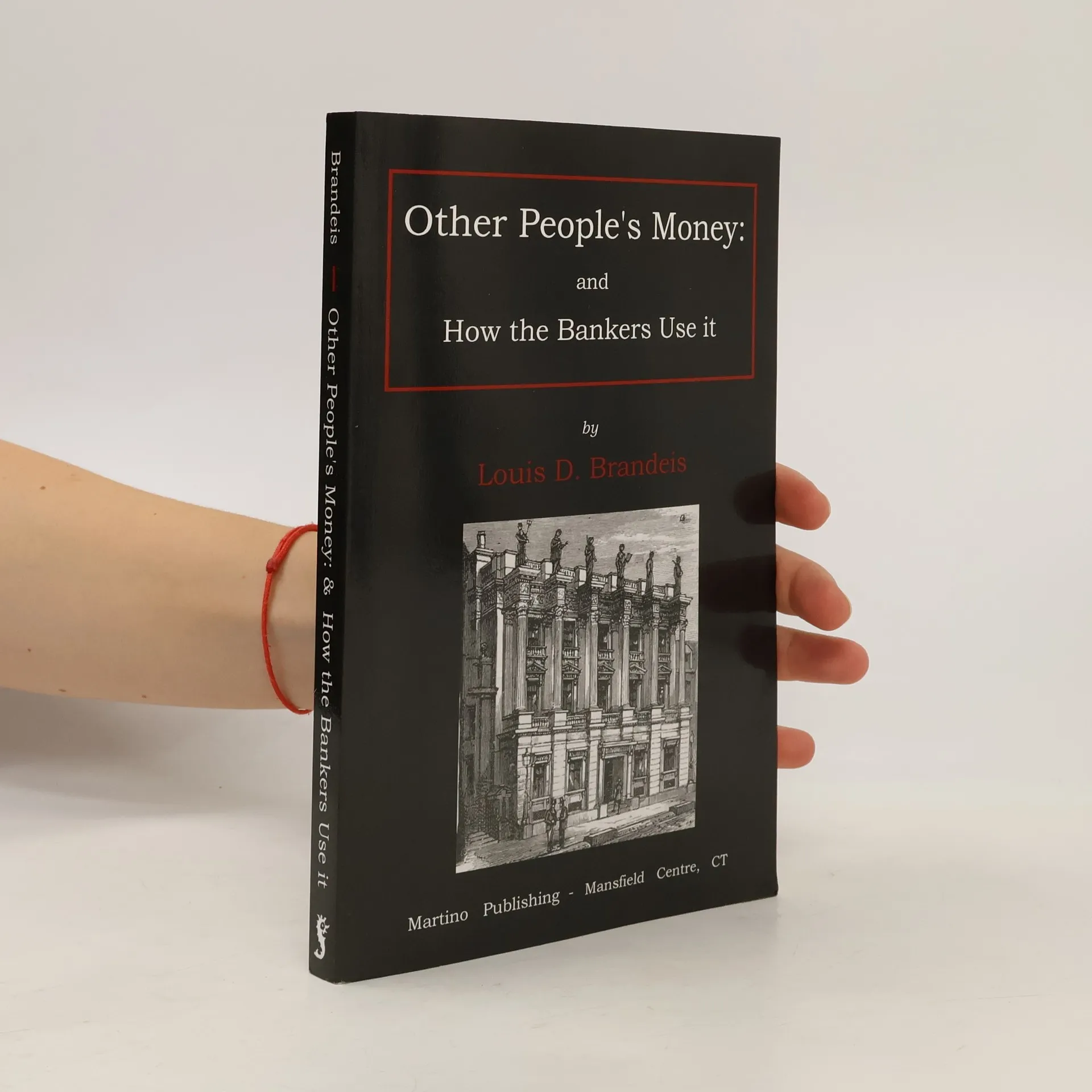
Other People's Money and How The Bankers Use It
- 94pagine
- 4 ore di lettura
The book offers a profound analysis of the money trust and its implications for American industrial development, as articulated by Louis D. Brandeis. It captures the essence of a pivotal era marked by the harnessing of steam and electricity, detailing the expansion and concentration in business that followed. Brandeis's work is recognized as a significant historical contribution, providing insights into the challenges posed by industrial concentration, which are deemed critical for future scholars to understand the complexities of contemporary economics.