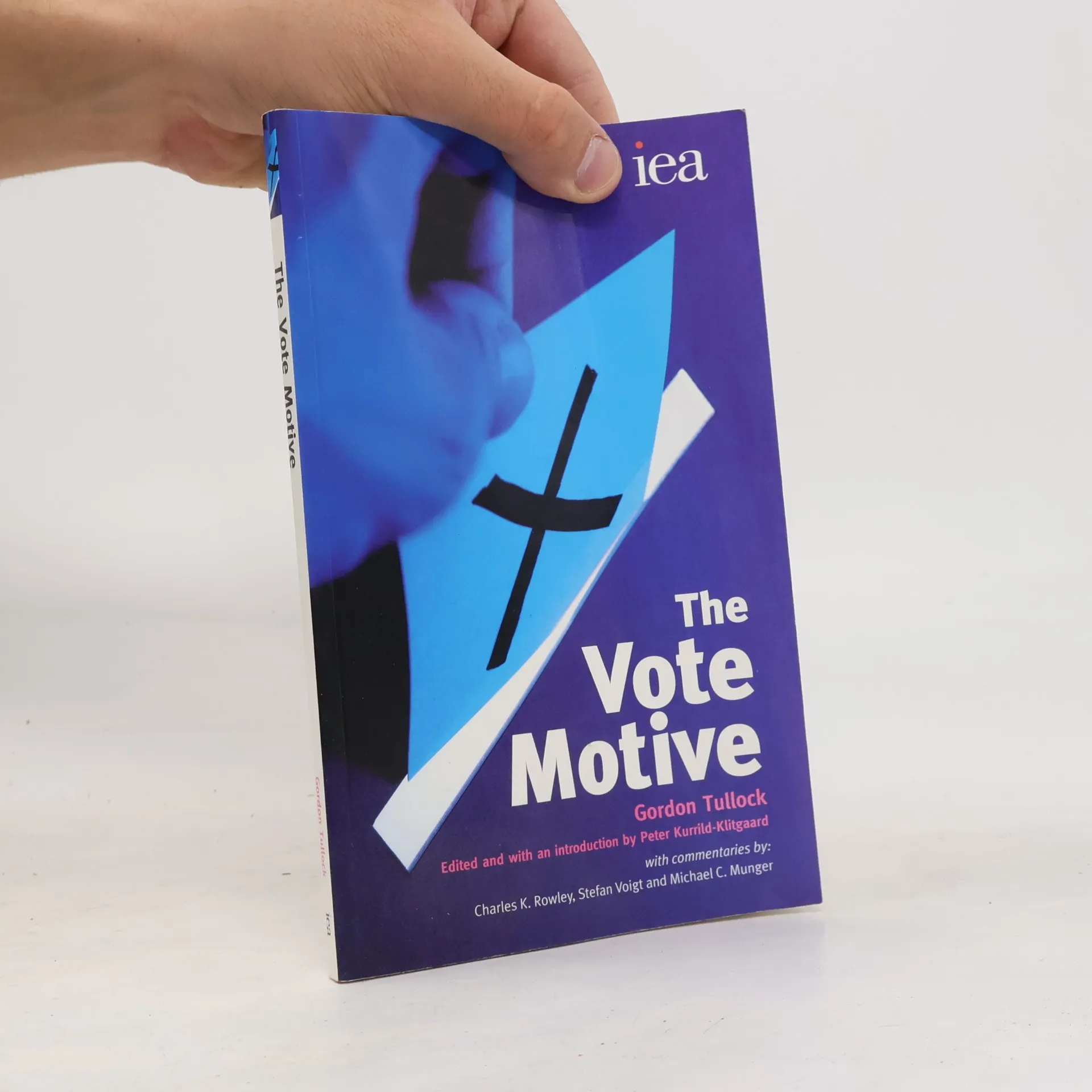
Government 'servants' can most likely be assumed to be pursuing their own interests, just like those in the private sector, although, given the coercive power of the state, the effects can be far from benign. This text analyses the motives and activities of politicians, civil servants and voters.
Editor Charles Rowley describes Gordon Tullock as “an economist by nature rather than by training.” With only a brief course in economics at the University of Chicago, Tullock is largely self-taught, allowing him to approach economic issues with an open mind and apply his intellect in an entrepreneurial way. The first volume in Liberty Fund’s The Selected Works of Gordon Tullock series features a collection of his major monographs and scholarly papers from 1954 to 2002. This inaugural volume presents a selection of Tullock’s academic papers and essays, aiming to introduce his work and highlight its intellectual significance for scholars. It opens with two pieces not authored by Tullock: a 1985 assessment by Mark Blaug, who included Tullock among the top economists since Keynes, and a recognition of Tullock as a Distinguished Fellow of the American Economic Association published in 1998. Tullock served as Professor Emeritus of Law at George Mason University, where he was a Distinguished Research Fellow and University Professor of Law and Economics. He also taught at several other institutions and founded the journal that evolved into Public Choice, serving as its editor until 1990. Charles K. Rowley, the editor, held various academic positions, including Duncan Black Professor of Economics at George Mason University.
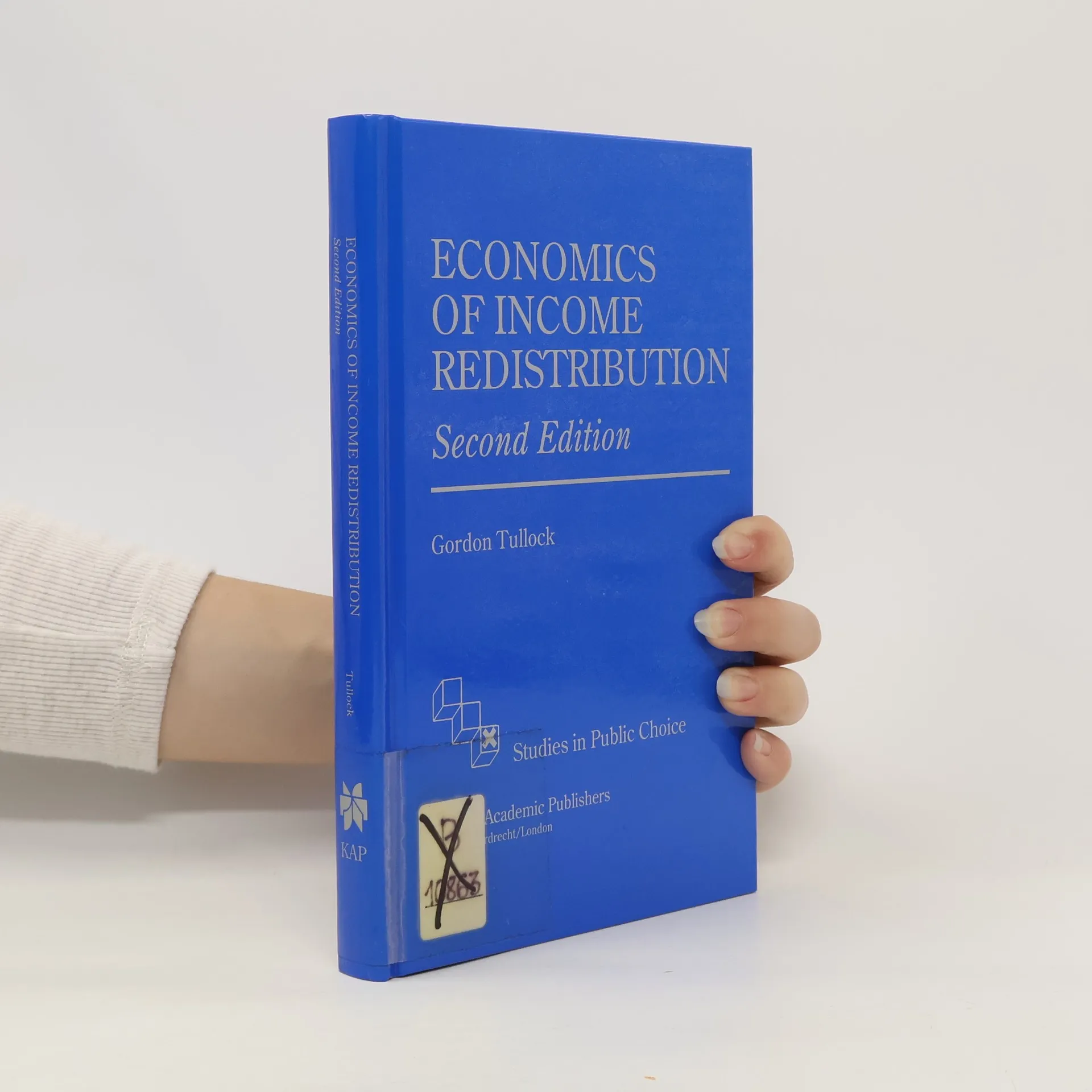
While income redistribution is one of the most important functions of modern governments, the world has changed greatly since this first edition of Economics of Income Redistribution was published in 1983. Pension systems and medical programs are in a state of crisis in many parts of the world and the general political mood is shifting away from income redistribution. Economics of Income Redistribution (2nd edition) brings this work up to date by discussing the economic and political aspects of income redistribution. It examines the classical moral objective of redistribution to assist the poor, as well as income transfer for pensions, education and intra-family gift giving.
Co-authored by Buchanan and Gordon Tullock, this classic work represents a significant shift in understanding how democracies operate. As noted by Robert D. Tollison in the foreword, it is a timeless exploration of political organization through the lens of economic principles. The authors, while acknowledging their discomfort as economists delving into political analysis, are motivated by the potential insights their perspective can provide. Their goal is to examine the rational individual's decision-making process concerning constitutional choice, focusing on decision-making rules. They introduce the concept of "economic individualism," arguing that while individual choice in market contexts has been extensively studied, the dynamics of individual decision-making in public sector group actions remain largely overlooked. Written in the early 1960s, this work has become foundational for the public choice movement, for which Buchanan is renowned. As a distinguished economist and Nobel laureate, Buchanan is recognized as one of the leading scholars of liberty in the twentieth century. The series encompasses various volumes addressing topics such as public debt, public finance, and the limits of liberty, reflecting the breadth of Buchanan's contributions to economic and political thought.