

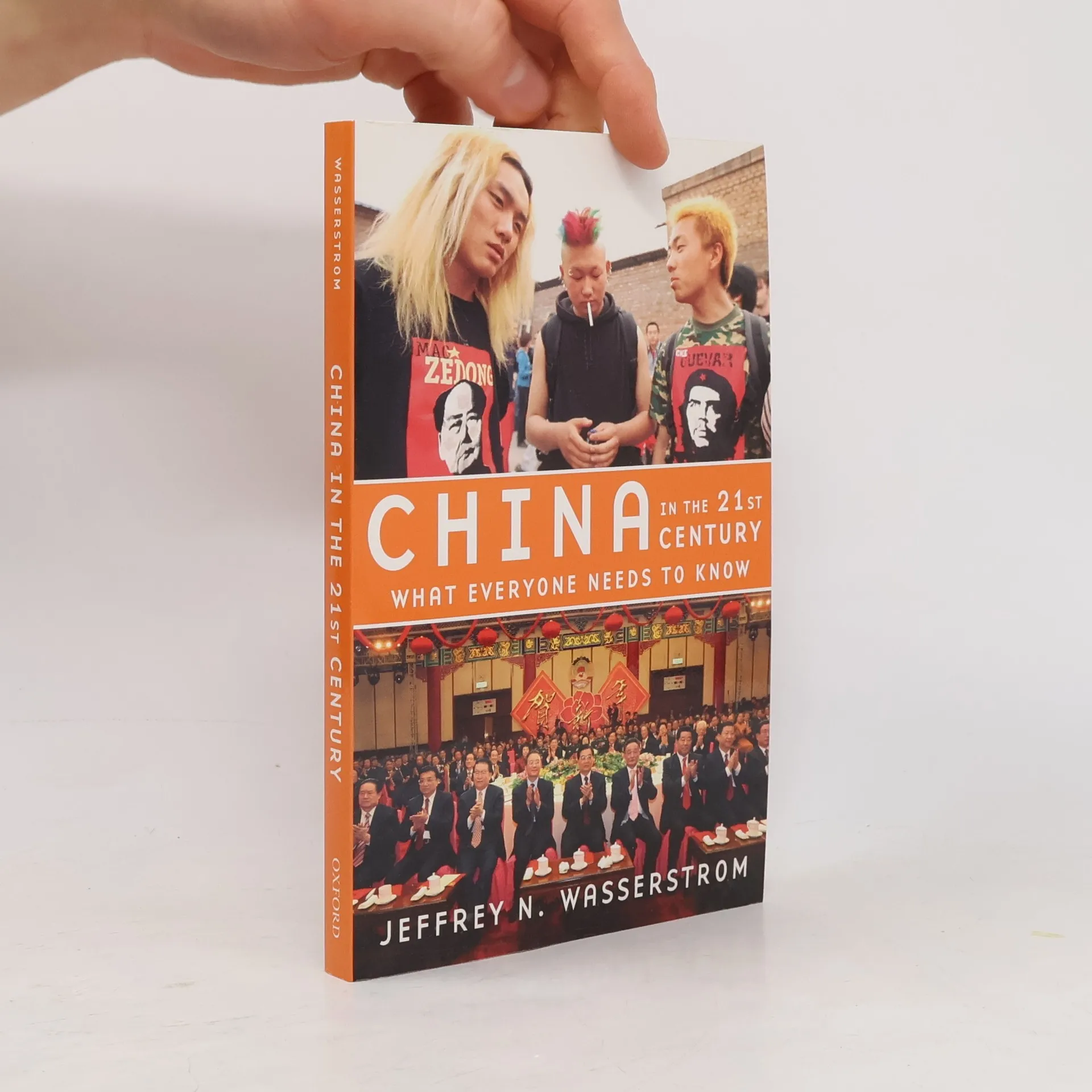
China in the 21st century. What everyone needs to know
- 164pagine
- 6 ore di lettura
The need to understand this global giant has never been more China is constantly in the news, yet conflicting impressions abound. Within one generation, China has transformed from an impoverished, repressive state into an economic and political powerhouse. In China in the 21st What Everyone Needs to Know , Jeffrey Wasserstrom provides cogent answers to the most urgent questions regarding the newest superpower and offers a framework for understanding its meteoric rise.Focusing his answers through the historical legacies--Western and Japanese imperialism, the Mao era, and the massacre near Tiananmen Square--that largely define China's present-day trajectory, Wasserstrom introduces readers to the Chinese Communist Party, the building boom in Shanghai, and theenvironmental fall-out of rapid Chinese industrialization. He also explains unique aspects of Chinese culture such as the one-child policy, and provides insight into how Chinese view Americans.Wasserstrom reveals that China today shares many traits with other industrialized nations during their periods of development, in particular the United States during its rapid industrialization in the 19th century. Finally, he provides guidance on the ways we can expect China to act in the futurevis-à-vis the United States, Russia, India, and its East Asian neighbors.