

Every day around the world there are dozens of protests both large and small. Most groups engage the local police, some get media attention, and a few are successful. Who are these people? What do they want? What do they do to get it? What effects do they ultimately have on our world?In this lively and compelling book, James Jasper, an international expert on the cultural and emotional dimensions of social movements, shows that we cannot answer these questions until we bring culture squarely into the frame. Drawing on a broad range of examples, from the Women's Movement to Occupy and the Arab Spring, Jasper makes clear that we need to appreciate fully the protestors' points of view - in other words their cultural meanings and feelings - as well as the meanings held by other strategic players, such as the police, media, politicians, and intellectuals. In fact, we can't understand our world at all without grasping the profound impact of protest."Protest: A Cultural Introduction to Social Movements" is an invaluable and insightful contribution to understanding social movements for beginners and experts alike.
James M Jasper Ordine dei libri (cronologico)
James M. Jasper esplora l'intricata relazione tra cultura e politica, con un focus particolare sulle dinamiche emotive e sociali dei movimenti di protesta. Il suo lavoro approfondisce come le emozioni e le relazioni tra manifestanti e i loro obiettivi plasmino l'azione politica e il cambiamento sociale. L'analisi di Jasper offre profonde intuizioni sulla complessa interazione tra sentimenti individuali e comportamento collettivo nell'arena politica.

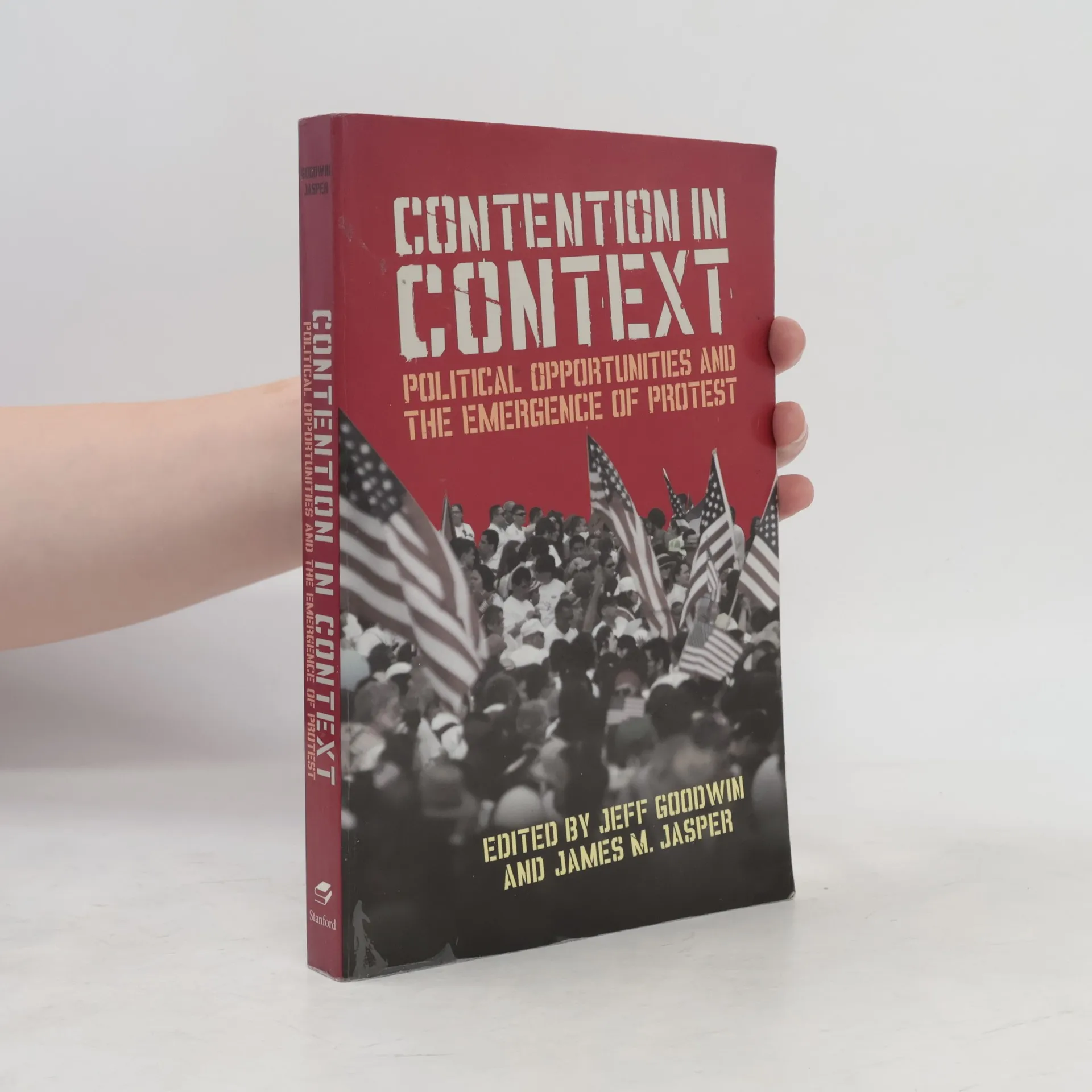

Despite extensive theoretical debates over the utility of "political opportunities" as an explanation for the rise and success of social movements, there have been surprisingly few serious empirical tests. Contention in Context provides the most extensive effort to date to test the model, analyzing a range of important cases of revolutions and protest movements to identify the role of political opportunities in the rise of political contention. With evidence from more than fifty cases, this book explores the role of the state in protest, the frequent overemphasis on political opportunities in recent research, and the extent to which opportunity models ignore the cultural and emotional triggers for collective action. By examining new directions in the study of protest and contention, this book shows that although political opportunities can help explain the emergence of certain kinds of movements, a new strategic language can ultimately tell us far more.
Nuclear Politics
Energy and the State in the United States, Sweden, and France
- 352pagine
- 13 ore di lettura
Why did nuclear energy policies in France, Sweden, and the United States diverge so significantly after the oil crisis of 1973 and 1974, despite their similarities at the time? James Jasper addresses this question by challenging the prevalent political explanations that focus solely on political and economic structures. He introduces a cultural and state-centered approach that considers structural factors alongside cultural meanings, individual biographies, and elite discretion. Jasper examines the period from the commercialization of light-water-reactor technology in the early 1960s to the present, detailing the post-1973 developments: France expanded its reactor construction, the U.S. canceled many reactor orders, and Sweden completed its planned nuclear plants but opted to phase out nuclear energy by 2010. This analysis is informed by one hundred interviews with managers, policymakers, and activists across the three nations. By offering a unique theoretical perspective and an in-depth look at nuclear policy over an extended historical period, this work enhances our understanding of the varied trajectories of nuclear energy in these countries. Originally published in 1990, this title is now available again through the Princeton Legacy Library, which aims to increase access to important scholarly works.