

Showing that the Western tradition of political philosophy from Plato onwards has very limited theoretical resources to cope with cultural diversity, the author discusses how the Western tradition can be revised and what conceptual tools are needed
Bhikhu C. Parekh Libri
Bhikhu Parekh è un eminente teorico politico britannico il cui lavoro si concentra sul multiculturalismo, sui diritti collettivi e sulle questioni socioculturali. La sua ricerca ha influenzato in modo significativo la governance nel Regno Unito, sostenendo visioni politiche non interventiste e tolleranti che promuovono l'armonia tra diverse etnie. Parekh è stato fondamentale nel portare una profonda comprensione della cultura indiana su scala globale attraverso le sue ideologie e la sua incrollabile dedizione. I suoi contributi al cambiamento sociale e alla comprensione interculturale lo rendono una figura cardine nel pensiero politico.
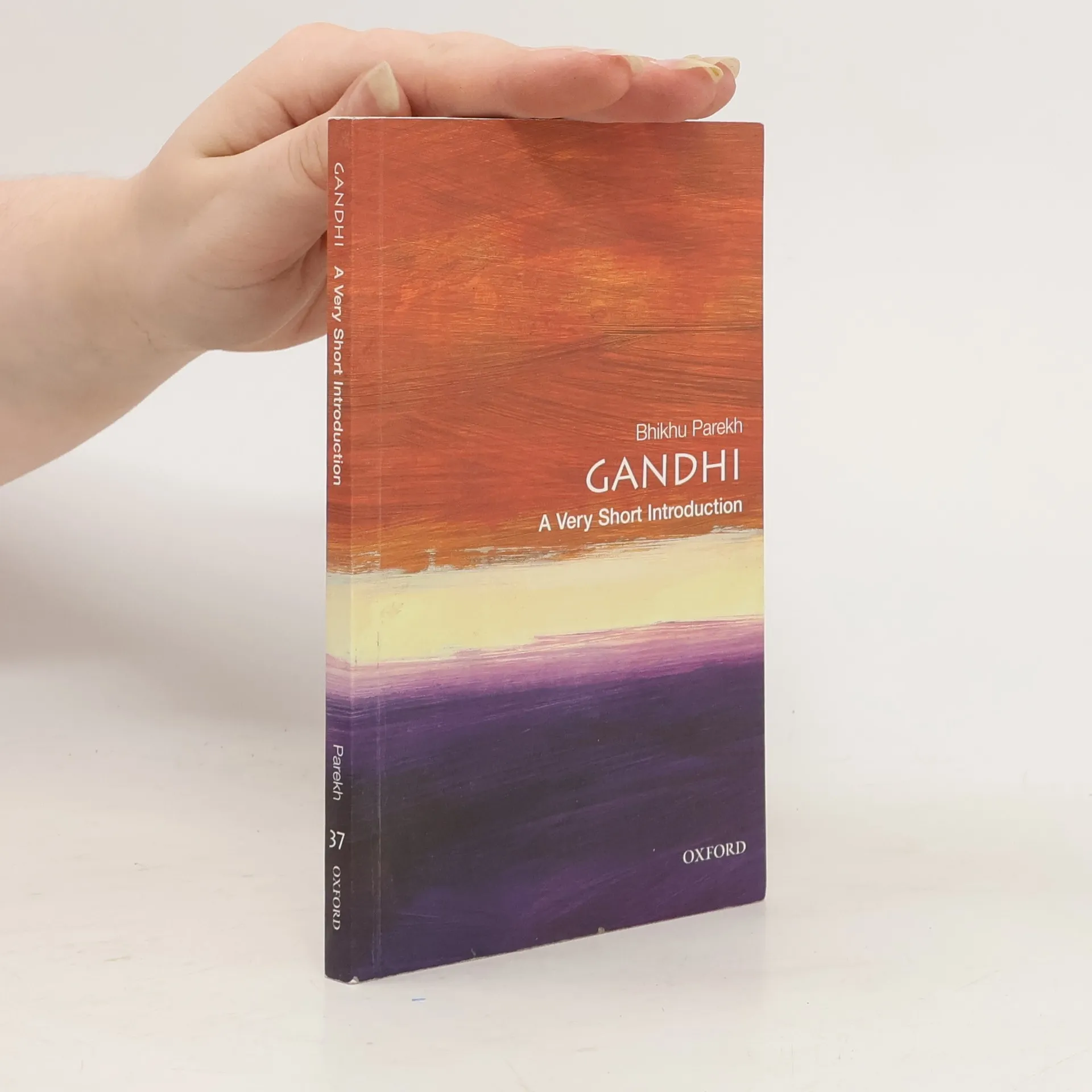
Gandhi: A Very Short Introduction
- 152pagine
- 6 ore di lettura
Mohandas Karamchand Gandhi (1869-1948) was one of the few men in history to fight simultaneously on moral, religious, political, social, economic, and cultural fronts. During his time as a lawyer in South Africa he developed his strategy of the idea of opposing unjust laws by non-violent protest. He led the Indian National Congress party in three major campaigns against British rule, each culminating in his arrest.In Gandhi , a short introduction to Gandhi's life and thought, Bhikhu Parekh outlines both Gandhi's major philosophical insights and the limitations of his thought. Written with extensive access to Gandhi's writings in Indian languages to which most commentators have little or no access, Parekh looks at Gandhi's cosmocentric anthropology, his spiritual view of politics, and his theories of oppression, non-violent action, and active citizenship. He also considers how the success of Gandhi's principles were limited by his lack of coherent theories of evil, and of state and power. Gandhi's view of man as ascetic allows no room for expressions of the cultural, artistic, or intellectual. Furthermore, he was so hostile to modern civilization that he was unable to appreciate its complex dialectic or offer a meaningful narrative.Nevertheless, Gandhi's life and thought had an enormous impact on the Indian nation, and he continues to be widely revered--known before and after his assassination as Mahatma, the Great Soul.