

Maggiori informazioni sul libro
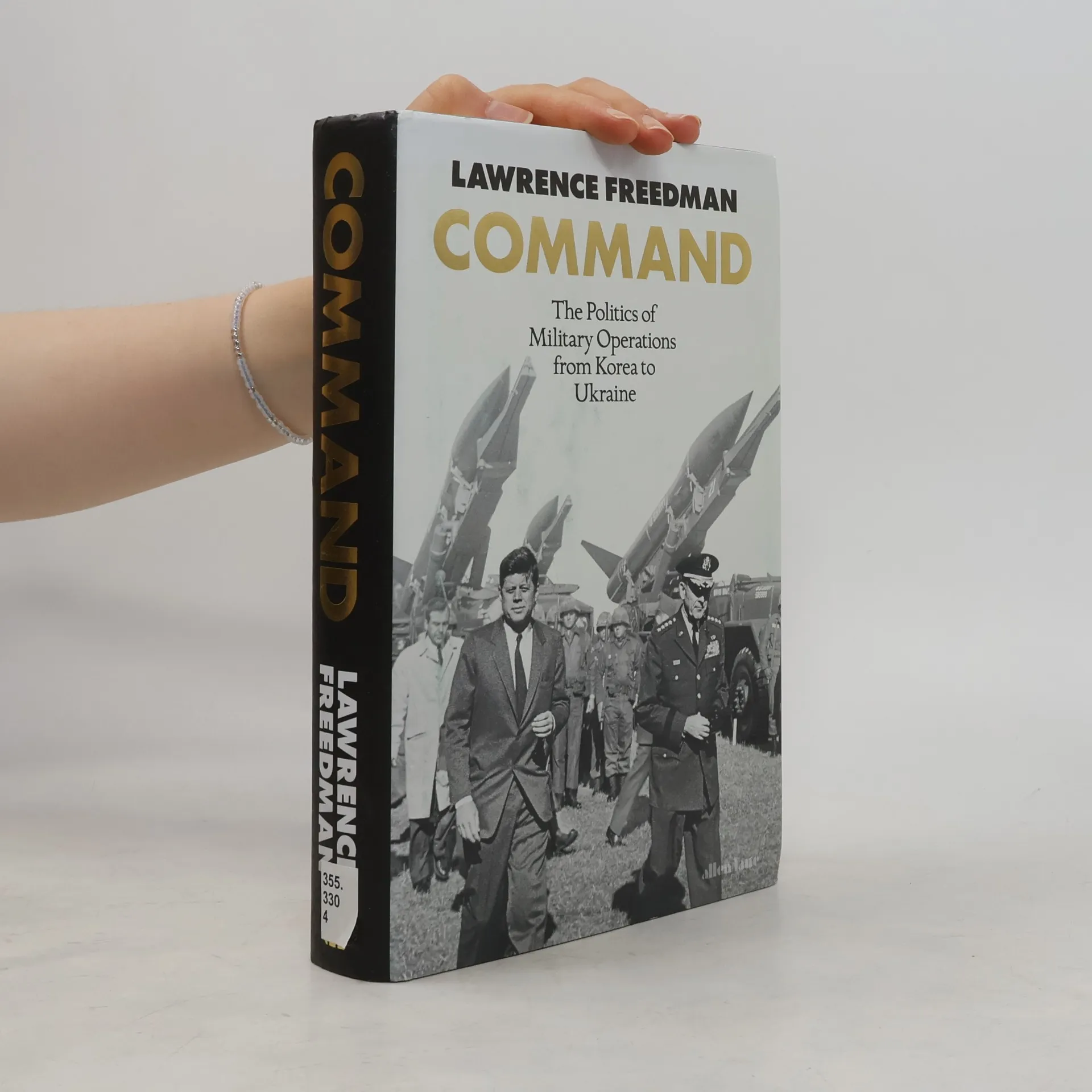
Throughout history, the concept of command -- as both a way to achieve objectives and as an assertion of authority -- has been essential to military action and leadership. But, as Sir Lawrence Freedman shows, it is also deeply political. Military command has been reconstructed and revolutionized since the Second World War by nuclear warfare, small-scale guerrilla land operations and cyber interference. Freedman takes a global perspective, systematically investigating its practice and politics since 1945 through a wide range of conflicts from the French Colonial Wars, the Cuban Missile Crisis and the Bangladesh Liberation War to North Vietnam's Easter Offensive of 1972, the Falklands War, the Iraq War and Russia's wars in Chechnya and Ukraine. By highlighting the political nature of strategy, Freedman shows that military decision-making cannot be separated from civilian priorities and that commanders must now have the sensibility to navigate politics as well as warfare.
Pubblicazione

Acquisto del libro
Command, Lawrence Freedman
- Lingua

- Pubblicato
- 2022
- Rilegatura
- (Copertina rigida)
Metodi di pagamento
Qui potrebbe esserci la tua recensione.
- Titolo
- Command
- Lingua
- Inglese
- Autori
- Lawrence Freedman
- Editore
- Penguin Books
- Pubblicato
- 2022
- Formato
- Copertina rigida
- Pagine
- 608
- ISBN10
- 0241456991
- ISBN13
- 9780241456996
- Serie
- Categoria
- Valutazione
- 4,1 su 5
- Descrizione
- Throughout history, the concept of command -- as both a way to achieve objectives and as an assertion of authority -- has been essential to military action and leadership. But, as Sir Lawrence Freedman shows, it is also deeply political. Military command has been reconstructed and revolutionized since the Second World War by nuclear warfare, small-scale guerrilla land operations and cyber interference. Freedman takes a global perspective, systematically investigating its practice and politics since 1945 through a wide range of conflicts from the French Colonial Wars, the Cuban Missile Crisis and the Bangladesh Liberation War to North Vietnam's Easter Offensive of 1972, the Falklands War, the Iraq War and Russia's wars in Chechnya and Ukraine. By highlighting the political nature of strategy, Freedman shows that military decision-making cannot be separated from civilian priorities and that commanders must now have the sensibility to navigate politics as well as warfare.