

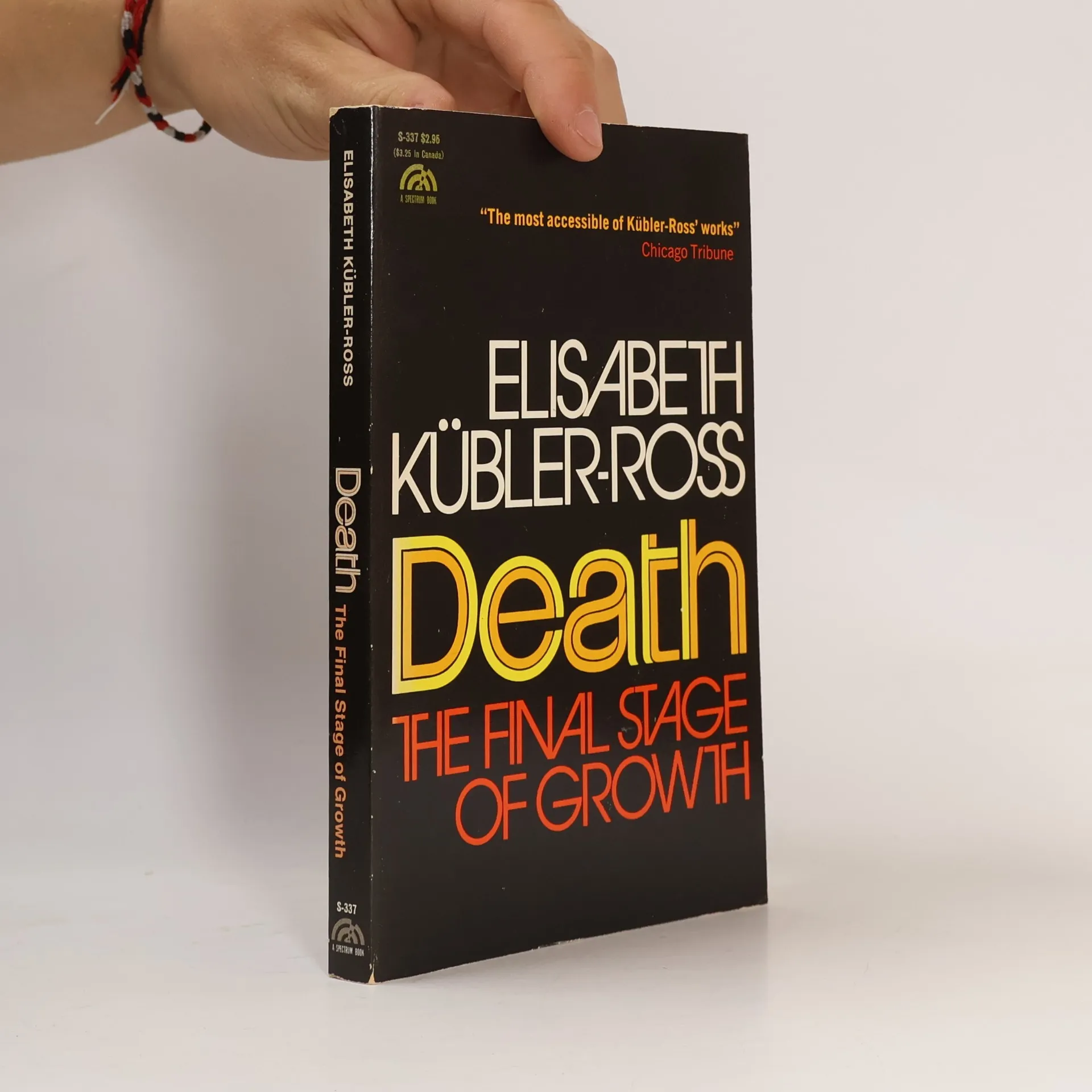


Death. The Final Stage of Growth
Autori
Valutazione del libro
Maggiori informazioni sul libro
Ours is a death-denying society. But death is inevitable, and we must face the question of how to deal with it. Coming to terms with our own finiteness helps us discover life's true meaning. Why do we treat death as a taboo? What are the sources of our fears? How do we express our grief, and how do we accept the death of a person close to us? How can we prepare for our own death? Drawing on our own and other cultures' views of death and dying, Elisabeth Kübler-Ross provides some illuminating answers to these and other questions. She offers a spectrum of viewpoints, including those of ministers, rabbis, doctors, nurses, and sociologists, and the personal accounts of those near death and of their survivors. Once we come to terms with death as a part of human development, the author shows, death can provide us with a key to the meaning of human existence.




Acquisto del libro
Death. The Final Stage of Growth, Elisabeth Kübler-Ross
- Lingua

- Pubblicato
- 1975
- Rilegatura
- (In brossura)
Metodi di pagamento
Qui potrebbe esserci la tua recensione.
- Titolo
- Death. The Final Stage of Growth
- Lingua
- Inglese
- Autori
- Elisabeth Kübler-Ross
- Editore
- Prentice Hall
- Pubblicato
- 1975
- Formato
- In brossura
- Pagine
- 175
- ISBN10
- 0131969986
- ISBN13
- 9780131969988
- Serie
- Tag
- Salute & Medicina, Temi psicologici, Temi religiosi, Tematica filosofica, Spiritualità e Religione, Medicina, Morte, Malattie, Paura, Speranza, Dio, Ospedali
- Valutazione
- 4,15 su 5
- Descrizione
- Ours is a death-denying society. But death is inevitable, and we must face the question of how to deal with it. Coming to terms with our own finiteness helps us discover life's true meaning. Why do we treat death as a taboo? What are the sources of our fears? How do we express our grief, and how do we accept the death of a person close to us? How can we prepare for our own death? Drawing on our own and other cultures' views of death and dying, Elisabeth Kübler-Ross provides some illuminating answers to these and other questions. She offers a spectrum of viewpoints, including those of ministers, rabbis, doctors, nurses, and sociologists, and the personal accounts of those near death and of their survivors. Once we come to terms with death as a part of human development, the author shows, death can provide us with a key to the meaning of human existence.