

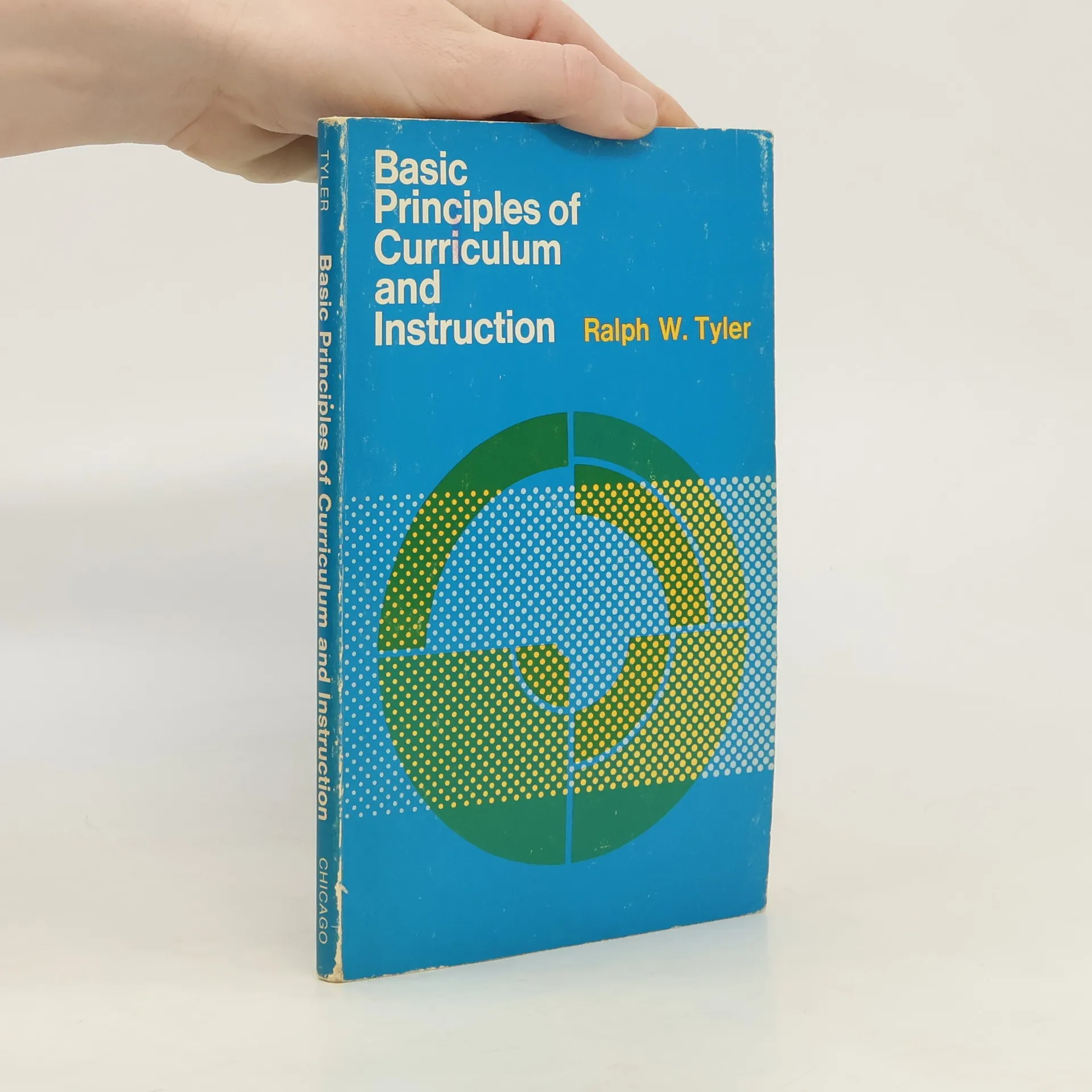

Basic Principles of Curriculum and Instruction
Autori
Valutazione del libro
Maggiori informazioni sul libro
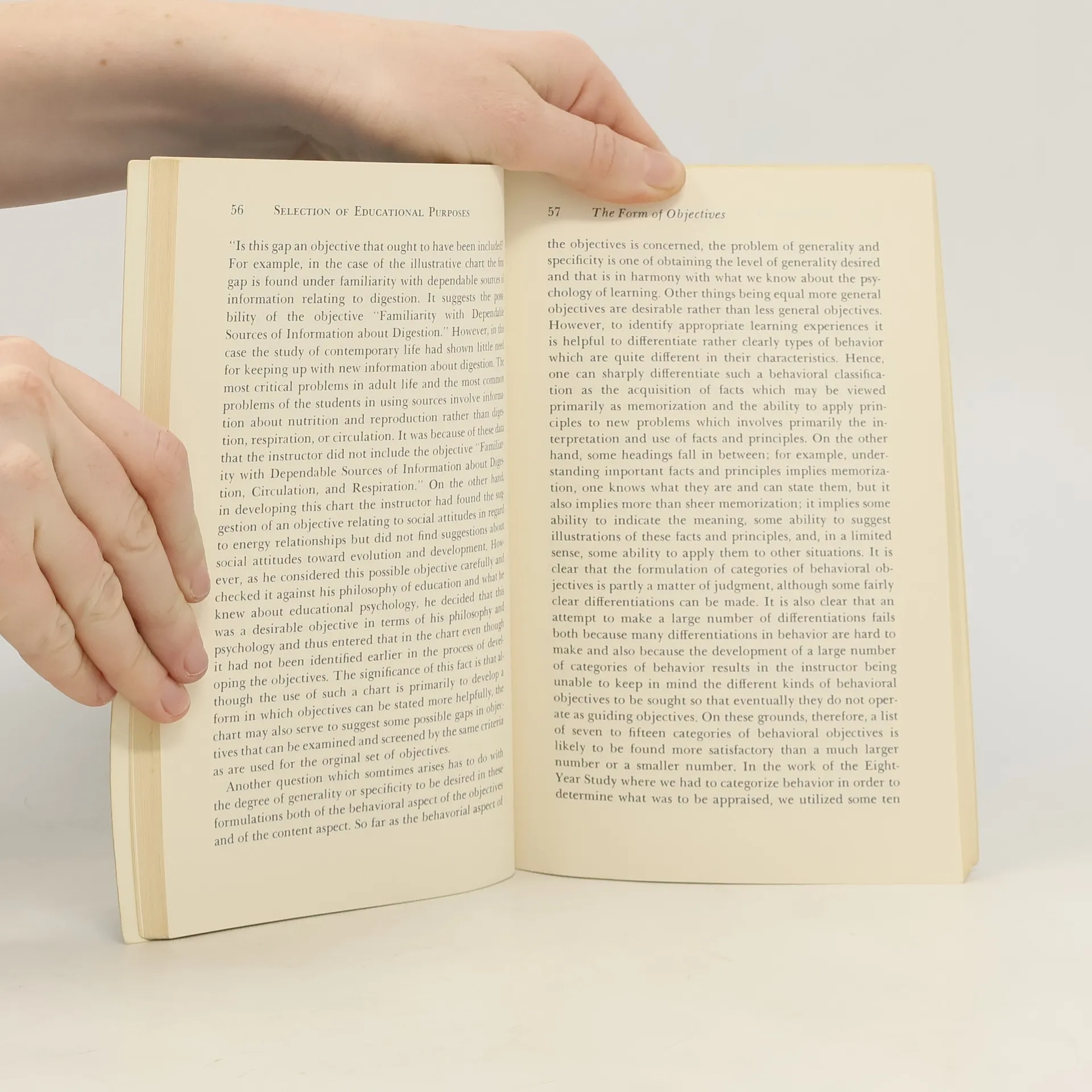
What educational purposes should the school seek to attain, and what educational experiences can be provided that are likely to achieve these purposes? Rather than literally answering these questions of curriculum and instruction, Tyler develops a rationale for studying them, and suggests procedures for formulating answers and evaluating programs of study. Quite simply, his book outlines one way of viewing an instructional program as a functioning instrument of education.The four sections of the book deal with ways of formulating, organizing, and evaluating the educational objectives that have been chosen for the curriculum. Tyler emphasizes the fact that curriculum planning is a continuous cyclical process, involving constand replanning, redevelopment, and reappraisal. Substitution of such an integrated view of an instructional program for hit-or-miss judgment as the basis for curriculum development cannot but result in an increasingly effective curriculum.
Pubblicazione

Acquisto del libro
Basic Principles of Curriculum and Instruction, Ralph W. Tyler
- Lingua

- Pubblicato
- 1969
- Rilegatura
- (In brossura)
Metodi di pagamento
Qui potrebbe esserci la tua recensione.
- Titolo
- Basic Principles of Curriculum and Instruction
- Lingua
- Inglese
- Autori
- Ralph W. Tyler
- Pubblicato
- 1969
- Formato
- In brossura
- ISBN10
- 0226820319
- ISBN13
- 9780226820316
- Serie
- Categoria
- Valutazione
- 3,45 su 5
- Descrizione
- What educational purposes should the school seek to attain, and what educational experiences can be provided that are likely to achieve these purposes? Rather than literally answering these questions of curriculum and instruction, Tyler develops a rationale for studying them, and suggests procedures for formulating answers and evaluating programs of study. Quite simply, his book outlines one way of viewing an instructional program as a functioning instrument of education.The four sections of the book deal with ways of formulating, organizing, and evaluating the educational objectives that have been chosen for the curriculum. Tyler emphasizes the fact that curriculum planning is a continuous cyclical process, involving constand replanning, redevelopment, and reappraisal. Substitution of such an integrated view of an instructional program for hit-or-miss judgment as the basis for curriculum development cannot but result in an increasingly effective curriculum.