
Bookbot

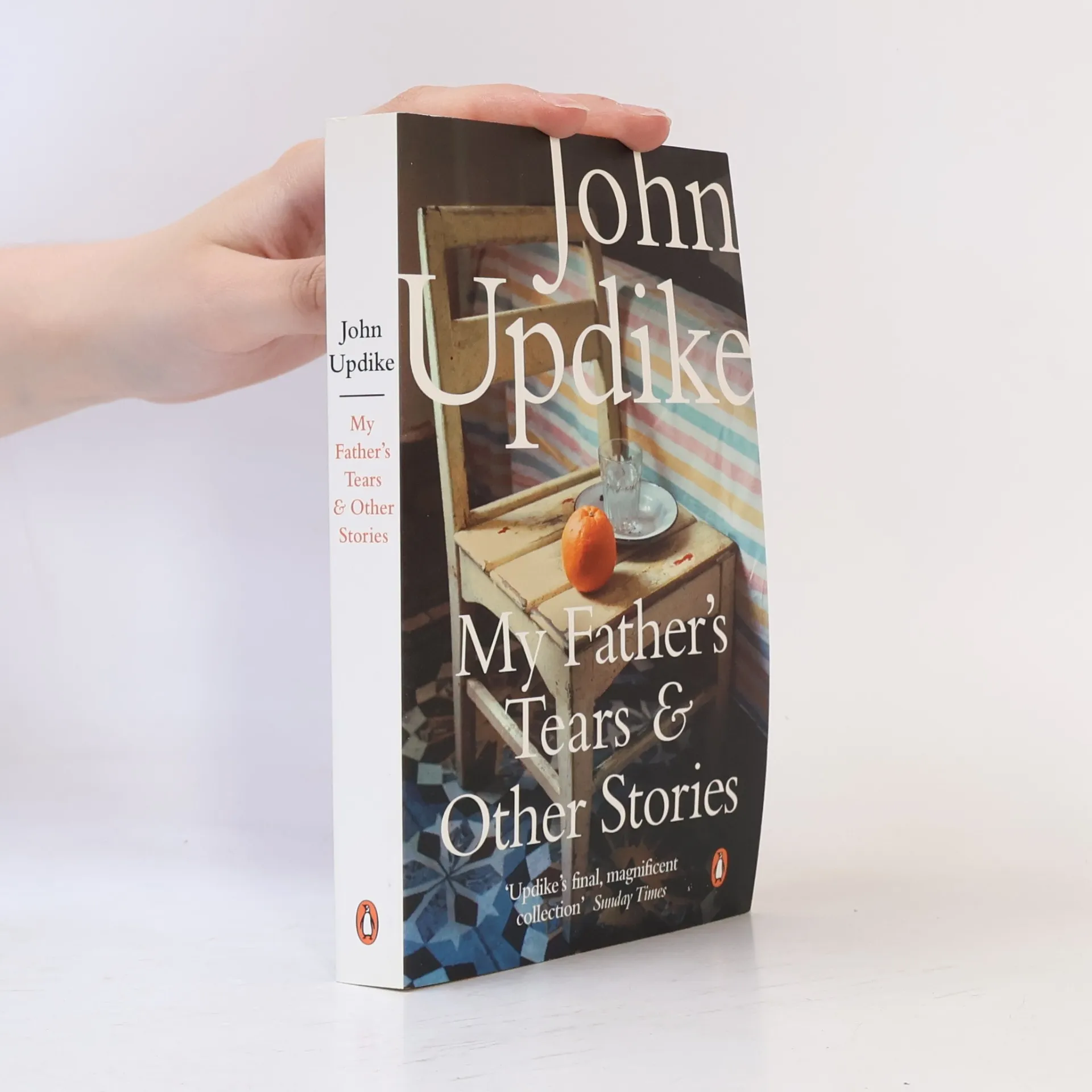
My Father's Tears

And Other Stories

Valutazione del libro

Parametri

  • 304pagine
  • 11 ore di lettura

Maggiori informazioni sul libro

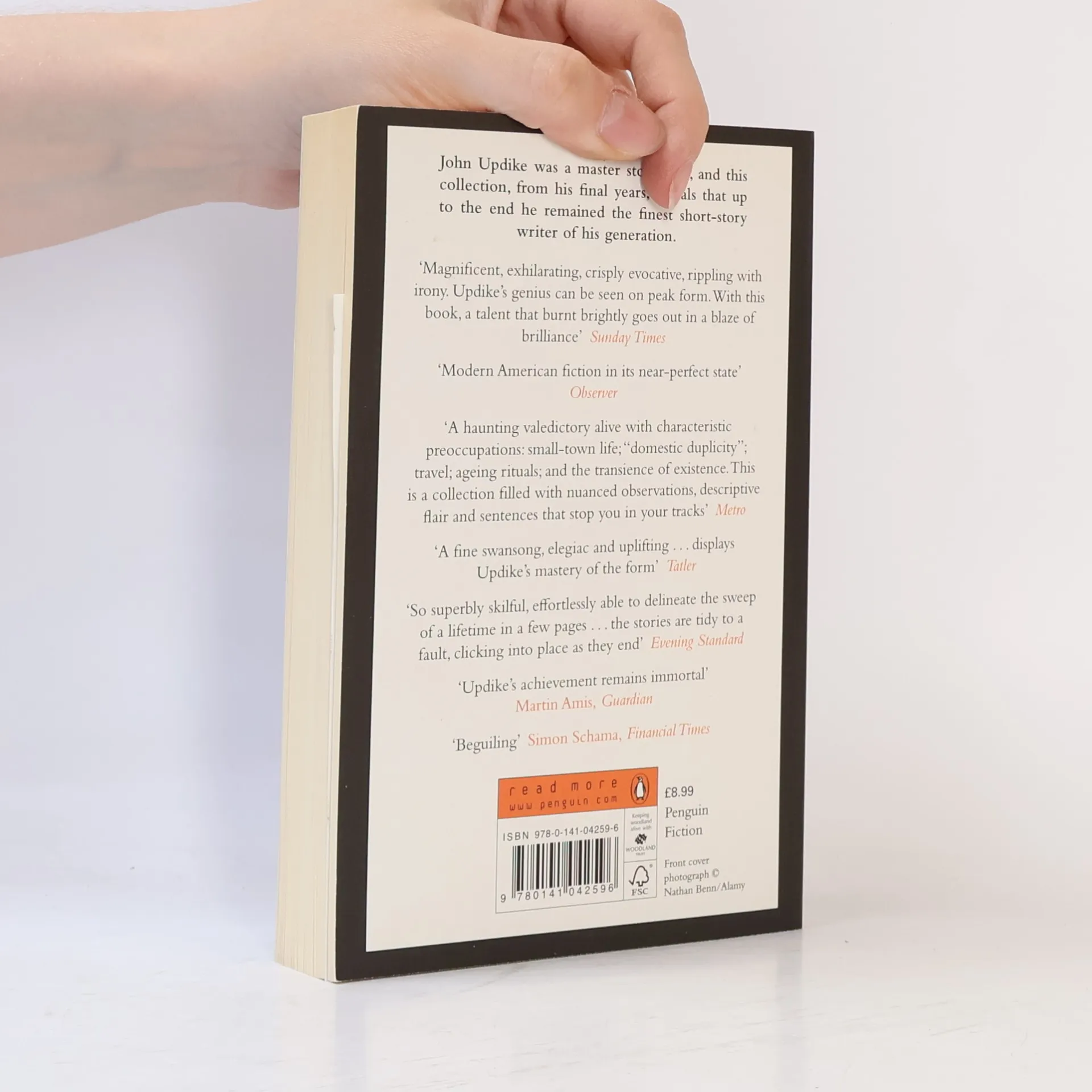
“Drinking a toast to the visible world, his impending disappearance from it be damned.” That’s how John Updike describes one of his elderly protagonists in this, his final collection of short stories. He might have been writing about himself. In My Father’s Tears, the author revisits his signature characters, places, and themes—Americans in suburbs, cities, and small towns grappling with faith and infidelity—in a gallery of portraits of his aging generation, men and women for whom making peace with the past is now paramount. The Seattle Times called My Father’s Tears “a haunting collection” that “echoes the melancholy of Chekhov, the romanticism of Wordsworth and the mournful spirit of Yeats.”

Acquisto del libro

My Father's Tears, John Updike

Lingua
Pubblicato
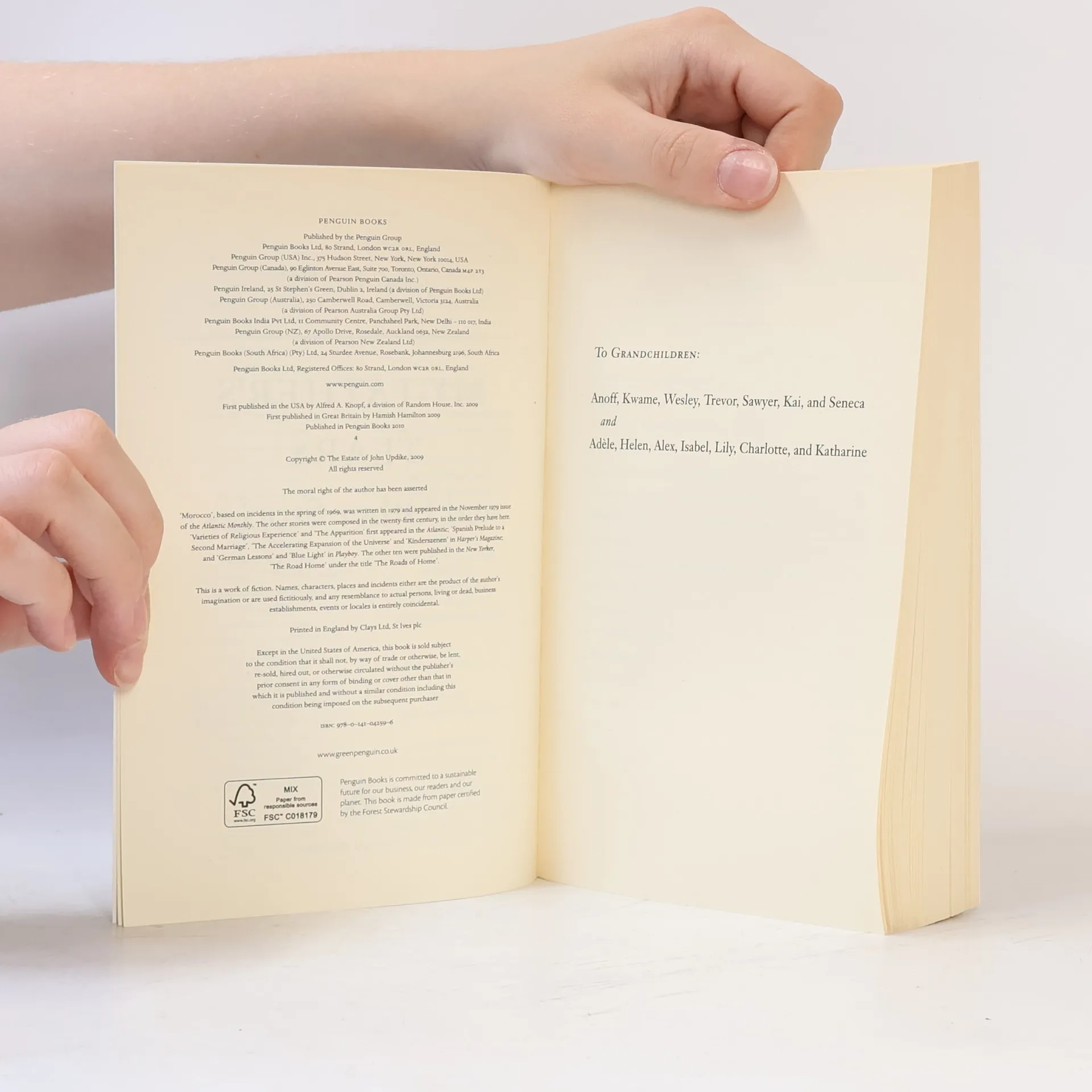
2010
product-detail.submit-box.info.binding
(In brossura)
Ti avviseremo via email non appena lo rintracceremo.

Metodi di pagamento

3,6
Molto buono
70 Valutazioni

Qui potrebbe esserci la tua recensione.

Titolo
My Father's Tears
Sottotitolo
And Other Stories
Lingua
Inglese
Pubblicato
2010
Formato
In brossura
Pagine
304
ISBN10
0345513800
ISBN13
9780345513809
Serie
Prima pubblicazione
2009
Titolo originale
My Father's Tears and Other Stories
Valutazione
3,55 su 5
Descrizione
“Drinking a toast to the visible world, his impending disappearance from it be damned.” That’s how John Updike describes one of his elderly protagonists in this, his final collection of short stories. He might have been writing about himself. In My Father’s Tears, the author revisits his signature characters, places, and themes—Americans in suburbs, cities, and small towns grappling with faith and infidelity—in a gallery of portraits of his aging generation, men and women for whom making peace with the past is now paramount. The Seattle Times called My Father’s Tears “a haunting collection” that “echoes the melancholy of Chekhov, the romanticism of Wordsworth and the mournful spirit of Yeats.”



