

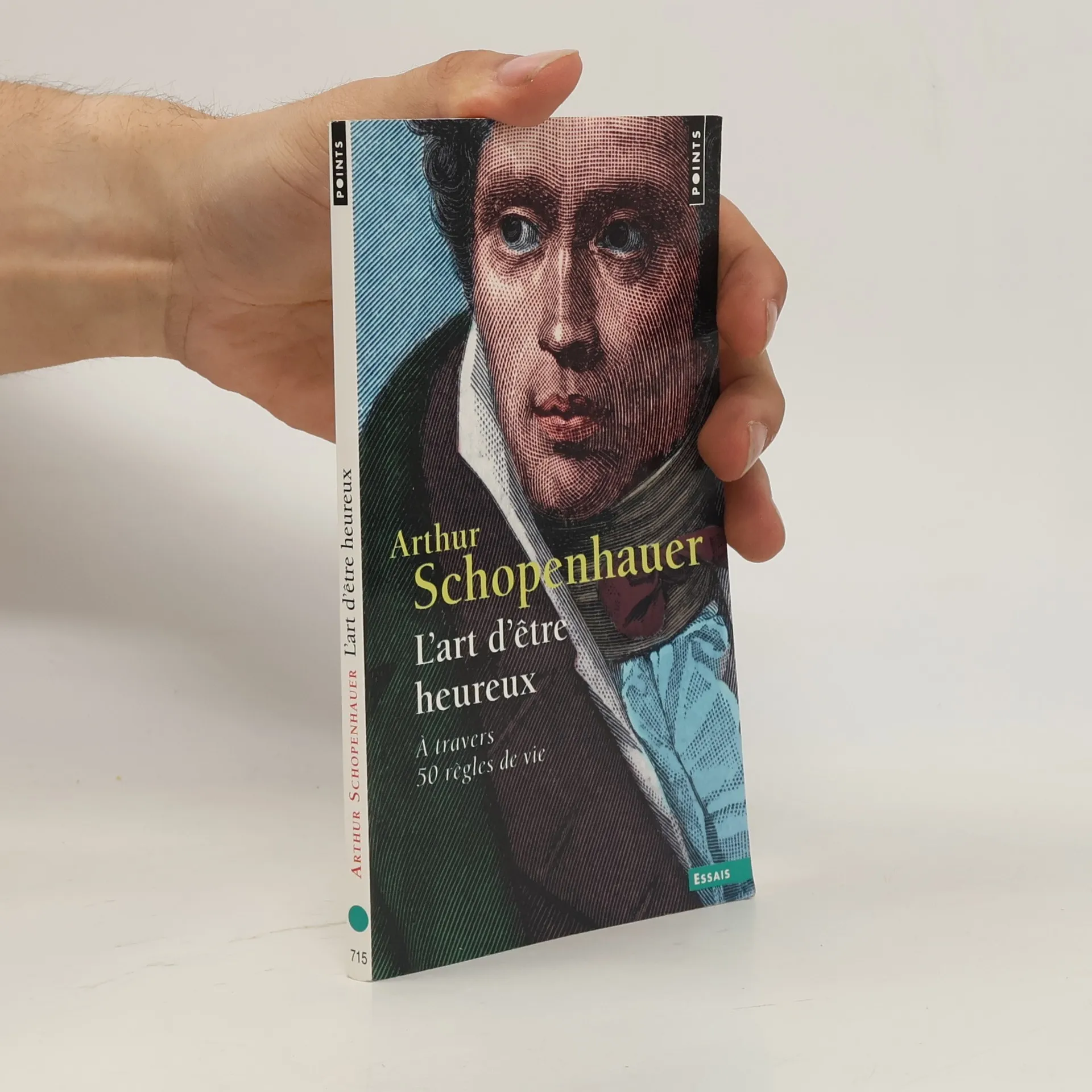
Points: Art d'être heureux
À travers 50 règles de vie - Essais
Autori
Maggiori informazioni sul libro
A leading German metaphysician of the 19th century, Arthur Schopenhauer (1788–1860) exerted an influence far beyond the hermetic world of philosophy, with adherents ranging from Richard Wagner and Friedrich Nietzsche to Leo Tolstoy and Thomas Mann. Among Schopenhauer's chief contributions to the field of philosophy are his rejection of the idealism of his contemporaries and his embrace of a practical variety of materialism. He jettisons the traditional philosophic jargon for a brisk, compelling style that employs direct terms to express the metaphysics of the will. In The Wisdom of Life , an essay from Schopenhauer's final work, Parerga und Paralipomena (1851), the philosopher favors individual strength of will and independent, reasoned deliberation over the tendency to act on irrational impulses. He examines the ways in which life can be arranged to derive the highest degree of pleasure and success, presents guidelines to achieving this full and rich manner of living, and advises that even a life well lived must always aspire to grander heights. Abounding in subjects of enduring relevance, Schopenhauer's highly readable work appears here in an excellent translation.
Acquisto del libro
Points: Art d'être heureux, Arthur Schopenhauer
- Lingua

- Pubblicato
- 2014
- Rilegatura
- (In brossura)
Metodi di pagamento
Ancora nessuna valutazione.
- Titolo
- Points: Art d'être heureux
- Sottotitolo
- À travers 50 règles de vie - Essais
- Lingua
- Francese
- Autori
- Arthur Schopenhauer
- Editore
- Éditions du Seuil
- Pubblicato
- 2014
- Formato
- In brossura
- Pagine
- 144
- ISBN10
- 275784220X
- ISBN13
- 9782757842201
- Serie
- Categoria
- Descrizione
- A leading German metaphysician of the 19th century, Arthur Schopenhauer (1788–1860) exerted an influence far beyond the hermetic world of philosophy, with adherents ranging from Richard Wagner and Friedrich Nietzsche to Leo Tolstoy and Thomas Mann. Among Schopenhauer's chief contributions to the field of philosophy are his rejection of the idealism of his contemporaries and his embrace of a practical variety of materialism. He jettisons the traditional philosophic jargon for a brisk, compelling style that employs direct terms to express the metaphysics of the will. In The Wisdom of Life , an essay from Schopenhauer's final work, Parerga und Paralipomena (1851), the philosopher favors individual strength of will and independent, reasoned deliberation over the tendency to act on irrational impulses. He examines the ways in which life can be arranged to derive the highest degree of pleasure and success, presents guidelines to achieving this full and rich manner of living, and advises that even a life well lived must always aspire to grander heights. Abounding in subjects of enduring relevance, Schopenhauer's highly readable work appears here in an excellent translation.