

Questo è quello che aggiungi al carrello
Parametri
- 288pagine
- 11 ore di lettura
Maggiori informazioni sul libro
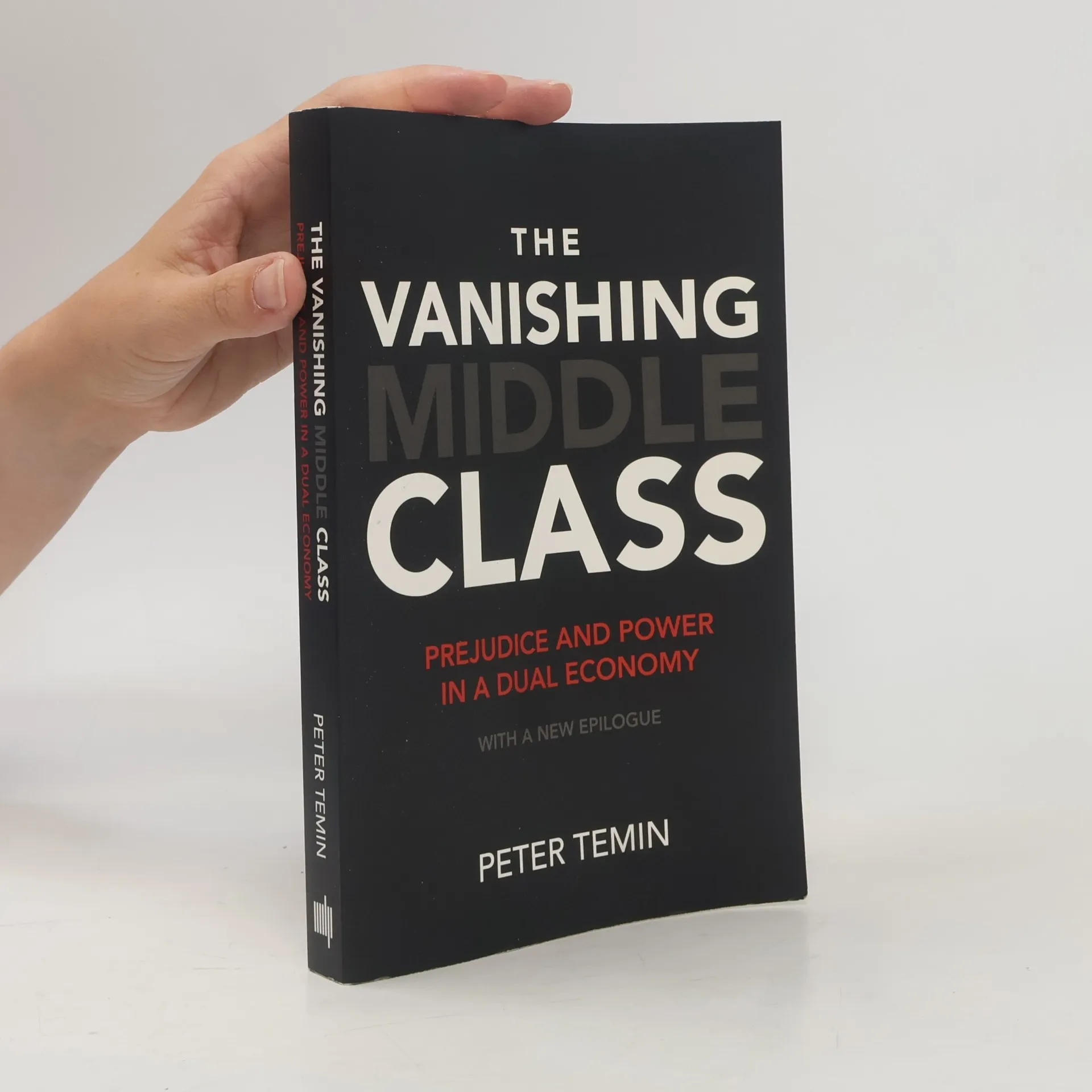
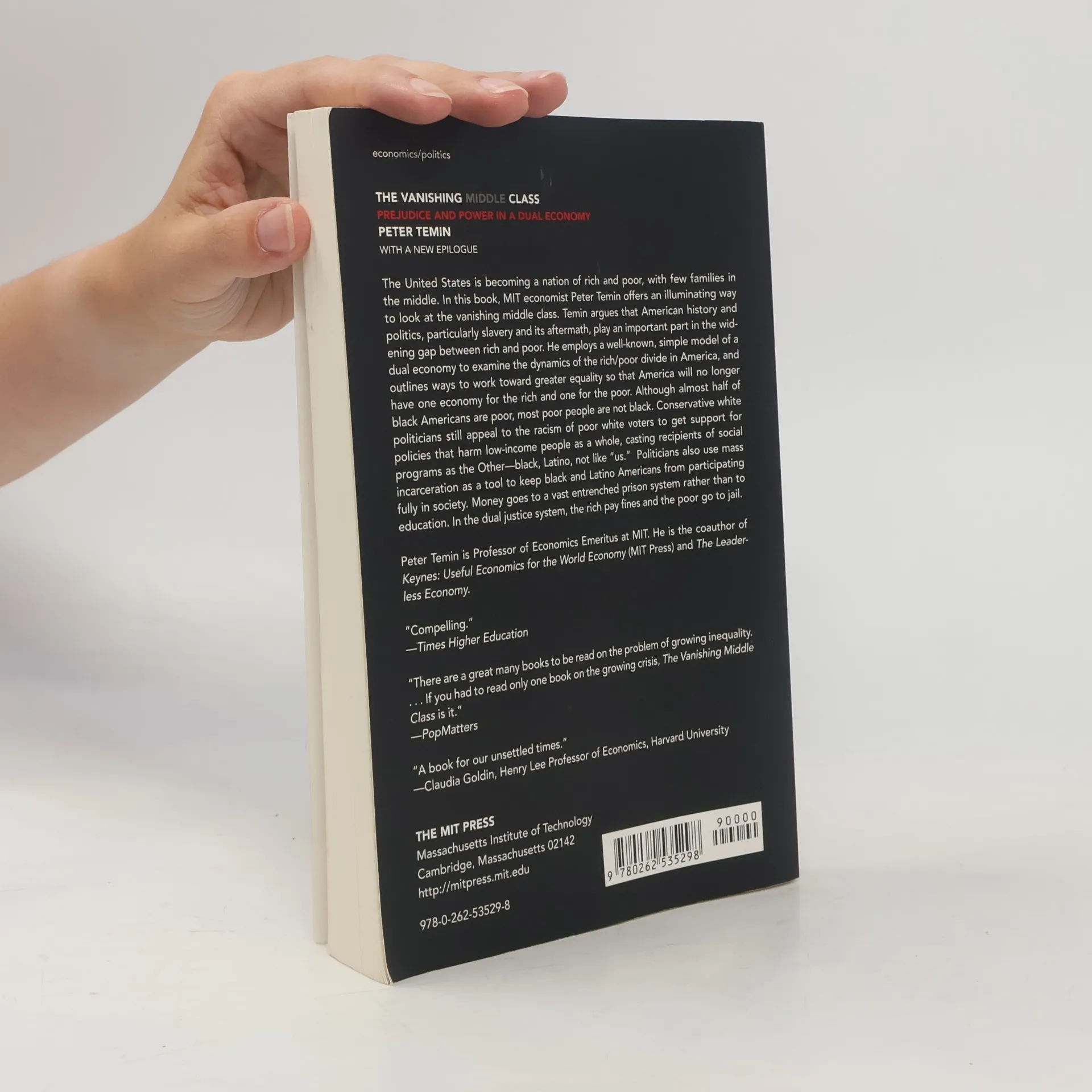
In this book, MIT economist Peter Temin offers an illuminating way to look at the vanishing middle class. Temin argues that American history and politics, particularly slavery and its aftermath, play an important part in the widening gap between rich and poor. Temin employs a well-known, simple model of a dual economy to examine the dynamics of the rich/poor divide in America, and outlines ways to work toward greater equality so that America will no longer have one economy for the rich and one for the poor.


Acquisto del libro
Vanishing Middle Class, New Epilogue, Peter Temin
- Lingua

- Pubblicato
- 2018
- Rilegatura
- (In brossura),
- Condizioni del libro
- In buone condizioni
- Prezzo
- 4,39 €
Metodi di pagamento
Ancora nessuna valutazione.
- Titolo
- Vanishing Middle Class, New Epilogue
- Lingua
- Inglese
- Autori
- Peter Temin
- Editore
- MIT Press
- Pubblicato
- 2018
- Formato
- In brossura
- Pagine
- 288
- ISBN10
- 0262535297
- ISBN13
- 9780262535298
- Serie
- Categoria
- Tag
- Commercio, Libri di cucina, Manuali e guide, Tematica filosofica, Animali, Tematica giuridica, Libri di testo universitari, Politica, USA, Salute, Cibo, Società, Femminismo, Giornalismo e Pubblicistica, Finanza, Teorie Politiche, Cultura, Libri di testo di biologia, Denaro, Etica, Relazioni internazionali, Giustizia sociale, Povertà, Diritto Civile, Globalizzazione, Corruzione, Capitalismo, Energia, Strategia, Storia economica, Governo, Politica economica, Geopolitica, Economia Politica, Filosofia politica, Etnia, Politica mondiale, Minoranze, Classi sociali, Disuguaglianza
- Descrizione
- In this book, MIT economist Peter Temin offers an illuminating way to look at the vanishing middle class. Temin argues that American history and politics, particularly slavery and its aftermath, play an important part in the widening gap between rich and poor. Temin employs a well-known, simple model of a dual economy to examine the dynamics of the rich/poor divide in America, and outlines ways to work toward greater equality so that America will no longer have one economy for the rich and one for the poor.