




Parametri
- 233pagine
- 9 ore di lettura
Maggiori informazioni sul libro
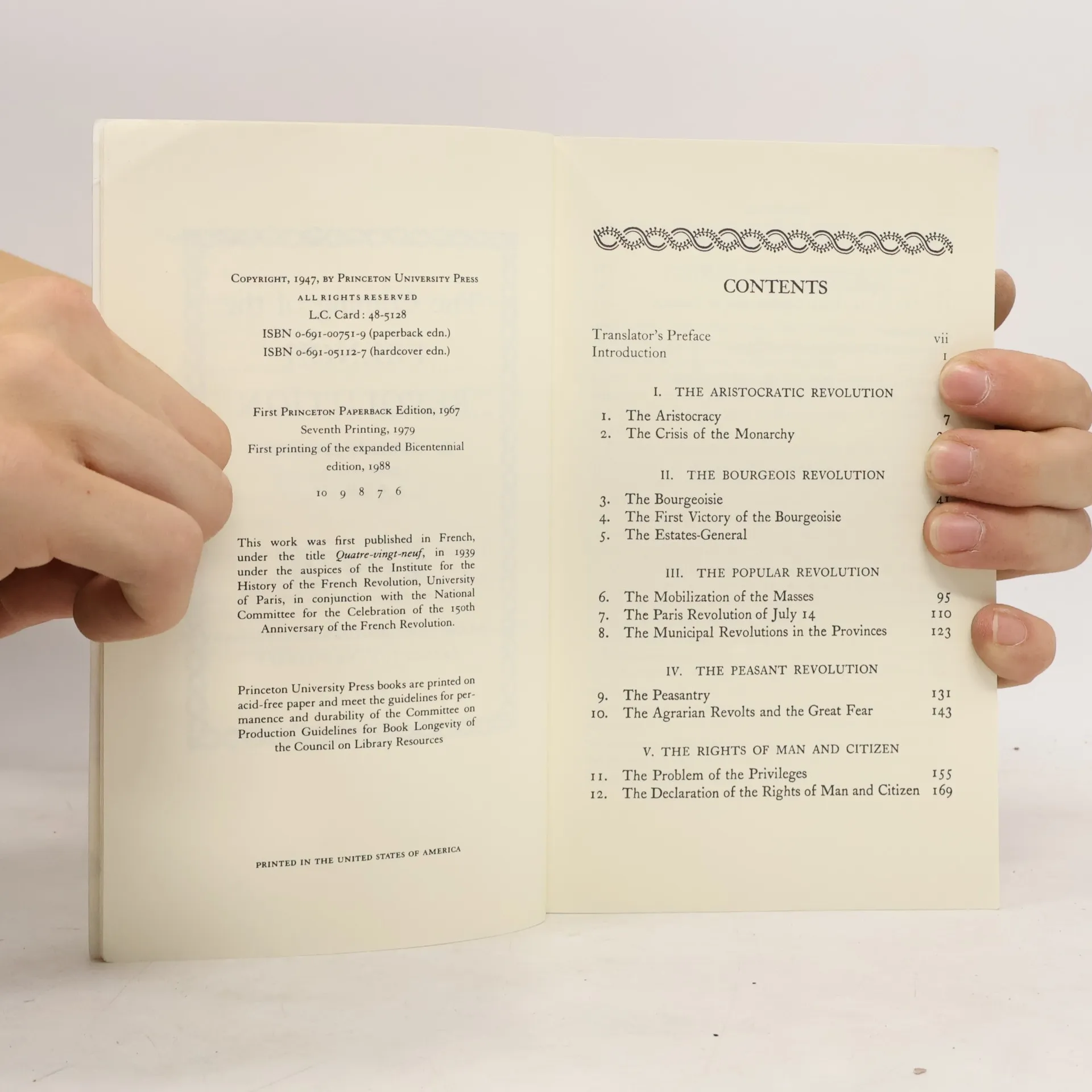
This classic work details what happened in France during the year 1789, the first year of the French Revolution. Lefebvre's signature contribution was writing history "from below" -- a Marxist approach -- and his particular specialty was the French Revolution as viewed from the experiences of the peasantry. Placing the "common people" at the center of his analysis, Lefebvre emphasized the class struggles within France and the significant role they played in the coming of the Revolution. First published in 1939 for the sesquicentennial of the Revolution, the book was suppressed by the Vichy government as a piece of revolutionary literature after the outbreak of the Second World War and the subsequent collapse of the Third Republic. R.R. Palmer, a distinguished historian of the French Revolution, translated the book into English in 1947. Although recent historians have reinterpreted the Revolution and disputed Lefebvre's conclusions, The Coming of the French Revolution remains essential reading for anyone interested in the origins of this great turning point in the formation of the modern world.

Acquisto del libro
The Coming of the French Revolution - Bicentennial Edition, Georges Lefebvre, R. R. Palmer
- Lingua

- Pubblicato
- 1988
- Rilegatura
- (In brossura)
Metodi di pagamento
Qui potrebbe esserci la tua recensione.
- Titolo
- The Coming of the French Revolution - Bicentennial Edition
- Lingua
- Inglese
- Autori
- Georges Lefebvre, R. R. Palmer
- Editore
- Princeton University Press
- Pubblicato
- 1988
- Formato
- In brossura
- Pagine
- 233
- ISBN10
- 0691007519
- ISBN13
- 9780691007519
- Serie
- Categoria
- Tag
- Tema stórico, Politica, Francia, Guerre, Storia d'Europa, Grande rivoluzione francese (1789-1799)
- Titolo originale
- Quatre-vingt-neuf
- Valutazione
- 3 su 5
- Descrizione
- This classic work details what happened in France during the year 1789, the first year of the French Revolution. Lefebvre's signature contribution was writing history "from below" -- a Marxist approach -- and his particular specialty was the French Revolution as viewed from the experiences of the peasantry. Placing the "common people" at the center of his analysis, Lefebvre emphasized the class struggles within France and the significant role they played in the coming of the Revolution. First published in 1939 for the sesquicentennial of the Revolution, the book was suppressed by the Vichy government as a piece of revolutionary literature after the outbreak of the Second World War and the subsequent collapse of the Third Republic. R.R. Palmer, a distinguished historian of the French Revolution, translated the book into English in 1947. Although recent historians have reinterpreted the Revolution and disputed Lefebvre's conclusions, The Coming of the French Revolution remains essential reading for anyone interested in the origins of this great turning point in the formation of the modern world.