


Parametri
- 308pagine
- 11 ore di lettura
Maggiori informazioni sul libro
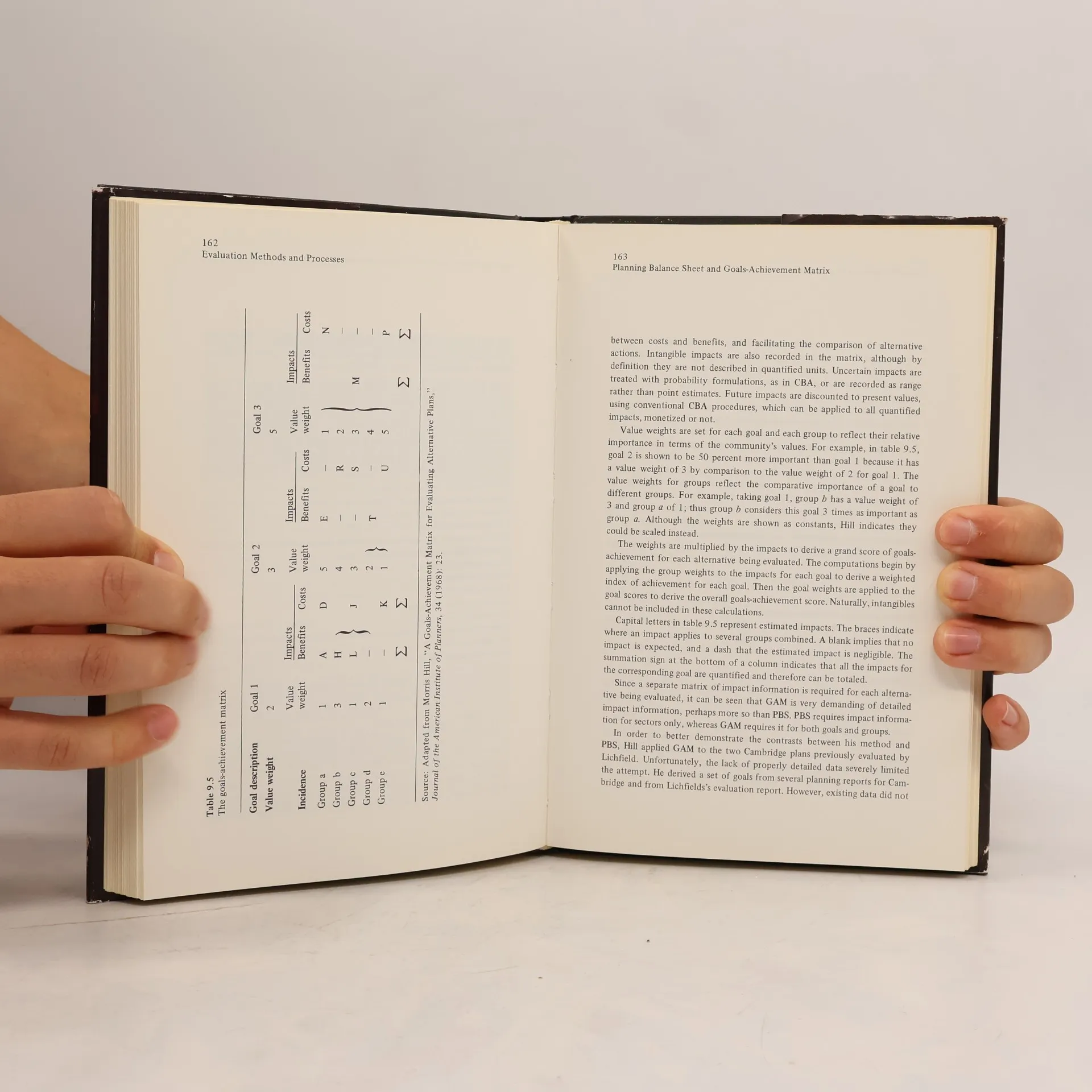
Evaluation—the process of obtaining, organizing, and weighing information on the consequences of alternatives—is central to planning. This book emphasizes that no single theory or discipline can fully encompass evaluation, nor is there a universally superior method; each has its pros and cons. It examines evaluation as a subjective and value-laden aspect of the broader democratic process, tackling issues like quantification, equity, future generations, technocratic planning, citizen participation, and social welfare assessments. The author critiques eight leading methodologies, offering suggestions for improvement and guidelines for conducting evaluations in the conclusion. The author's stance is that planners should treat each evaluation as unique, choosing techniques best suited to the specific context. Drawing from eighteen years of field experience, the author argues that effective evaluations stem from sound judgment informed by an understanding of various methodologies, rather than adhering to a rigid set of standardized procedures. This work provides a fresh perspective valuable to professionals, public officials, engaged citizens, and students across fields such as environmental planning, engineering, health sciences, and natural resources management.
Acquisto del libro
Evaluation in Environmental Planning, Donald M. McAllister
- Lingua

- Pubblicato
- 1980
- Rilegatura
- (Copertina rigida),
- Condizioni del libro
- In buone condizioni
- Prezzo
- 7,39 €
Metodi di pagamento
Ancora nessuna valutazione.
- Titolo
- Evaluation in Environmental Planning
- Sottotitolo
- Assessing Environmental, Social, Economic, and Political Trade-offs
- Lingua
- Inglese
- Autori
- Donald M. McAllister
- Editore
- MIT Press
- Pubblicato
- 1980
- Formato
- Copertina rigida
- Pagine
- 308
- ISBN10
- 0262131463
- ISBN13
- 9780262131469
- Serie
- Tag
- Descrizione
- Evaluation—the process of obtaining, organizing, and weighing information on the consequences of alternatives—is central to planning. This book emphasizes that no single theory or discipline can fully encompass evaluation, nor is there a universally superior method; each has its pros and cons. It examines evaluation as a subjective and value-laden aspect of the broader democratic process, tackling issues like quantification, equity, future generations, technocratic planning, citizen participation, and social welfare assessments. The author critiques eight leading methodologies, offering suggestions for improvement and guidelines for conducting evaluations in the conclusion. The author's stance is that planners should treat each evaluation as unique, choosing techniques best suited to the specific context. Drawing from eighteen years of field experience, the author argues that effective evaluations stem from sound judgment informed by an understanding of various methodologies, rather than adhering to a rigid set of standardized procedures. This work provides a fresh perspective valuable to professionals, public officials, engaged citizens, and students across fields such as environmental planning, engineering, health sciences, and natural resources management.