Questa serie filosofica indaga l'intricato rapporto tra potere, legge e vita. Esamina criticamente il concetto di 'vita nuda' – esistenza esclusa dall'ordine politico ma che ne costituisce il fondamento. Le opere esplorano come le società moderne esercitino controllo e sottomissione attraverso i meccanismi del potere sovrano e le strutture legali. Offre profonde riflessioni sulla teoria politica e il suo impatto sull'esistenza umana.
Offers Agamben's genealogy of power in terms of political, philosophical and
legal thought. This book investigates the genealogy of the strife between the
Polis and its population with particular regard to the Greek concept of stasis
and the strife with the commonwealth of Hobbes' Leviathan.
In this book, Agamben investigates monasticism from its beginnings up through
the Franciscan movement in an attempt to find a new form-of-life that escapes
from the logic of Western politics as put forth in his Homo Sacer series.
One of Italy's most original philosophers aims to connect the problem of pure
possibility, potentiality, and power with the problem of political and social
ethics in a context where the latter has lost its previous religious,
metaphysical, and cultural grounding.
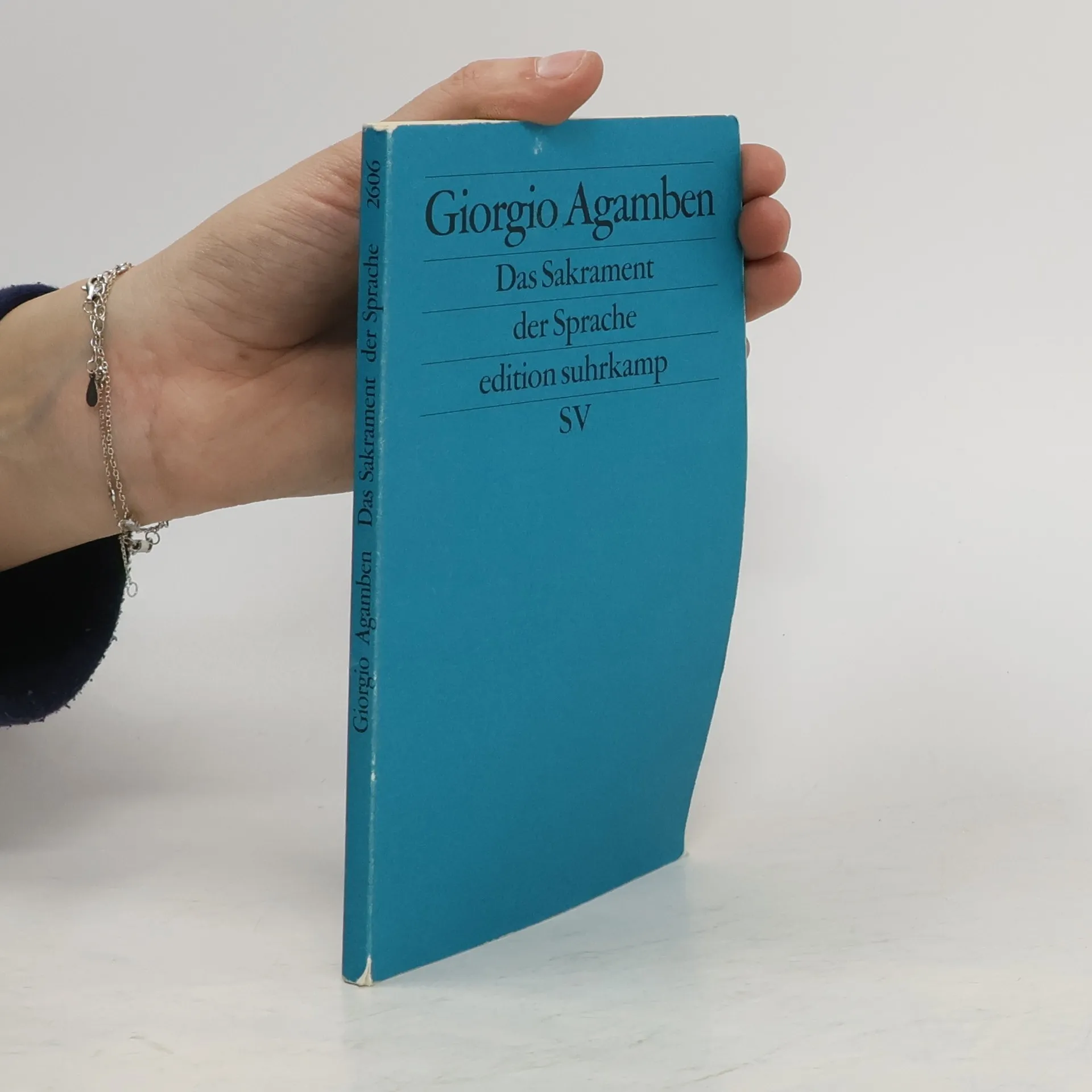
Exploring the oath's pivotal role in political and religious history, this book delves into its strategic significance at the crossroads of law, religion, and politics. Agamben conducts an archaeological analysis of Greek and Roman texts, revealing the oath as a foundational event in human development. He argues that the oath serves as both a 'sacrament of power' and a 'sacrament of language,' highlighting how humanity's ability to speak intertwines with the commitments made through oaths, shaping individual and collective identity.
Insofern der Ausnahmezustand zur Regel zu werden droht, sind die Institutionen des demokratischen Rechtsstaats und das verfassungsgemäße Gleichgewicht der Gewalten gefährdet, und die Grenze zwischen Demokratie und Diktatur verschwimmt. In Auseinandersetzung mit verschiedenen theoretischen Annäherungen an das Phänomen des Ausnahmezustands - zu nennen sind in erster Linie Walter Benjamin und Carl Schmitt, aber auch Autoren wie Theodor Mommsen, Adolphe Nissen und Jacques Derrida - vermißt Agamben das von den meisten Theoretikern gemiedene Niemandsland zwischen Politik und Recht, zwischen der Rechtsordnung und dem Leben und wirft ein neues Licht auf jene verborgene Beziehung, die das Recht an die Gewalt bindet.
Dem Eid kommt als" Sakrament der Macht"in der Geschichte der abendländischen Politik und Religion eine grundlegende Rolle zu. Dennoch fehlt - ungeachtet zahlreicher linguistischer, anthropologischer und historischer Studien - ein all diese Aspekte umfassender Versuch, den systematisch-strategischen Ort zu bestimmen, den die Institution des Eides am Schnittpunkt von Recht, Religion und Politik einnimmt. Hier setzt Giorgio Agamben mit seiner" Archäologie des Eides"an - und trifft mitten ins Zentrum der Existenz des Menschen als sprechendes sowie als politisches Tier. Im Rückgriff auf griechische und römische Quellen stellt Agamben den Konnex her zwischen dem Eid einerseits und archaischer Gesetzgebung, Fluch und Götternamen andererseits. Dabei gewinnt er eine völlig neuartige Perspektive auf den Ursprung des Eides: Der Eid wird zum entscheidenden Moment in der Anthropogenese; als Sakrament der Macht hat er sich etablieren können, weil er zuallererst das Sakrament der Sprache ist. Indem sich der Mensch als sprechendes Wesen entdeckt, bindet er sich auch an die Sprache und setzt in ihr sein Schicksal aufs Spiel
In this book the Italian philosopher Giorgio Agamben looks closely at the literature of the survivors of Auschwitz, probing the philosophical and ethical questions raised by their testimony
Lo stato di eccezione, ossia quella sospensione dell'ordine giuridico che siamo abituati a considerare una misura provvisoria e straordinaria, sta oggi diventando sotto i nostri occhi un paradigma normale di governo, che determina in misura crescente la politica sia estera sia interna degli stati. Il libro di Agamben è il primo tentativo di fornirne una sommaria ricostruzione storica e, insieme, di analizzare le ragioni e il senso della sua evoluzione attuale, da Hitler a Guantanamo. Quando lo stato di eccezione tende a confondersi con la regola, le istituzioni e gli equilibri delle costituzioni democratiche non possono più funzionare e lo stesso confine fra democrazia e assolutismo sembra cancellarsi. Muovendosi nella terra di nessuno fra la politica e il diritto, fra l'ordine giuridico e la vita, dove i ricercatori non amano avventurarsi, Agamben smonta a una a una le teorizzazioni giuridiche dello stato di eccezione e getta una luce nuova sulla relazione nascosta che lega violenza e diritto.