


Bookbot

Otto Neugebauer

    26 maggio 1899 – 19 febbraio 1990

    Otto Neugebauer è stato un matematico e storico della scienza noto per la sua ricerca sulla storia dell'astronomia e delle scienze esatte nell'antichità e nel Medioevo. Studiando tavolette d'argilla, scoprì che gli antichi babilonesi conoscevano la matematica e l'astronomia molto più di quanto si pensasse in precedenza. Neugebauer è stato definito "il più originale e produttivo studioso della storia delle scienze esatte, forse della storia della scienza, della nostra epoca". Il suo lavoro ha illuminato le conoscenze avanzate delle civiltà antiche che in precedenza erano state trascurate.

    Astronomische Papyri aus Wiener Sammlungen
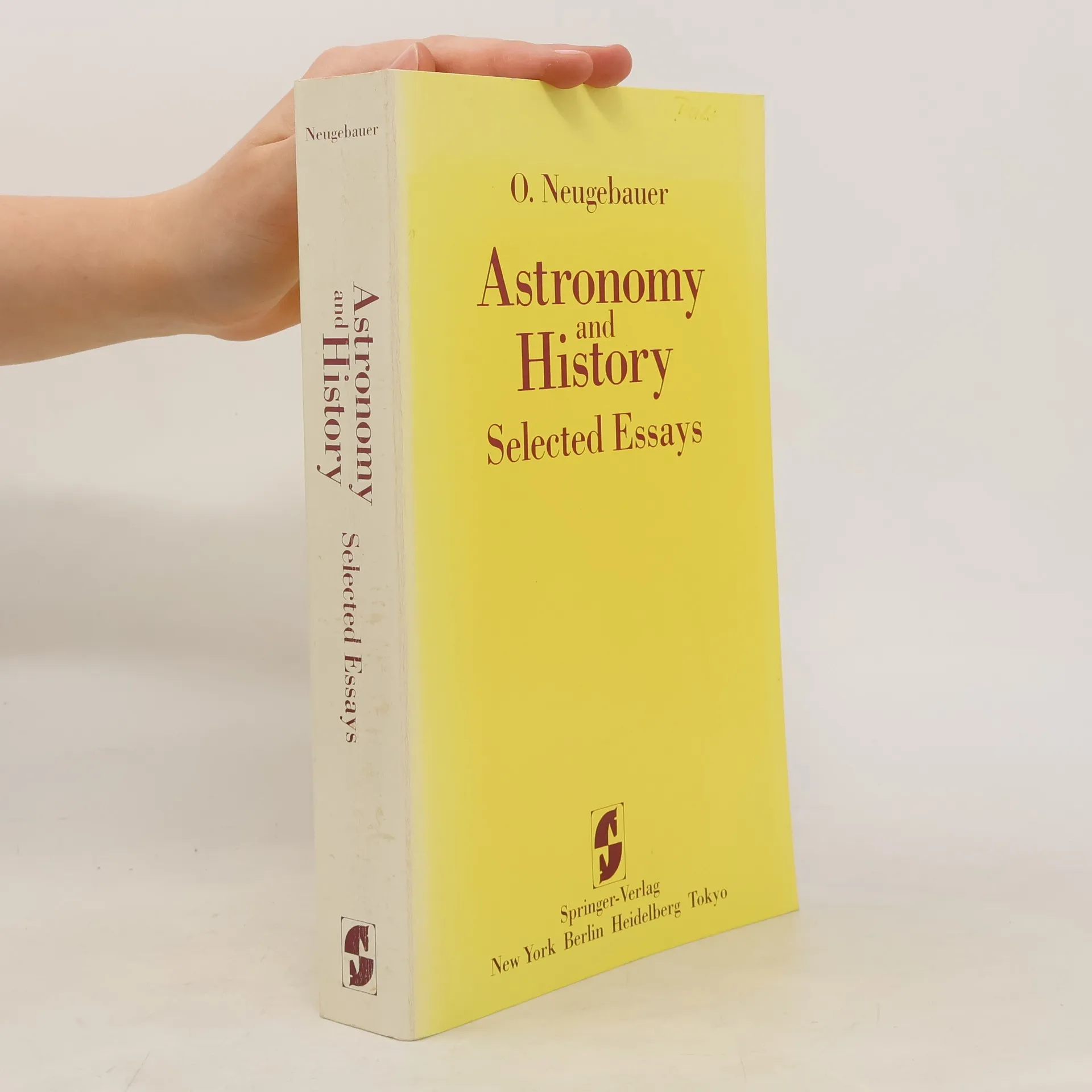
    Astronomy and history
    Memoirs of the American Philosophical Society - 48: Greek Horoscopes
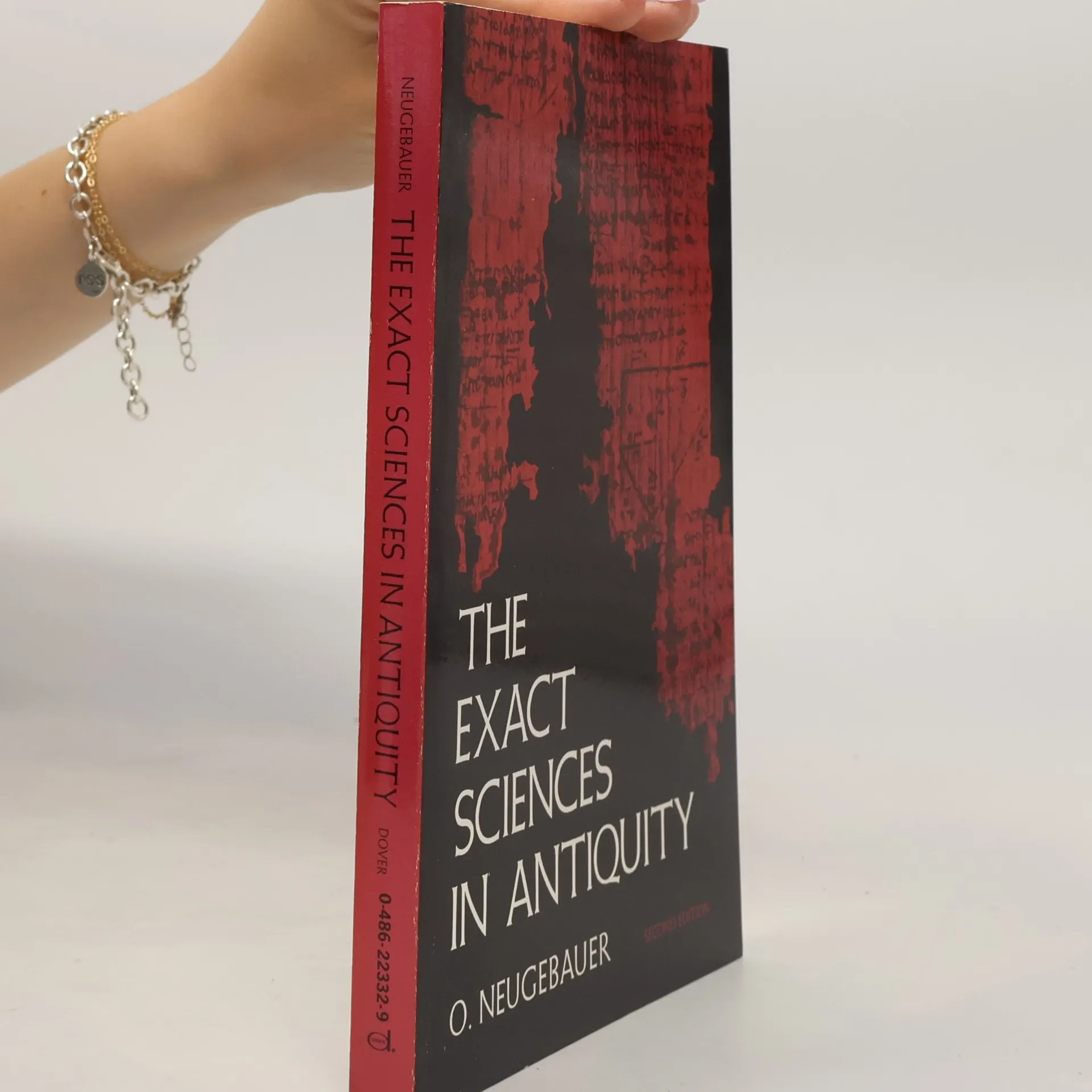
    The Exact Sciences in Antiquity
    • What we know about Greek astronomy is dominated by Ptolemy s Almagest (written c. 140 A.D.) & closely related works like Theon s Handy Tables (end of 4th C.) but we have only very little info. about the practice of computing the positions of sun, moon, & planets during any period of antiquity. Now, the Greek horoscopes are available for study as a group which could be expected to reflect the current techniques of Greek astronomy. About 60 horoscopes from the first 5 centuries of our era have been published since Young (1828) & Champollion-Figeac (1840) in the papyrological literature, which comprises 18,000 texts. This vol. includes all horoscopes from this widely scattered material & a few unpublished pieces. Illustrations.

      Memoirs of the American Philosophical Society - 48: Greek Horoscopes1987
    • Die hier versammelten Aufsätze zu verschiedenen Themen der antiken und mittelalterlichen Astronomie wurden ursprünglich von Noel Swerdlow von der Universität Chicago angeregt. Sie bieten einen allgemeinen Hintergrund für meine technischere Geschichte der antiken mathematischen Astronomie und für meine Ausgabe astronomischer keilschriftlicher Texte. Mehrere dieser wiederveröffentlichten Artikel wurden geschrieben, um gut verankerte historische Mythen zu widerlegen, die einer genauen Prüfung der Quellen nicht standhalten konnten. Beispiele sind der angebliche astronomische Ursprung des ägyptischen Kalenders, die Entdeckung der Präzession durch die Babylonier und die Vereinfachung des ptolemäischen Systems in Kopernikus' De Revolutionibus. In all meinen Arbeiten habe ich versucht, so genau wie möglich darzustellen, was die ursprünglichen Quellen offenbaren, was oft sehr unterschiedlich von der allgemein akzeptierten Sichtweise ist. So beleuchtet die Diskussion der technischen Terminologie die Bedeutung eines antiken Textes, der häufig missbraucht wurde, um moderne Theorien über den antiken Heliozentrismus zu unterstützen; ein fast isolierter Fall zeigt, wie die griechischen Weltkarten tatsächlich aussahen; und der alexandrinische Ostercomputus, der von vielen Historikern bewundert wird, wird aus äthiopischen Quellen als auf sehr einfachen Verfahren basierend dargestellt.

      Astronomy and history1983
      3,0
    • The Exact Sciences in Antiquity

      Second Edition

      • 288pagine
      • 11 ore di lettura

      Based on lectures from 1949 at Cornell University, this work offers a non-technical overview of Egyptian and Babylonian mathematics and astronomy, detailing their influence on the Hellenistic world. It highlights the unexpected sophistication of early science, particularly in Babylonian mathematics. The text contrasts the Egyptian additive computation methods using unit fractions with Babylonian place value systems. It explores Babylonian numerical tables, approximations of the square root of 2, Pythagorean numbers, quadratic equations, and various algebraic and geometric cases, revealing a level of mathematical advancement comparable to early Renaissance Europe, unlike the more primitive Egyptian mathematics. In astronomy, the author discusses a surprising level of sophistication, attributing it to a competent mathematical framework rather than merely centuries of observations. The transmission of this early science into Hellenistic culture is also examined, along with an appendix on Greek astronomy and the influences on the Copernican system. Renowned for his contributions to premodern science, the author presents a unique, accessible survey that benefits anyone interested in the history of science and culture. This is an unabridged, slightly corrected reprint of the 1957 edition, featuring 14 plates and 52 figures.

      The Exact Sciences in Antiquity1969