Années de pèlerinage. Troisième Année Italie (S163) & Trois Odes funèbres (S516, S516a, S517)
Partitur für Klavier
- 136pagine
- 5 ore di lettura


Franz Liszt fu un compositore e pianista virtuoso ungherese, rinomato per la sua abilità tecnica e la sua influenza sulla musica del XIX secolo. Come compositore, guidò la "Scuola Tedesca Nuova", innovando nella forma e nell'armonia musicale. Il lavoro di Liszt anticipò alcune tendenze musicali del XX secolo e il suo impatto si estese oltre la sua epoca. Fu anche un importante insegnante e mecenate.


Partitur für Klavier
The premiere of Rigoletto (1851) marks a significant milestone in Verdi's oeuvre. The opera, based on a play by Victor Hugo (Le Roi s'amuse, 1832), is a work of bizarre logic, featuring a grotesque blend of wild passion and dark humor, tragic seriousness and desperate mockery. Verdi himself referred to it as a revolutionary opera.
Franz Liszt's biographical work pays heartfelt tribute to Frédéric Chopin, highlighting their close friendship and shared experiences in the Romantic era. Liszt provides a unique perspective on Chopin's life, delving into his personality, relationships, and the cultural backdrop of his time. The narrative vividly captures the essence of Chopin's music and its influence on classical music, while also detailing his formative years in Poland and artistic journey in Paris. This biography transcends mere facts, offering an intimate homage from one musical genius to another.
Der Briefwechsel zwischen Richard Wagner und Franz Liszt von 1854 bis 1861 beleuchtet Wagners literarische Aktivitäten, das gescheiterte Opernprojekt "Wieland der Schmied" und die Entwicklung von "Der Ring des Nibelungen". Zudem wird Wagners Beziehung zu Mathilde Wesendonck und die Trennung von seiner ersten Frau thematisiert.
Der Band beleuchtet die Freundschaft zwischen Richard Wagner und Franz Liszt sowie deren musikalischen Austausch in einem umfangreichen Briefwechsel. Im Fokus stehen Wagners dramatische Jahre, seine Rolle in der Revolution 1848/49 und sein anschließendes Exil in der Schweiz, wo er Ideen für sein Spätwerk entwickelte.
Der unveränderte Nachdruck von 1880 bietet Lesern die Möglichkeit, ein historisches Werk in originaler Form zu erleben. Der Verlag Antigonos legt besonderen Wert auf die Erhaltung und Zugänglichkeit kulturellen Erbes, indem er sorgfältig ausgewählte Nachdrucke herausgibt. Diese Initiative ermöglicht es, bedeutende Texte aus der Vergangenheit in gutem Zustand zu genießen und zu studieren.
Parigi, 1840. Liszt, il pianista più acclamato d’Europa, incontra Wagner, un giovane compositore sconosciuto. Inizia così una delle amicizie più celebri e complesse nella storia della musica. Nei successivi otto anni, Wagner compone opere come Il Vascello fantasma, Tannhäuser e Lohengrin, mentre Liszt, riconoscendo il potenziale rivoluzionario di Wagner, si dedica con passione alla sua promozione, culminando in un ciclo di concerti a Weimar nel 1853, dove dirige personalmente le tre opere. Liszt scrive articoli celebrativi sul genio di Wagner e concepisce un libro che sottolinea l'importanza di unire compositore e librettista, essenziale per il nuovo sistema drammatico di Wagner. Le sue pagine, ricche di riferimenti a filosofia, Bibbia, mitologie e arti, rivelano una ricerca musicale profonda. Sebbene il libro non sia stato pubblicato a causa di vicende editoriali, il musicologo Nicolas Dufetel ha recuperato i manoscritti e le annotazioni di Liszt, dando finalmente compiutezza al progetto. Per Liszt, la musica non può esistere senza poesia, e l'opera lirica deve rinascere, con Wagner come messia di questa trasformazione.
This collection of literature attempts to compile many of the classic works that have stood the test of time and offer them at a reduced, affordable price, in an attractive volume so that everyone can enjoy them.
(Piano). 18 varied pieces written throughout the Liszt's lifetime. With a detailed introduction and teaching notes for each piece.
Die 'Consolations' gehören zu den bekanntesten Klavierwerken von Franz Liszt. Ihre Popularität beruht nicht nur auf ihrem expressiven und lyrischen Charakter, sondern auch auf ihren relativ moderaten pianistischen Anforderungen. Die endgültige Version der sechs Stücke erschien erstmals 1850 im Druck. Die Ausgabe basiert hauptsächlich auf der deutschen Erstausgabe, da keine erhaltenen Autographe und Druckvorlagen vorhanden sind. Zudem wurden die französische Erstausgabe sowie separate Ausgaben der Consolations Nr. 3 und 5, die in London oder Paris veröffentlicht wurden, konsultiert. Die Ausgabe wird durch Auffhinweise der Liszt-Schülerin Lina Ramann ergänzt, die praktisch erste Aufzeichnungen von Liszts Interpretationsideen darstellen. Eine klare Notation ohne Umblätterprobleme erleichtert das Studium und die Aufführung der beliebten Werke.
LOVE LETTERS OF GREAT MEN (Volume 1) is an anthology of romantic love letters written by leading male historical figures. *** The book plays a key role in the plot of the US movie Sex and the City. *** When Carrie Bradshaw in the "Sex and the City" movie began reading the book Love Letters of Great Men, millions of women wanted to get their hands on the book. Of course, what could be more romantic than an entire book of love letters, written by men! *** The book includes love letters written by Ludwig van Beethoven, Pietro Bembo, Napolean Bonaparte, Rupert Brooke, Robert Browning, Robert Burdette, Lord Byron, Lord Randolph Churchill, Winston Churchill, Mark Twain, John Constable, Cuff Cooper, Oliver Cromwell, Pierre Curie, Alfred de Musset, F. Scott Fitzgerald, Gustave Flaubert, Johann Wolfgang von Goethe, Lyman Hodge, Count Gabriel Honore de Mirbeau, Victor Hugo, James Joyce, Franz Kafka, John Keats, Henry IV of France, Henry VIII, Franz Liszt, Jack London, Wolfgang Amadeus Mozart, Thomas Otway, Robert Peary, Sir Walter Raleigh, Theodore Roosevelt, Jr., John Ruskin, Robert Schumann, George Bernard Shaw, Richard Steele, Alfred de Musset, Dylan Thomas, Count Leo Tolstoy, Vincent Van Gogh, Voltaire, Henry von Kleist, and Woodrow Wilson.
Sonate in h-Moll, Mephisto-Walzer Nr. 1, 2 Etüden über Waldesrauschen und Gnomenreigen, Rigoletto-Paraphrase, La Campanella (Etüde über Paganini Nr. 3)
Franz Liszt's liaison with Agnes Street-Klindworth was a shadowy affair and one of the best-kept secrets of the Weimar years, according to Alan Walker, and La Mara's heavily censored 1894 edition of the Liszt-Agnes letters did little to illuminate this relationship. Here, in a new and expanded edition of those letters, Pauline Pocknell casts new light not only on Liszt himself, but on a woman who was the Master's mistress and confidante as well as a spy of considerable historical importance in her own right. This new critical edition contains all 160 extant letters in both English and French, transcribed from the most reliable sources and carefully annotated by a scholar of increasing reputation. Also included are-biographical information about Agnes herself; historical and critical prefaces; detailed notes for each letter; linking text between letters; analytical tables of the correspondence; an extensive bibliography and an index. Some 40 rare illustrations accompany the letters themselves and help readers visualize Liszt's and Agnes's circumstances and the amorous and diplomatic encounters they documented for posterity.
Five advanced level pieces for piano by Franz Liszt (1811-1886). This collection of selected piano pieces is reprinted from the New Liszt Edition published by Editio Musica Budapest, Music Publishers Ltd. Includes After Reading Dante, 1st Ballade, 2nd Ballade, the multi-sectional Study in Twelve Exercises, and the Historical Hungarian Portraits based on individual personalities.
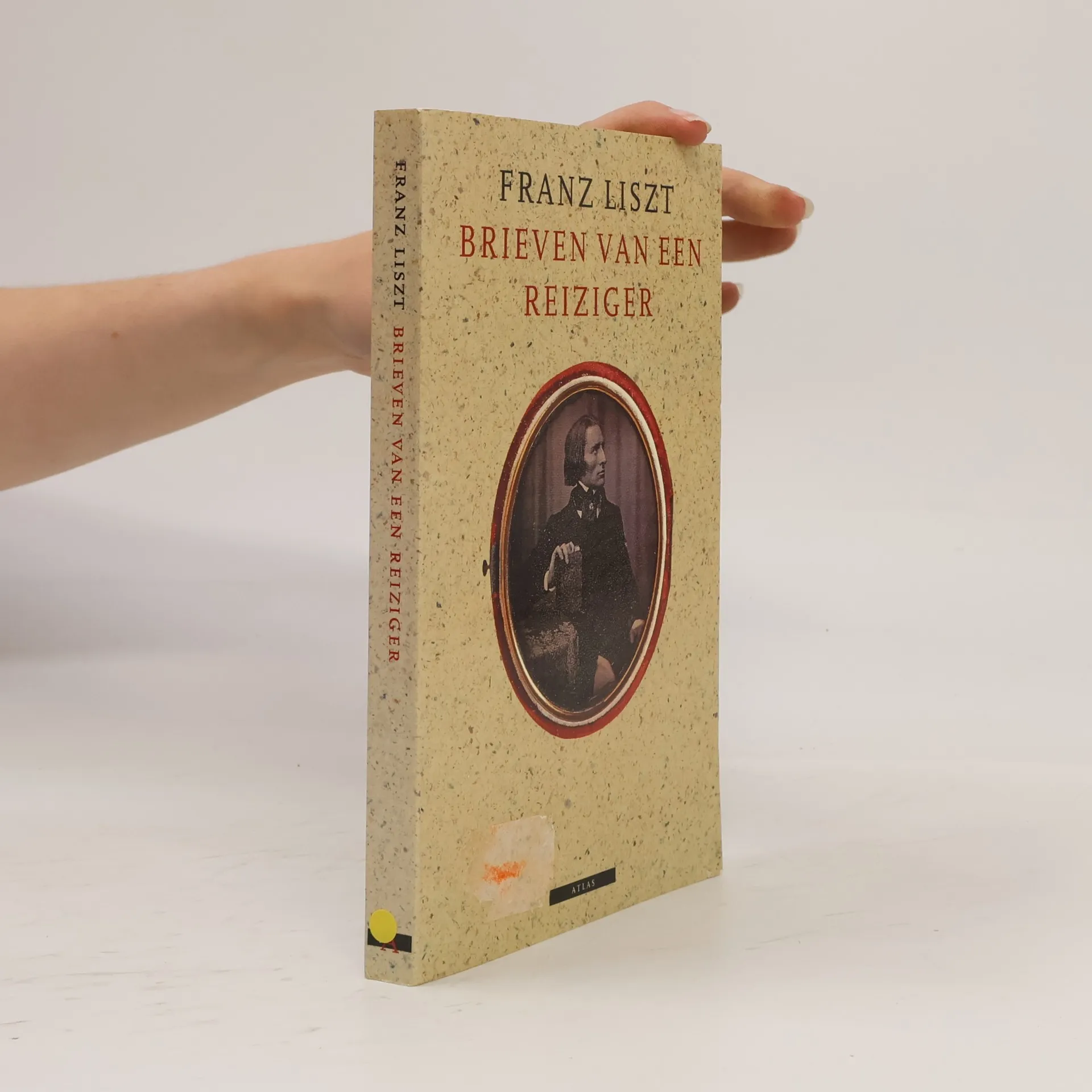
Reisbrieven van de pianovirtuoos en componist (1811-1886).
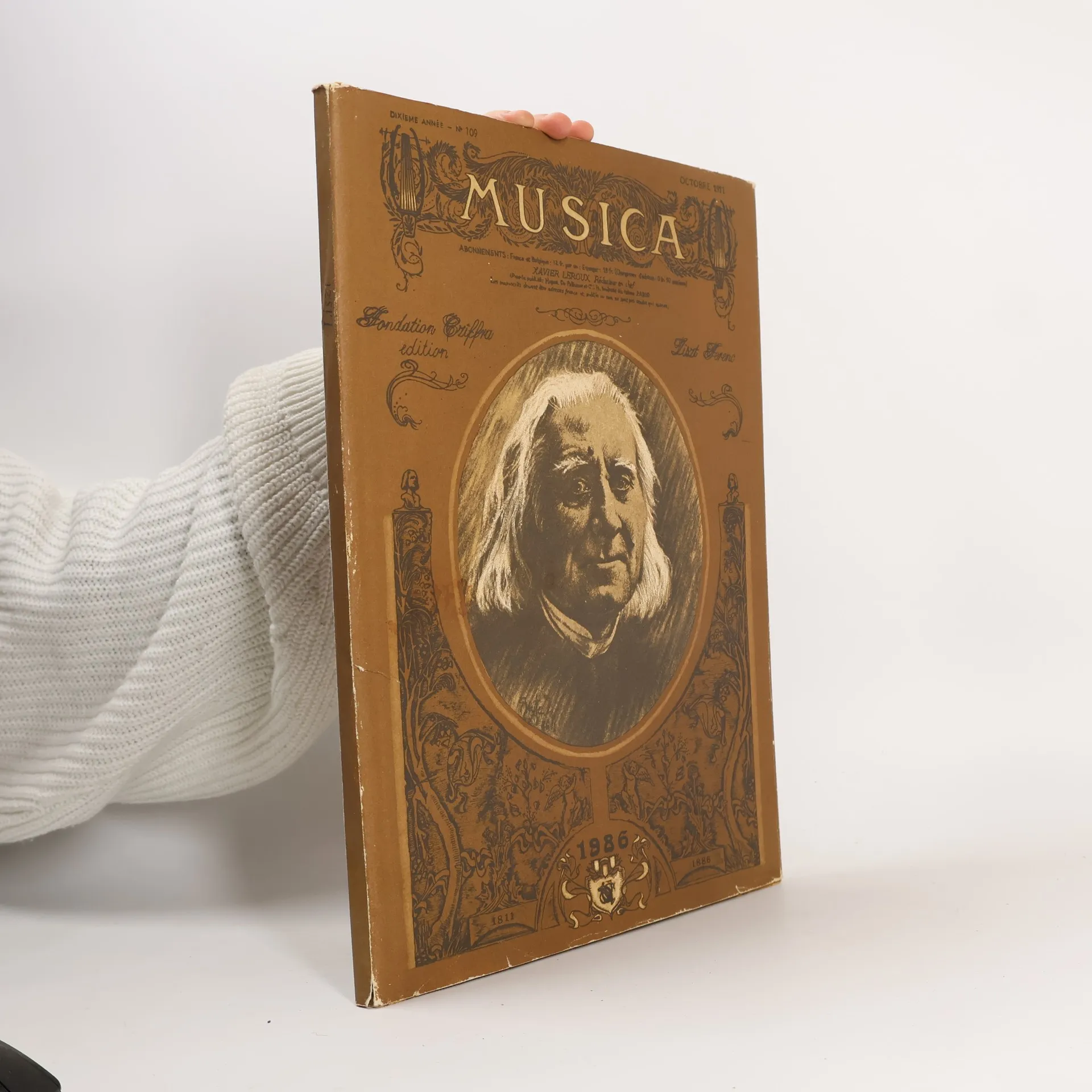
Faksimileausg. der französischen Zeitschrift "Musica" vom Oktober 1911 zum Jubiläum des 175. Geburtstages und des 100. Todestages von Franz Liszt
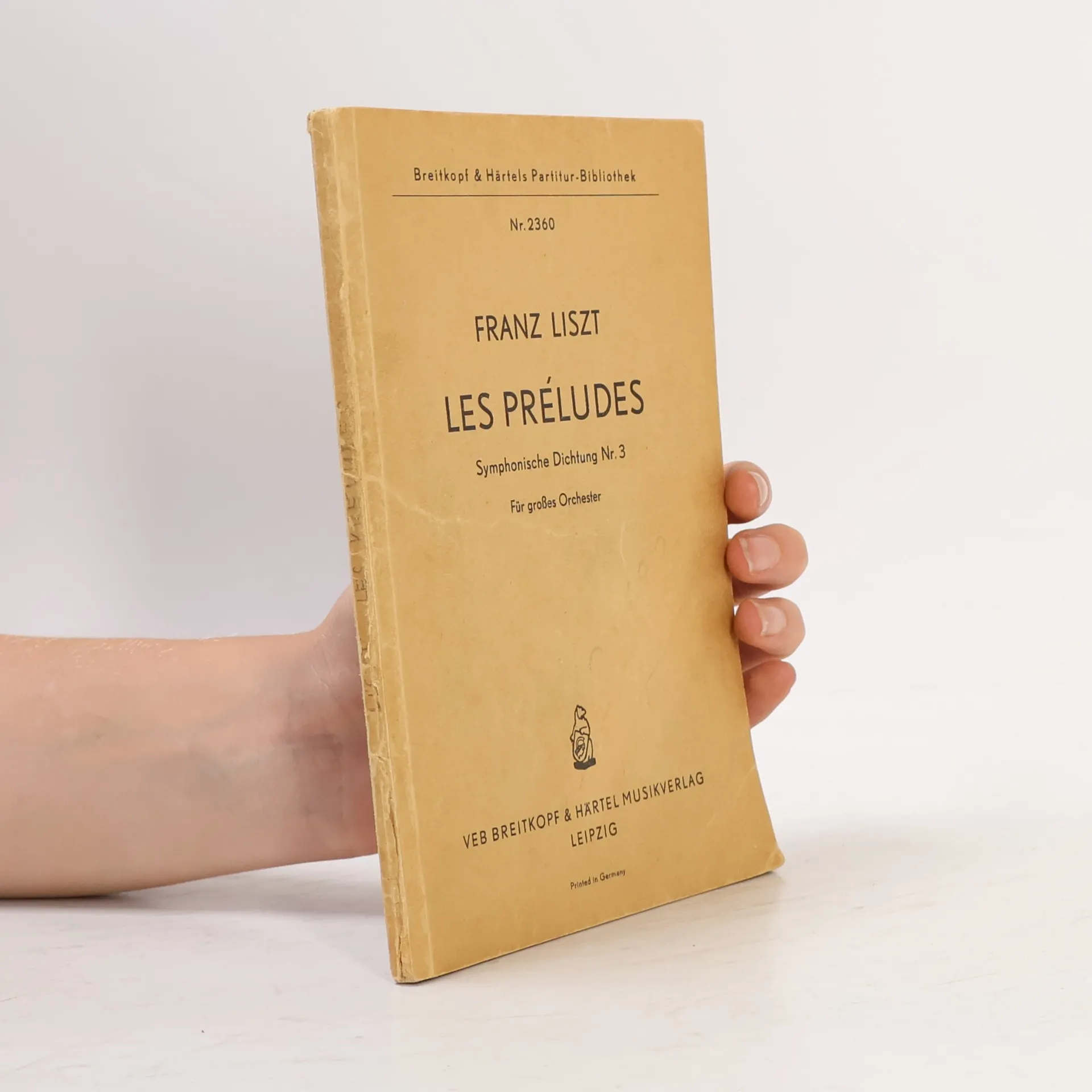
Symphonische Dichtung Nr. 3. Für großes Orchester