





De ervaringen van de jonge Törless
Valutazione del libro
Maggiori informazioni sul libro
Like his contemporary and rival Sigmund Freud, Robert Musil boldly explored the dark, irrational undercurrents of humanity. The Confusions of Young Törless , published in 1906 while he was a student, uncovers the bullying, snobbery, and vicious homoerotic violence at an elite boys academy. Unsparingly honest in its depiction of the author's tangled feelings about his mother, other women, and male bonding, it also vividly illustrates the crisis of a whole society, where the breakdown of traditional values and the cult of pitiless masculine strength were soon to lead to the cataclysm of the First World War and the rise of fascism. A century later, Musil's first novel still retains its shocking, prophetic power.


Acquisto del libro
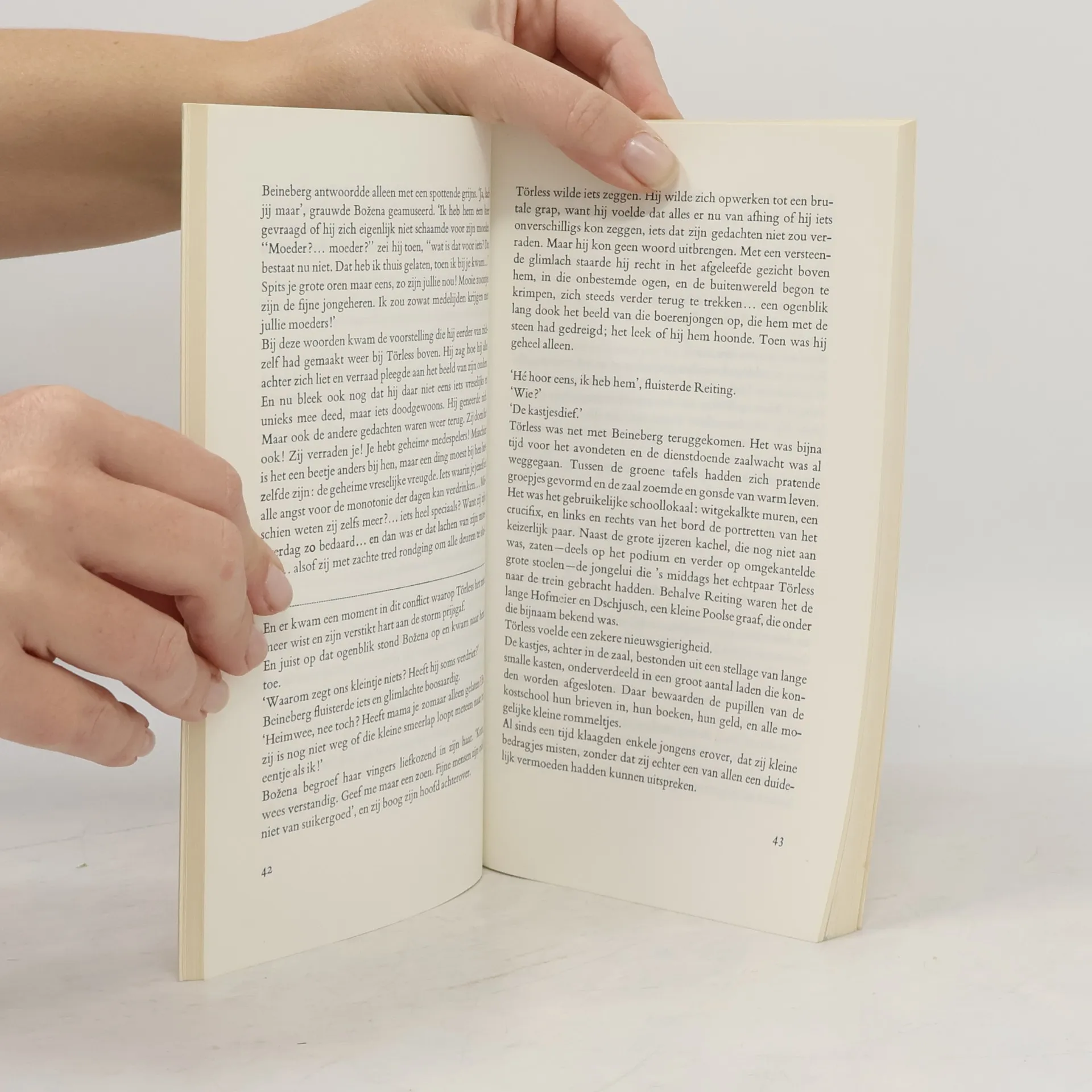
De ervaringen van de jonge Törless, Robert Musil, Frank Diamand
- Lingua

- Pubblicato
- 1985
- Rilegatura
- (In brossura),
- Condizioni del libro
- Danneggiato
- Prezzo
- 14,86 €
Metodi di pagamento
Qui potrebbe esserci la tua recensione.
- Titolo
- De ervaringen van de jonge Törless
- Lingua
- Olandese
- Autori
- Robert Musil, Frank Diamand
- Editore
- Ambo / Polak & Van Gennep
- Pubblicato
- 1985
- Formato
- In brossura
- Pagine
- 174
- ISBN10
- 9026307403
- ISBN13
- 9789026307409
- Serie
- Tag
- Tema stórico, Temi psicologici, Letteratura ceca, Letteratura tedesca, Germania, XX Secolo, LGBTQ+, Scuola, Crescita, Austria, Adattato in un film, Gioventù, Violenza, Letture obbligatorie, Omosessualità, Letteratura austriaca, Bullismo, Ricerca di se stessi, Collegio, Pubertà, Impero Austro-Ungarico, Letteratura centroeuropea, Scuole Militari
- Prima pubblicazione
- 1906
- Titolo originale
- Die Verwirrungen des Zöglings Törleß
- Valutazione
- 3,8 su 5
- Descrizione
- Like his contemporary and rival Sigmund Freud, Robert Musil boldly explored the dark, irrational undercurrents of humanity. The Confusions of Young Törless , published in 1906 while he was a student, uncovers the bullying, snobbery, and vicious homoerotic violence at an elite boys academy. Unsparingly honest in its depiction of the author's tangled feelings about his mother, other women, and male bonding, it also vividly illustrates the crisis of a whole society, where the breakdown of traditional values and the cult of pitiless masculine strength were soon to lead to the cataclysm of the First World War and the rise of fascism. A century later, Musil's first novel still retains its shocking, prophetic power.