

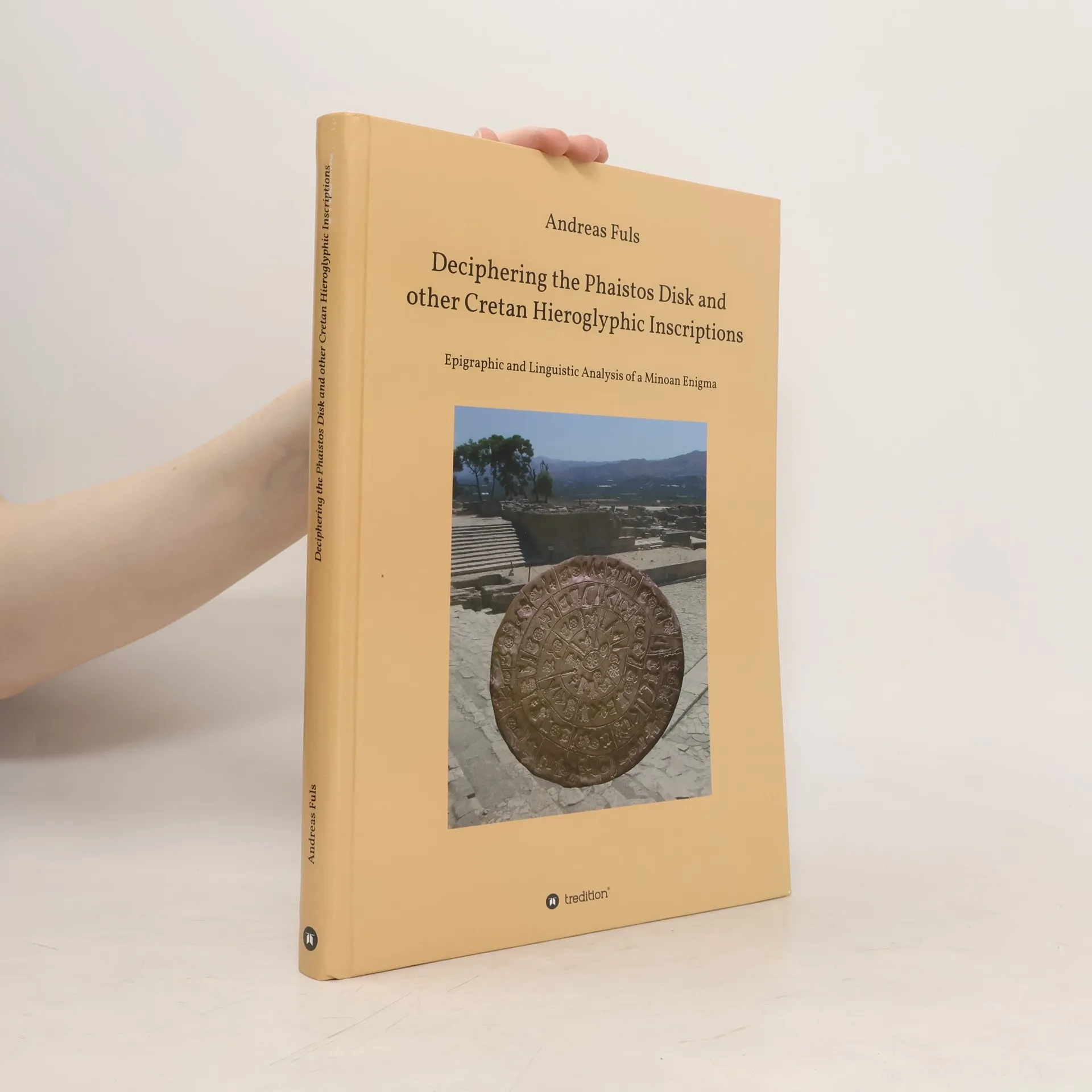
Deciphering the Phaistos Disk and other Cretan Hieroglyphic Inscriptions
Epigraphic and Linguistic Analysis of a Minoan Enigma
Autori
Valutazione del libro
Maggiori informazioni sul libro
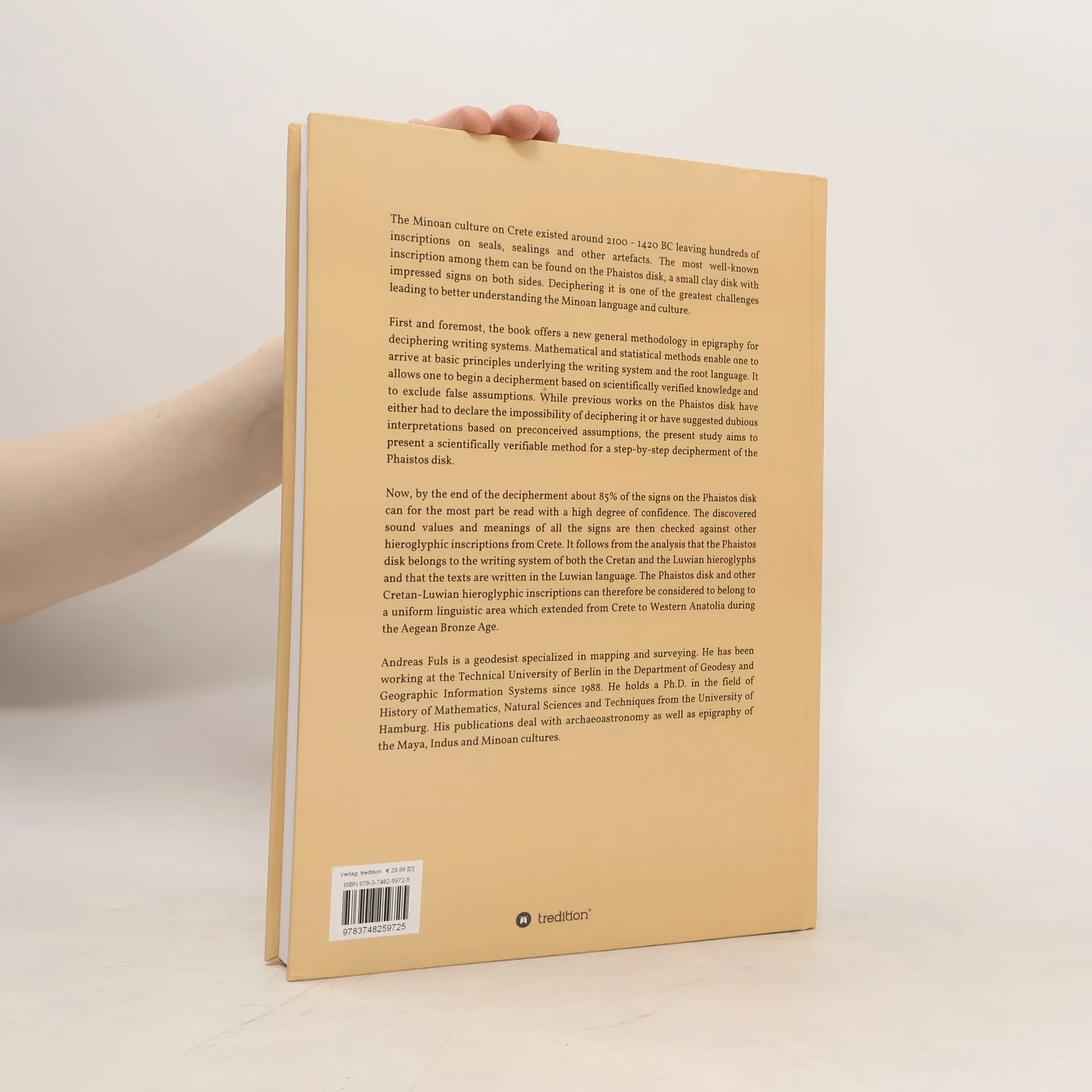
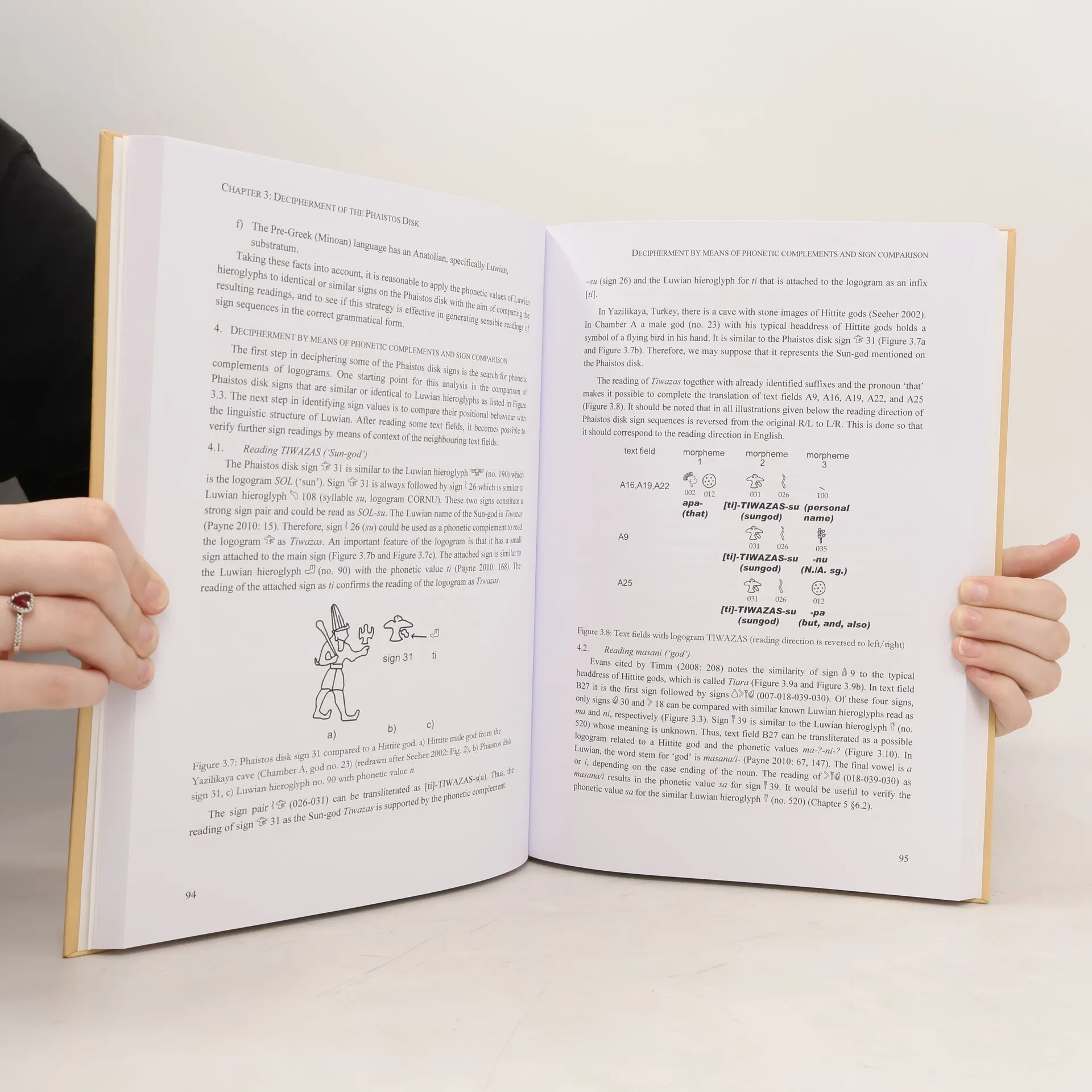
The Minoan culture on Crete, existing around 2100-1420 BC, left numerous inscriptions on seals and artefacts, with the Phaistos disk being the most notable. This small clay disk features impressed signs on both sides, and deciphering it presents a significant challenge to understanding Minoan language and culture. The book introduces a new methodology in epigraphy for deciphering writing systems, utilizing mathematical and statistical methods to uncover fundamental principles of the writing system and its root language. This approach allows for a scientifically grounded decipherment, moving beyond previous works that either deemed it impossible or offered questionable interpretations. The study aims to provide a verifiable method for deciphering the Phaistos disk step by step. By the end of the analysis, about 85% of the signs can be read with confidence. The meanings and sound values of the signs are cross-checked against other hieroglyphic inscriptions from Crete. The findings indicate that the Phaistos disk is linked to both Cretan and Luwian hieroglyphs, with the texts written in the Luwian language. Consequently, these inscriptions are part of a uniform linguistic area that spanned from Crete to Western Anatolia during the Aegean Bronze Age.
Acquisto del libro
Deciphering the Phaistos Disk and other Cretan Hieroglyphic Inscriptions, Andreas Fuls
- Lingua

- Pubblicato
- 2019
- Rilegatura
- (Copertina rigida)
Metodi di pagamento
Qui potrebbe esserci la tua recensione.
- Titolo
- Deciphering the Phaistos Disk and other Cretan Hieroglyphic Inscriptions
- Sottotitolo
- Epigraphic and Linguistic Analysis of a Minoan Enigma
- Lingua
- Inglese
- Autori
- Andreas Fuls
- Editore
- tredition
- Pubblicato
- 2019
- Formato
- Copertina rigida
- Pagine
- 256
- ISBN10
- 3748259727
- ISBN13
- 9783748259725
- Serie
- Tag
- Valutazione
- 3 su 5
- Descrizione
- The Minoan culture on Crete, existing around 2100-1420 BC, left numerous inscriptions on seals and artefacts, with the Phaistos disk being the most notable. This small clay disk features impressed signs on both sides, and deciphering it presents a significant challenge to understanding Minoan language and culture. The book introduces a new methodology in epigraphy for deciphering writing systems, utilizing mathematical and statistical methods to uncover fundamental principles of the writing system and its root language. This approach allows for a scientifically grounded decipherment, moving beyond previous works that either deemed it impossible or offered questionable interpretations. The study aims to provide a verifiable method for deciphering the Phaistos disk step by step. By the end of the analysis, about 85% of the signs can be read with confidence. The meanings and sound values of the signs are cross-checked against other hieroglyphic inscriptions from Crete. The findings indicate that the Phaistos disk is linked to both Cretan and Luwian hieroglyphs, with the texts written in the Luwian language. Consequently, these inscriptions are part of a uniform linguistic area that spanned from Crete to Western Anatolia during the Aegean Bronze Age.