

Maggiori informazioni sul libro
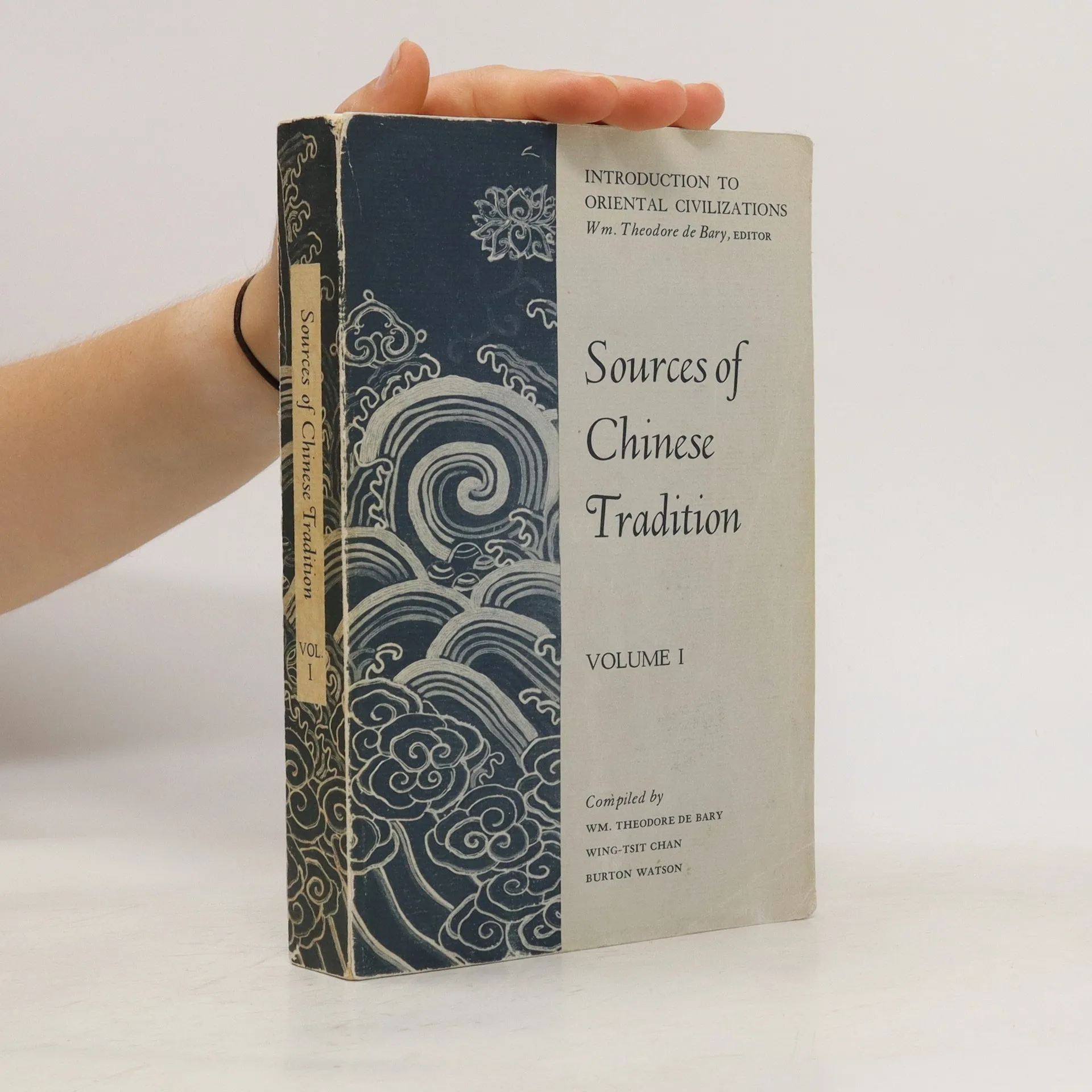
To provide an exciting introduction to the background of contemporary civilization in China, the editors of this book bring together translations from Chinese sources that illustrate Chinese thought since earliest times. The traditions represented range from Confucianism and Taoism to Buddhism. This volume contains a chronological table of Chinese history beginning with 2852 B.C. up to A.D. 1849. In addition to presenting the major schools of classical philosophy, this volume discusses yin-yang theories of cosmology and geomancy and the rationale of monarchy and dynastic rule. Neo-Confucianism is dealt with in its manifold revival in the Sung dynasty, the political reforms of Wang Anshih, and the philosophical school of Reason.
Acquisto del libro
Sources of Chinese tradition, Burton Watson, Yipao Mei, Wing Tsit Chan, Wm Theodore De Bary
- Lingua

- Pubblicato
- 1960
- Rilegatura
- (In brossura)
Metodi di pagamento
Qui potrebbe esserci la tua recensione.
- Titolo
- Sources of Chinese tradition
- Lingua
- Inglese
- Editore
- Columbia University Press
- Pubblicato
- 1960
- Formato
- In brossura
- ISBN10
- 0231086024
- ISBN13
- 9780231086028
- Serie
- Categoria
- Valutazione
- 3,7 su 5
- Descrizione
- To provide an exciting introduction to the background of contemporary civilization in China, the editors of this book bring together translations from Chinese sources that illustrate Chinese thought since earliest times. The traditions represented range from Confucianism and Taoism to Buddhism. This volume contains a chronological table of Chinese history beginning with 2852 B.C. up to A.D. 1849. In addition to presenting the major schools of classical philosophy, this volume discusses yin-yang theories of cosmology and geomancy and the rationale of monarchy and dynastic rule. Neo-Confucianism is dealt with in its manifold revival in the Sung dynasty, the political reforms of Wang Anshih, and the philosophical school of Reason.