

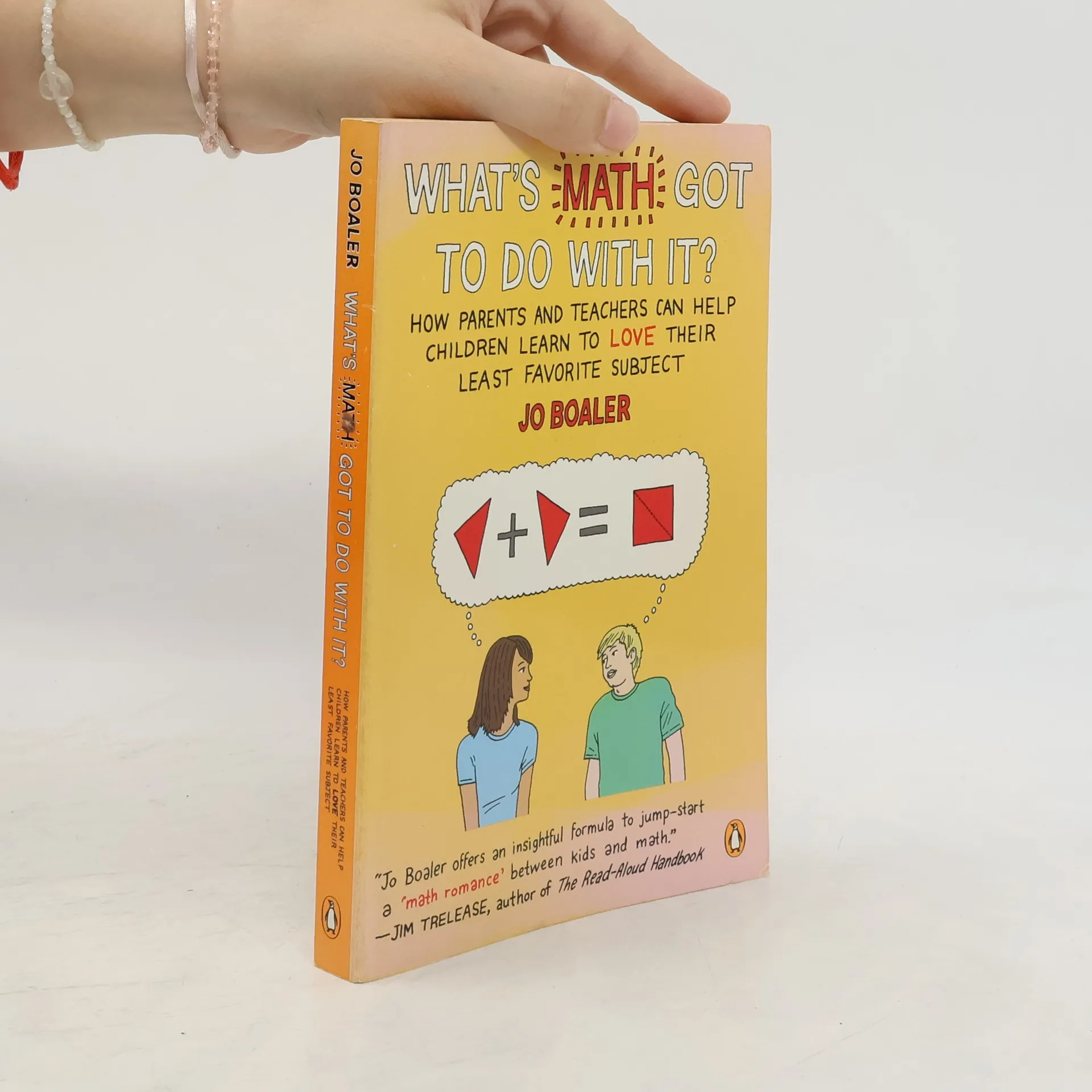
What's Math Got to Do with It?
How Parents and Teachers Can Help Children Learn to Love Their Least Favorite Subject
Autori
Valutazione del libro
Maggiori informazioni sul libro
A recent assessment of mathematics performance around the world ranked the United States twenty-eighth out of forty countries in the study. When the level of spending was taken into account, we sank to the very bottom of the list. We are falling rapidly behind the rest of the developed world when it comes to math education-and the consequences are dire. In this straightforward and inspiring book, Jo Boaler, a professor of mathematics education at Stanford for nine years, outlines concrete solutions that can change things for the better, including classroom approaches, essential strategies for students, and advice for parents. This is a must-read for anyone who is interested in the mathematical and scientific future of our country.
Acquisto del libro
What's Math Got to Do with It?, Jo Boaler
- Lingua

- Pubblicato
- 2009
- Rilegatura
- (In brossura)
Metodi di pagamento
Qui potrebbe esserci la tua recensione.
- Titolo
- What's Math Got to Do with It?
- Sottotitolo
- How Parents and Teachers Can Help Children Learn to Love Their Least Favorite Subject
- Lingua
- Inglese
- Autori
- Jo Boaler
- Editore
- Penguin Books
- Pubblicato
- 2009
- Formato
- In brossura
- Pagine
- 288
- ISBN10
- 0143115715
- ISBN13
- 9780143115717
- Serie
- Valutazione
- 4,1 su 5
- Descrizione
- A recent assessment of mathematics performance around the world ranked the United States twenty-eighth out of forty countries in the study. When the level of spending was taken into account, we sank to the very bottom of the list. We are falling rapidly behind the rest of the developed world when it comes to math education-and the consequences are dire. In this straightforward and inspiring book, Jo Boaler, a professor of mathematics education at Stanford for nine years, outlines concrete solutions that can change things for the better, including classroom approaches, essential strategies for students, and advice for parents. This is a must-read for anyone who is interested in the mathematical and scientific future of our country.