

Parametri
- 504pagine
- 18 ore di lettura
Maggiori informazioni sul libro
With shortages of fossil energy, especially oil and natural gas, and heavy biomass energy use occurring in both developed and developing countries, a major focus has developed worldwide on renewable energy systems. Renewable energy systems include wind power, biomass, photovoltaics, hydropower, solar thermal, thermal ponds, and biogas. Currently, there is a heavy focus on biofuels made from crops, such as corn, sugarcane, and soybeans, for use as renewable energy sources. Wood and crop residues are also being used as fuel. Though it may seem beneficial to use renewable plant materials for biofuel, the use of crop residues and other biomass for biofuels raises many concerns about major environmental problems, including food shortages and serious destruction of vital soil resources. All renewable energy systems need to be investigated because humankind has only about 40 years of oil and gas reserves remaining. There is a 50 to 100 year supply of coal resources in the ground, but coal will become increasingly difficult to extract and will greatly increase the global warming threat. Serious energy conservation and research on viable renewable energy technologies are needed. This book considers the effectiveness and economics of several renewable energy technologies of current interest, including biofuels, solar and wind.
Acquisto del libro
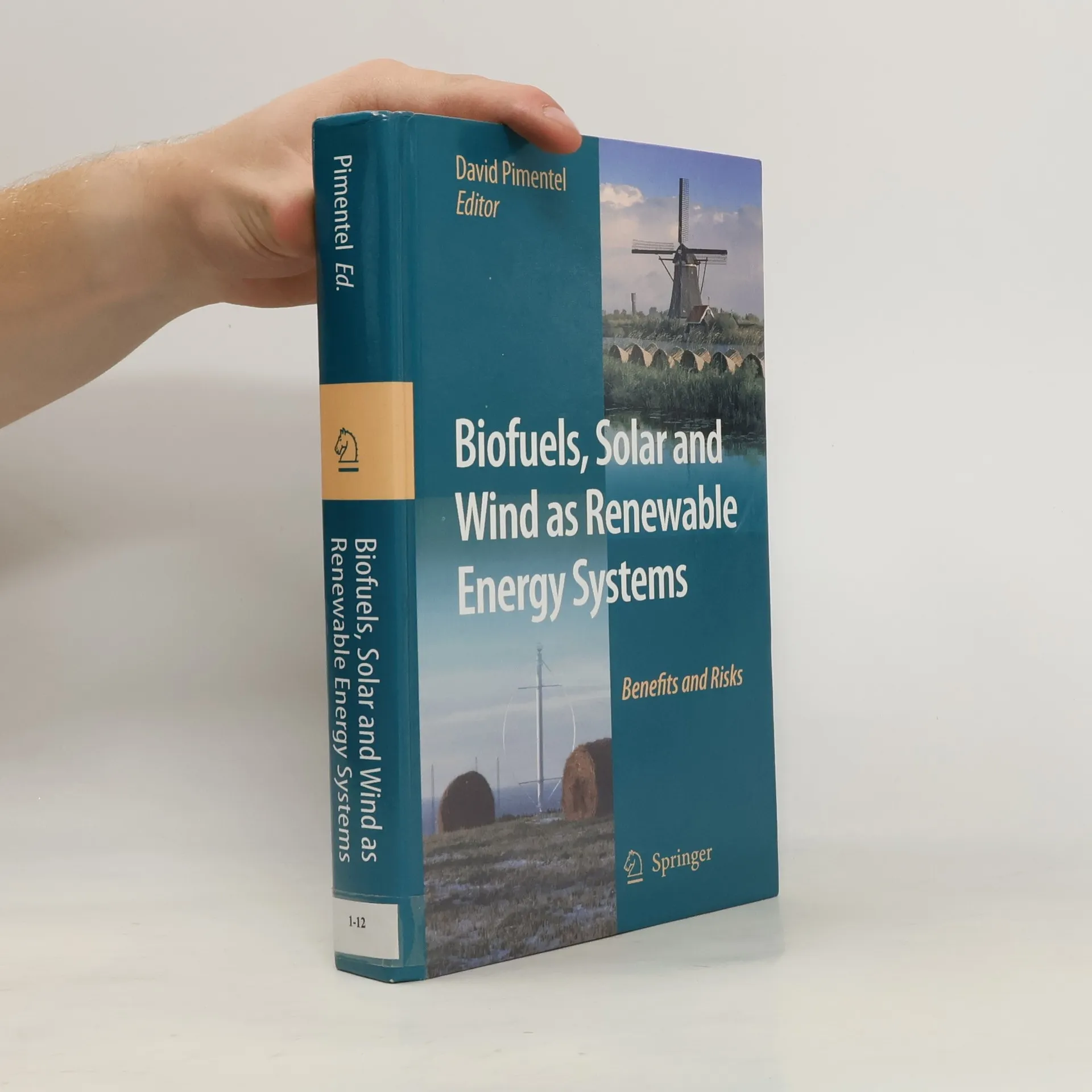
Biofuels, Solar and Wind as Renewable Energy Systems, David Pimentel
- Lingua

- Pubblicato
- 2008
- Rilegatura
- (Copertina rigida)
Metodi di pagamento
Ancora nessuna valutazione.
- Titolo
- Biofuels, Solar and Wind as Renewable Energy Systems
- Sottotitolo
- Benefits and Risks
- Lingua
- Inglese
- Autori
- David Pimentel
- Editore
- Springer
- Pubblicato
- 2008
- Formato
- Copertina rigida
- Pagine
- 504
- ISBN10
- 1402086539
- ISBN13
- 9781402086533
- Serie
- Categoria
- Descrizione
- With shortages of fossil energy, especially oil and natural gas, and heavy biomass energy use occurring in both developed and developing countries, a major focus has developed worldwide on renewable energy systems. Renewable energy systems include wind power, biomass, photovoltaics, hydropower, solar thermal, thermal ponds, and biogas. Currently, there is a heavy focus on biofuels made from crops, such as corn, sugarcane, and soybeans, for use as renewable energy sources. Wood and crop residues are also being used as fuel. Though it may seem beneficial to use renewable plant materials for biofuel, the use of crop residues and other biomass for biofuels raises many concerns about major environmental problems, including food shortages and serious destruction of vital soil resources. All renewable energy systems need to be investigated because humankind has only about 40 years of oil and gas reserves remaining. There is a 50 to 100 year supply of coal resources in the ground, but coal will become increasingly difficult to extract and will greatly increase the global warming threat. Serious energy conservation and research on viable renewable energy technologies are needed. This book considers the effectiveness and economics of several renewable energy technologies of current interest, including biofuels, solar and wind.