

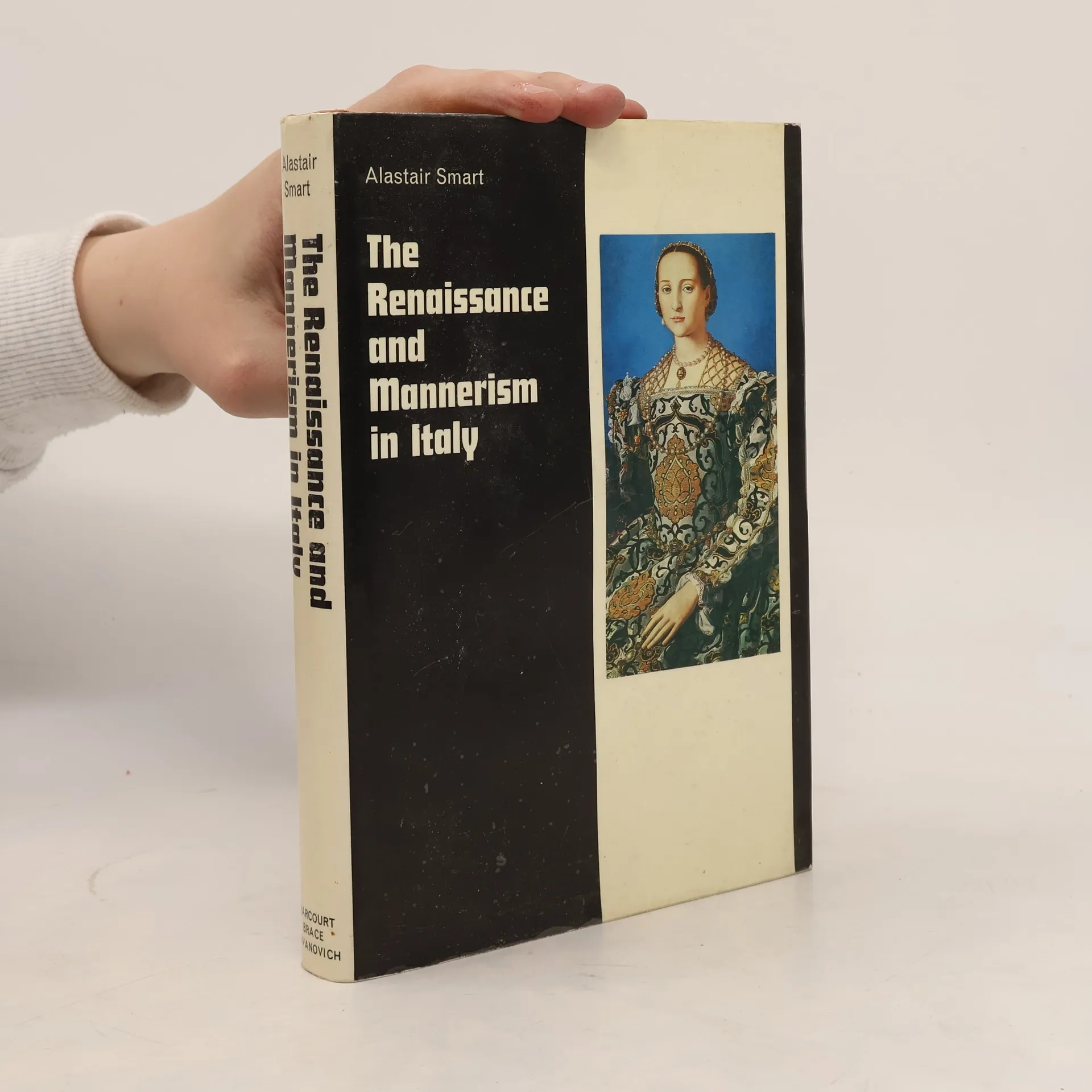
Maggiori informazioni sul libro
Professor Smart, in this cogent and sensitive new study, has found that in order to represent Renaissance art faithfully he has had to emphasize its religious inspiration and the tragic tone of many of its masterpieces. He shows how the unique fusion of Christian and pagan culture which took place in Florence in the early fifteenth century was received and transformed by the later Quattrocento throughout Italy, leading to the climax of Papal Rome under Julius II, to the still controversial change of mood called Mannerism, and to the final flowering in sixteenth-century Venice. Each artist is clearly characterized and related to the forces, spiritual and social, that molded his imagination. It is a rounded and satisfying picture, offering at the same time a complete account of an artistic movement and a series of fresh insights which will enrich the reader's experience of art. --
Acquisto del libro
The Renaissance and Mannerism in Italy, Alastair Smart
- Lingua

- Pubblicato
- 1971
- Rilegatura
- (Copertina rigida)
Metodi di pagamento
Ancora nessuna valutazione.
- Titolo
- The Renaissance and Mannerism in Italy
- Lingua
- Inglese
- Autori
- Alastair Smart
- Editore
- Harcourt Brace Jovanovich
- Pubblicato
- 1971
- Formato
- Copertina rigida
- Pagine
- 252
- ISBN10
- 0151768250
- ISBN13
- 9780151768257
- Serie
- Descrizione
- Professor Smart, in this cogent and sensitive new study, has found that in order to represent Renaissance art faithfully he has had to emphasize its religious inspiration and the tragic tone of many of its masterpieces. He shows how the unique fusion of Christian and pagan culture which took place in Florence in the early fifteenth century was received and transformed by the later Quattrocento throughout Italy, leading to the climax of Papal Rome under Julius II, to the still controversial change of mood called Mannerism, and to the final flowering in sixteenth-century Venice. Each artist is clearly characterized and related to the forces, spiritual and social, that molded his imagination. It is a rounded and satisfying picture, offering at the same time a complete account of an artistic movement and a series of fresh insights which will enrich the reader's experience of art. --