

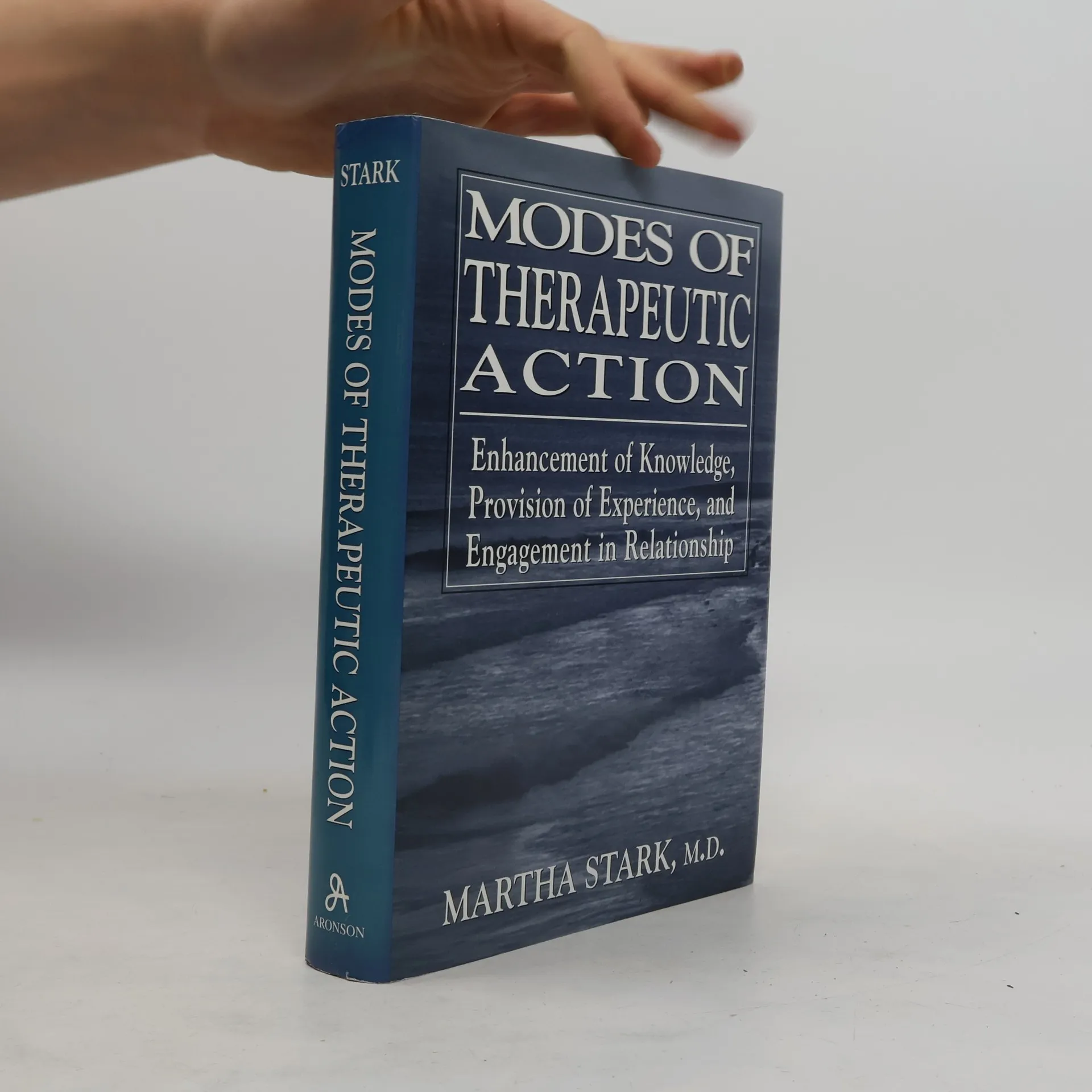
Modes of Therapeutic Action
Enhancement of Knowledge, Provision of Experience, and Engagement in Relationship
Autori
Valutazione del libro
Maggiori informazioni sul libro
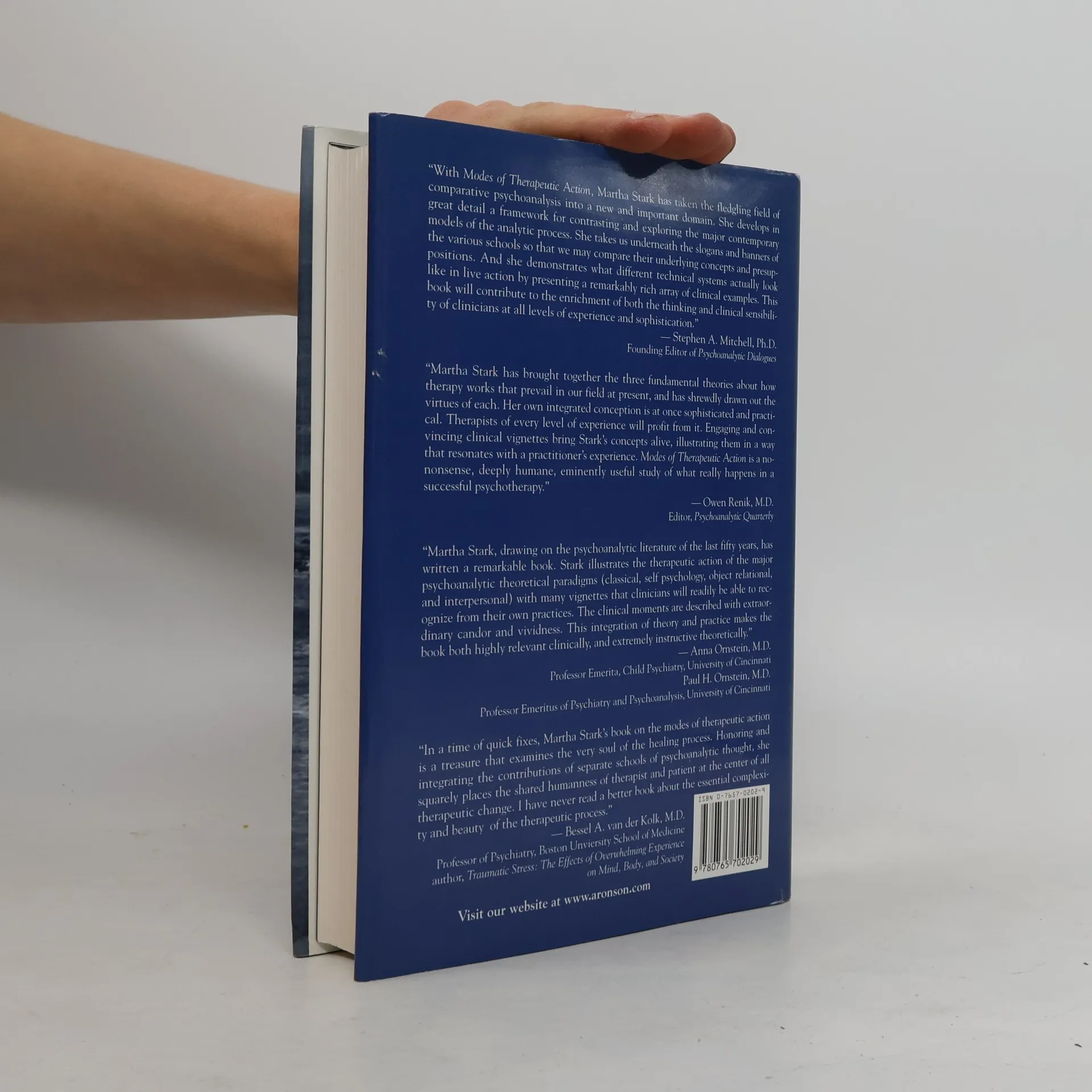
How do we position ourselves in relation to our patients, and how do these positions influence our understanding and interventions? Martha Stark explores this through a comprehensive theory of therapeutic action, integrating three models. Model 1 focuses on knowledge and insight, representing a one-person psychology centered on the patient's internal workings. Model 2 emphasizes corrective experience, functioning as a one-and-a-half-person psychology where the therapist fills in the patient's deficits, highlighting what the therapist can offer rather than who they are. Model 3 centers on the real relationship, embodying a two-person psychology that emphasizes mutuality, reciprocity, and intersubjectivity. This model involves a 'give-and-take' dynamic, where the therapist brings their whole self into the therapeutic space. Stark illustrates through clinical vignettes that these three modes—knowledge, experience, and relationship—are mutually enhancing rather than exclusive. By embracing the uncertainty inherent in the therapeutic process and recognizing the myriad possibilities for change, therapists can maximize the therapeutic potential of each moment and improve their effectiveness as clinicians.
Acquisto del libro
Modes of Therapeutic Action, Martha Stark
- Lingua

- Pubblicato
- 1999
- Rilegatura
- (Copertina rigida)
Metodi di pagamento
Qui potrebbe esserci la tua recensione.
- Titolo
- Modes of Therapeutic Action
- Sottotitolo
- Enhancement of Knowledge, Provision of Experience, and Engagement in Relationship
- Lingua
- Inglese
- Autori
- Martha Stark
- Editore
- Jason Aronson, Inc.
- Pubblicato
- 1999
- Formato
- Copertina rigida
- Pagine
- 384
- ISBN10
- 0765702029
- ISBN13
- 9780765702029
- Serie
- Categoria
- Valutazione
- 4,65 su 5
- Descrizione
- How do we position ourselves in relation to our patients, and how do these positions influence our understanding and interventions? Martha Stark explores this through a comprehensive theory of therapeutic action, integrating three models. Model 1 focuses on knowledge and insight, representing a one-person psychology centered on the patient's internal workings. Model 2 emphasizes corrective experience, functioning as a one-and-a-half-person psychology where the therapist fills in the patient's deficits, highlighting what the therapist can offer rather than who they are. Model 3 centers on the real relationship, embodying a two-person psychology that emphasizes mutuality, reciprocity, and intersubjectivity. This model involves a 'give-and-take' dynamic, where the therapist brings their whole self into the therapeutic space. Stark illustrates through clinical vignettes that these three modes—knowledge, experience, and relationship—are mutually enhancing rather than exclusive. By embracing the uncertainty inherent in the therapeutic process and recognizing the myriad possibilities for change, therapists can maximize the therapeutic potential of each moment and improve their effectiveness as clinicians.