



Maggiori informazioni sul libro
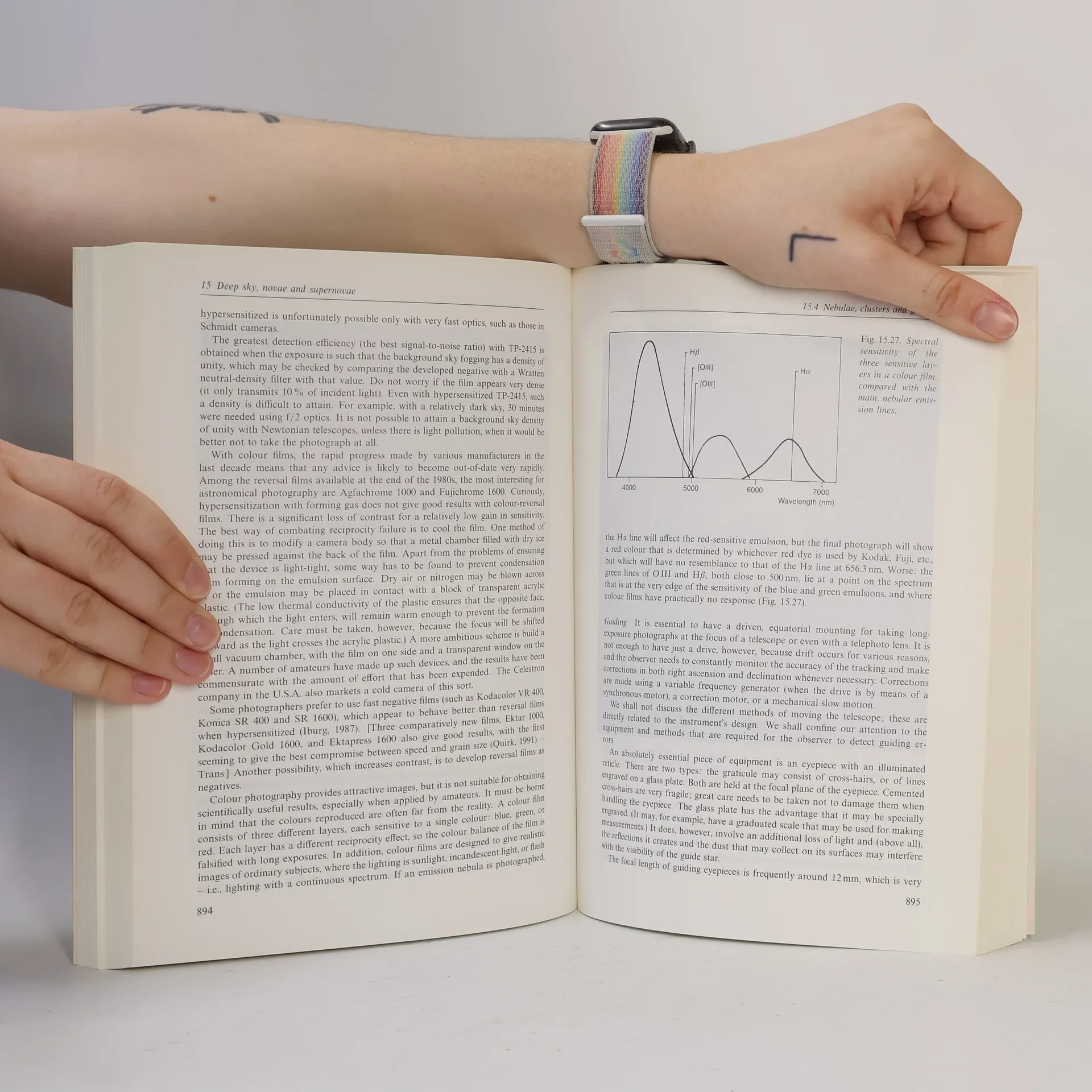
Serious amateur astronomers often wonder how to find new minor planets, comets and novae and would like to know how to use photoelectric detectors to derive the temperatures of stars. These issues along with predicting future eclipses and the occultations of stars by minor planets are topics covered in this authoritative and wide-ranging guide. For each topic, sound practical methods of observation and the scientific background are given to facilitate better observations. Guidelines also show how to record and catalog observations using the recognized professional terminology and classification schemes. From the simplest pencil drawings of the moon to observations of the most distant galaxies with state-of-the-art CCD cameras and photoelectric photometers, this guide is packed with practical tips for all types of amateur observations. Volume 2 covers aurorae, meteors, double and multiple stars, variable stars, deep sky objects, novae, and supernovae.
Acquisto del libro
Practical Astronomy Handbooks - 2: The Observer's Guide to Astronomy, Patrick Martinez, Storm Dunlop
- Lingua

- Pubblicato
- 1994
- Rilegatura
- (In brossura)
Metodi di pagamento
Ancora nessuna valutazione.
- Titolo
- Practical Astronomy Handbooks - 2: The Observer's Guide to Astronomy
- Lingua
- Inglese
- Autori
- Patrick Martinez, Storm Dunlop
- Editore
- Cambridge University Press
- Pubblicato
- 1994
- Formato
- In brossura
- Pagine
- 572
- ISBN10
- 0521458986
- ISBN13
- 9780521458986
- Serie
- Descrizione
- Serious amateur astronomers often wonder how to find new minor planets, comets and novae and would like to know how to use photoelectric detectors to derive the temperatures of stars. These issues along with predicting future eclipses and the occultations of stars by minor planets are topics covered in this authoritative and wide-ranging guide. For each topic, sound practical methods of observation and the scientific background are given to facilitate better observations. Guidelines also show how to record and catalog observations using the recognized professional terminology and classification schemes. From the simplest pencil drawings of the moon to observations of the most distant galaxies with state-of-the-art CCD cameras and photoelectric photometers, this guide is packed with practical tips for all types of amateur observations. Volume 2 covers aurorae, meteors, double and multiple stars, variable stars, deep sky objects, novae, and supernovae.