

Maggiori informazioni sul libro
This work explores China's historical and intellectual framework, beginning with an examination of its traditional worldview. It discusses the evolutionary attempts of China to adapt to the modern state system, followed by an analysis of nationalism and communism as revolutionary ideologies in the 20th century. The second part delves into China's self-perception within the international arena, focusing on concepts of nation-state and cultural change, as well as the international significance of the Chinese Revolution. The third part addresses the environmental understanding of "New China," analyzing the decline of traditional structures, the conditions for China's foreign policy existence, and its relationships with allies and adversaries. The fourth part outlines the foreign policy principles of "New China," discussing material development concepts, the nature and function of war, and the scope and limitations of diplomacy. Finally, the fifth part presents the outcomes of national and foreign policy strategies in the 20th-century state system, highlighting the unique aspects of national and foreign policy thinking in "New China." It emphasizes the practical relevance of comparative analyses of China's national and foreign policy concepts in the global context. The work concludes with a comprehensive bibliography.
Acquisto del libro
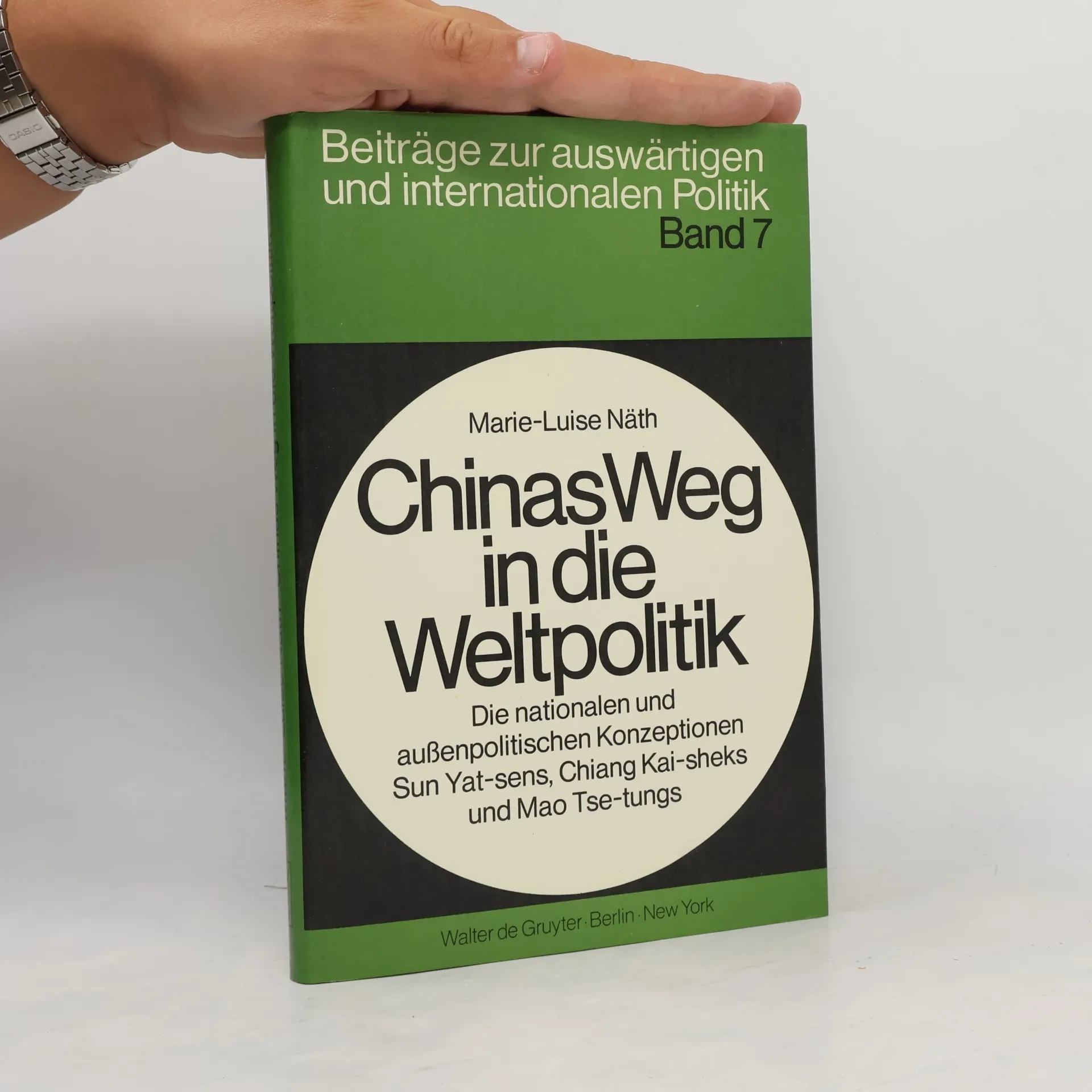
Chinas Weg in die Weltpolitik, MarieLuise Näth
- Lingua

- Pubblicato
- 1976
- Rilegatura
- (Copertina rigida)
Metodi di pagamento
Ancora nessuna valutazione.
- Titolo
- Chinas Weg in die Weltpolitik
- Sottotitolo
- Die nationalen und außerpolitischen Konzeptionen Sun Yat-sens, Chiang Kai-sheks und Mao Tse-tungs
- Lingua
- Tedesco
- Autori
- MarieLuise Näth
- Editore
- De Gruyter
- Pubblicato
- 1976
- Formato
- Copertina rigida
- Pagine
- 267
- ISBN10
- 3110047373
- ISBN13
- 9783110047370
- Serie
- Descrizione
- This work explores China's historical and intellectual framework, beginning with an examination of its traditional worldview. It discusses the evolutionary attempts of China to adapt to the modern state system, followed by an analysis of nationalism and communism as revolutionary ideologies in the 20th century. The second part delves into China's self-perception within the international arena, focusing on concepts of nation-state and cultural change, as well as the international significance of the Chinese Revolution. The third part addresses the environmental understanding of "New China," analyzing the decline of traditional structures, the conditions for China's foreign policy existence, and its relationships with allies and adversaries. The fourth part outlines the foreign policy principles of "New China," discussing material development concepts, the nature and function of war, and the scope and limitations of diplomacy. Finally, the fifth part presents the outcomes of national and foreign policy strategies in the 20th-century state system, highlighting the unique aspects of national and foreign policy thinking in "New China." It emphasizes the practical relevance of comparative analyses of China's national and foreign policy concepts in the global context. The work concludes with a comprehensive bibliography.