


Maggiori informazioni sul libro
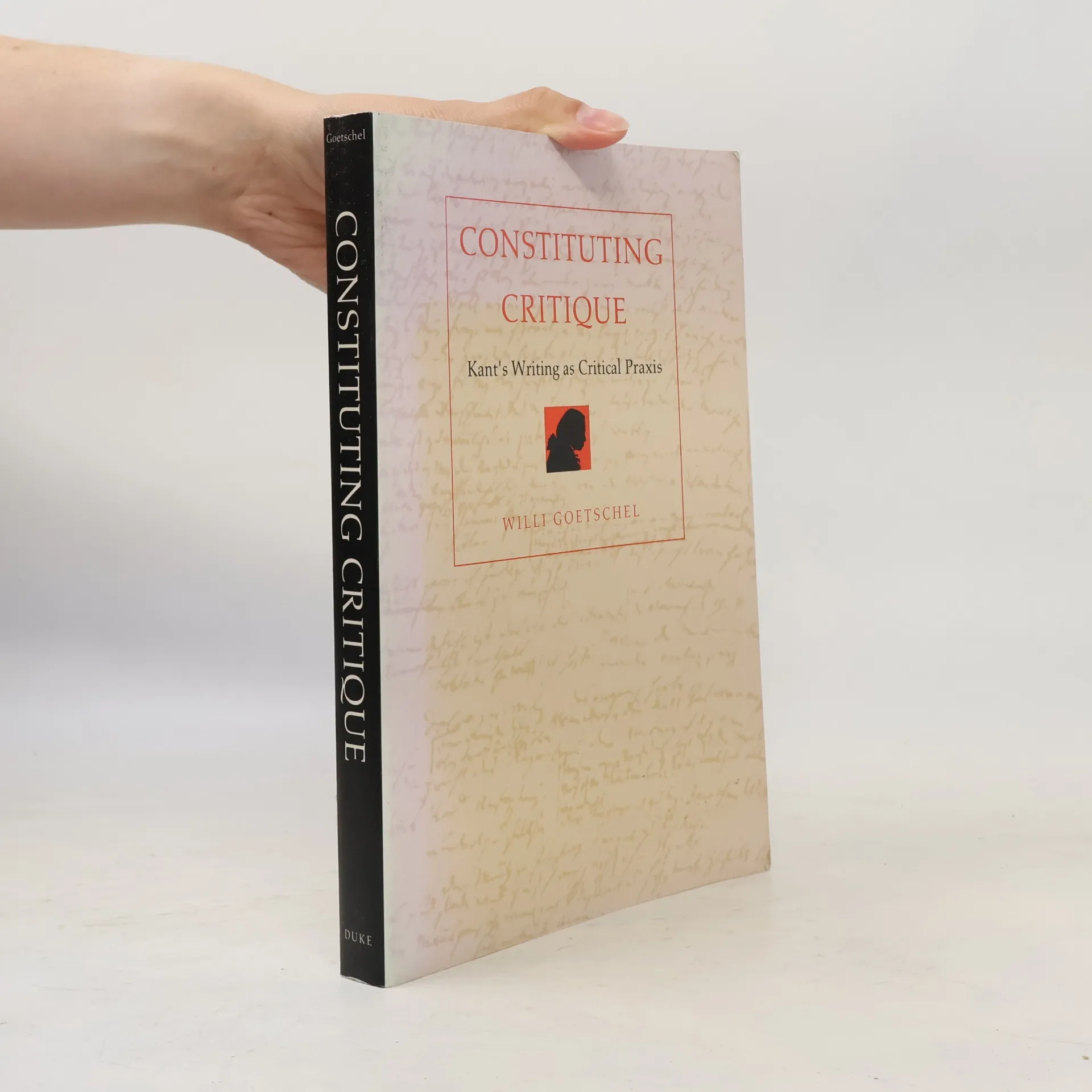
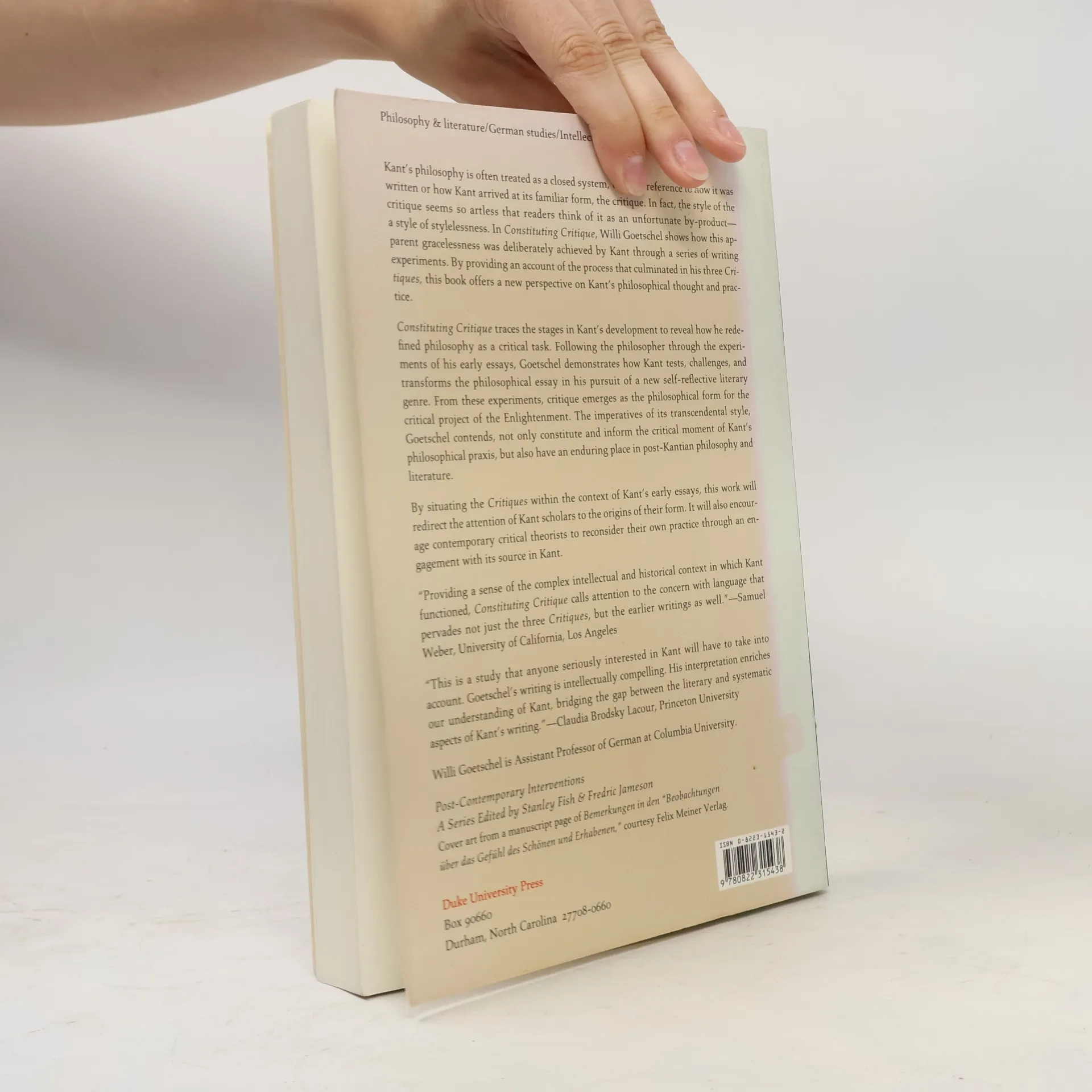
Kant’s philosophy is often viewed as a closed system, disconnected from its writing process and development into the critique. The critique’s seemingly artless style is frequently seen as a flaw, a style of stylelessness. In this work, Willi Goetschel reveals that this apparent gracelessness was a deliberate choice by Kant, achieved through various writing experiments. By detailing the stages of Kant’s development, the book presents a fresh perspective on his philosophical thought and practice. It follows Kant's journey through his early essays, illustrating how he tests and transforms the philosophical essay into a new self-reflective literary genre. From these experiments, critique emerges as the philosophical form central to the Enlightenment's critical project. Goetschel argues that the transcendental style's imperatives not only shape Kant’s philosophical praxis but also hold significance in post-Kantian philosophy and literature. By placing the Critiques in the context of Kant’s early writings, this work aims to redirect attention to the origins of their form and encourages contemporary critical theorists to engage with Kant’s foundational influence on their own practices.
Acquisto del libro
Constituting Critique, Eric J. Schwab, Willi Goetschel
- Lingua

- Pubblicato
- 1994
- Rilegatura
- (In brossura),
- Condizioni del libro
- Danneggiato
- Prezzo
- 3,96 €
Metodi di pagamento
Ancora nessuna valutazione.
- Titolo
- Constituting Critique
- Sottotitolo
- Kant's Writing as Critical Praxis
- Lingua
- Inglese
- Autori
- Eric J. Schwab, Willi Goetschel
- Editore
- Duke University Press
- Pubblicato
- 1994
- Formato
- In brossura
- Pagine
- 256
- ISBN10
- 0822315432
- ISBN13
- 9780822315438
- Serie
- Categoria
- Descrizione
- Kant’s philosophy is often viewed as a closed system, disconnected from its writing process and development into the critique. The critique’s seemingly artless style is frequently seen as a flaw, a style of stylelessness. In this work, Willi Goetschel reveals that this apparent gracelessness was a deliberate choice by Kant, achieved through various writing experiments. By detailing the stages of Kant’s development, the book presents a fresh perspective on his philosophical thought and practice. It follows Kant's journey through his early essays, illustrating how he tests and transforms the philosophical essay into a new self-reflective literary genre. From these experiments, critique emerges as the philosophical form central to the Enlightenment's critical project. Goetschel argues that the transcendental style's imperatives not only shape Kant’s philosophical praxis but also hold significance in post-Kantian philosophy and literature. By placing the Critiques in the context of Kant’s early writings, this work aims to redirect attention to the origins of their form and encourages contemporary critical theorists to engage with Kant’s foundational influence on their own practices.