

Bookbot

Abdullah O. calan

    4 aprile 1949

    Abdullah Öcalan è il fondatore del Partito dei Lavoratori del Kurdistan (PKK). Sotto la sua guida, il PKK ha lottato per la liberazione curda. Dalla sua cattura e incarcerazione, Öcalan ha scritto ampiamente sulla storia del Medio Oriente e del Kurdistan, influenzando significativamente il corso della politica curda. Sostiene i concetti di Autonomia Democratica e Confederalismo Democratico come alternative a uno stato-nazione curdo. Attualmente è in isolamento totale.

    The Political Thought of Abdullah Öcalan
    Beyond State, Power, And Violence
    Civilization
    Capitalism
    Confederalismo democratico
    Liberare la vita
    • Liberare la vita

      • 64pagine
      • 3 ore di lettura

      La brochure che avete davanti è la terza di questo tipo preparata da Iniziativa Internazionale. Queste brochure sono state composte a partire da diversi libri scritti da Abdullah Öcalan per darvi un’idea delle sue opinioni su specifici argomenti. La pratica che ha osservato nei paesi del socialismo reale e i suoi sforzi teorici e la sua pratica dagli anni ’70 in poi, hanno portato Öcalan alla conclusione che la schiavitù delle donne è stata l’inizio di tutte le altre forme di schiavitù. Questo, conclude, non è dovuto al fatto che la donna è biologicamente diversa dall’uomo, ma al fatto che è stata la fondatrice e leader del sistema matriarcale del neolitico. I testi che compongono questo saggio sono stratti di libri scritti da Öcalan in questi ultimi anni e non ancora tradotti.
      Liberare la vita
      4,1
    • In questo opuscolo Abdullah Öcalan sviluppa in modo sistematico il suo progetto politico, il confederalismo democratico. Ad una critica fondamentale dello stato nazione segue una descrizione della sua possibile alternativa, una democrazia transnazionale dal basso. Il testo di questo opuscolo e stato composto a partire da libri recenti di Öcalan non ancora tradotti.

      Confederalismo democratico
      3,9
    • Capitalism

      • 340pagine
      • 12 ore di lettura

      To understand how capitalism has come to engulf our world, we must understand how it developed out of classical civilization. Its historical roots lie in the emergence of hierarchies, power, monopolies, and the nation-state, argues Abdullah calan. Capitalism: The Age of Unmasked Gods and Naked Kings is the second book in a new five-volume work called Manifesto for a Democratic Civilization. Together, they present the synthesis of calan's political thinking. This volume completes his journey through the history of civilizations, preparing the ground for the upcoming volume on The Sociology of Freedom.

      Capitalism
      4,3
    • Civilization

      • 215pagine
      • 8 ore di lettura

      This manifesto offers the essence of Öcalan's ideas on society, knowledge, and power, and they are crucial for understanding the Kurdish revolution. Öcalan argues that a criticism that limits itself to capitalism is too superficial, and in this work, he turns his eyes to the underlying structures of civilization.

      Civilization
      4,3
    • Beyond State, Power, And Violence

      • 800pagine
      • 28 ore di lettura

      After the dissolution of the PKK (Kurdistan Workers’ Party) in 2002, internal discussions ran high, and fear and uncertainty about the future of the Kurdish freedom movement threatened to unravel the gains of decades of organizing and armed struggle. From his prison cell, Abdullah Öcalan intervened by penning his most influential work to date: Beyond State, Power, and Violence. With a stunning vision of a freedom movement centered on women’s liberation, democracy, and ecology, Öcalan helped reinvigorate the Kurdish freedom movement by providing a revolutionary path forward with what is undoubtedly the furthest-reaching definition of democracy the world has ever seen. Here, for the first time, is the highly anticipated English translation of this monumental work.

      Beyond State, Power, And Violence
      4,3
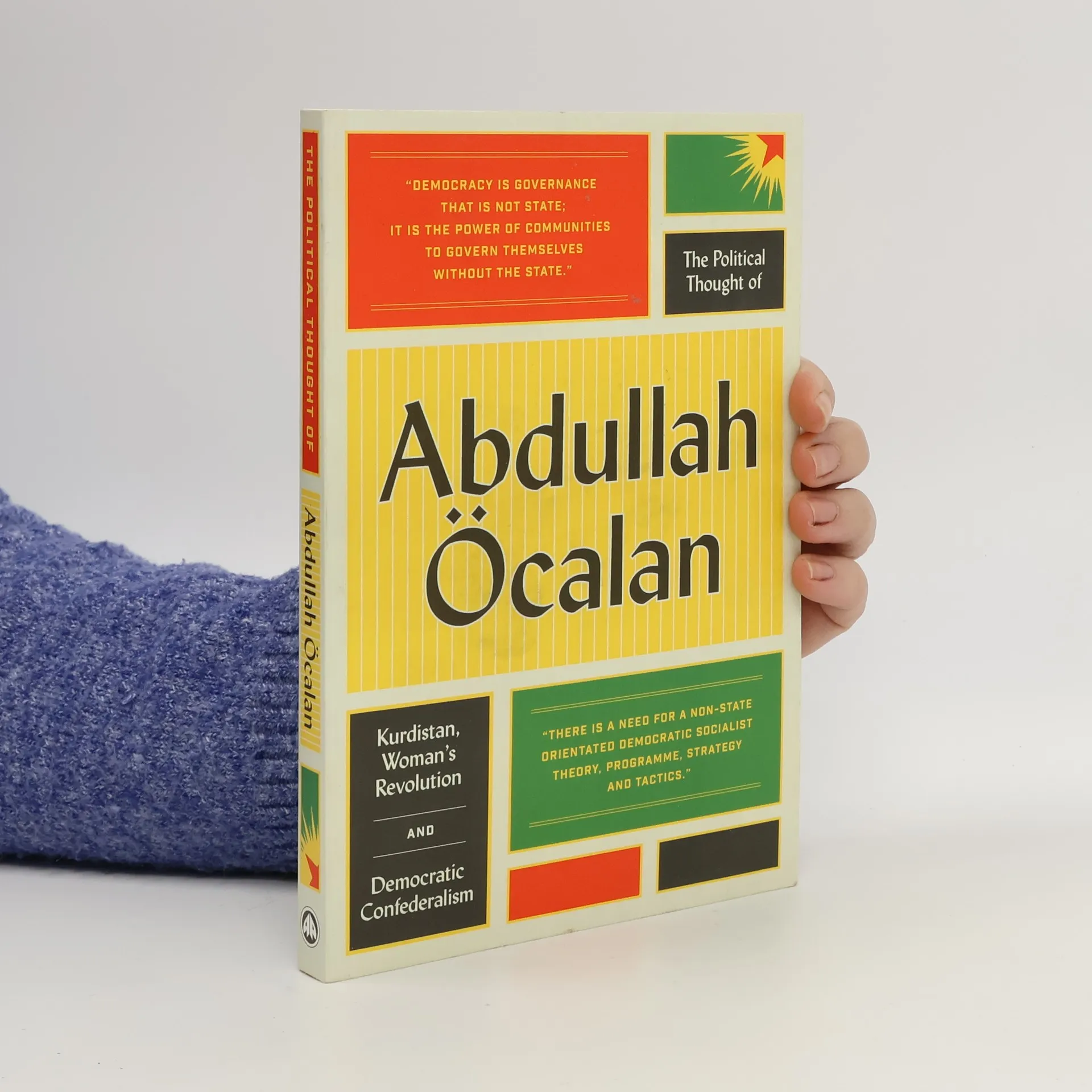
    • The Political Thought of Abdullah Öcalan

      Kurdistan, Women's Revolution and Democratic Confederalism

      • 144pagine
      • 6 ore di lettura

      These are the essential writings of a man who inspired a new, egalitarian socialist regime in the Middle East, which is currently fighting for survival against religious extremism and state violence. Abdullah Öcalan led the struggle for Kurdish liberation for more than 20 years until his capture in 1999. Now, writing from prison in Turkey, he has inspired a new political movement. Called Democratic Confederalism, this revolutionary model is developing on the ground in parts of Syria and Turkey; it represents an alternative to religious sectarianism, patriarchy, capitalism and chauvinistic nationalism, providing the blueprint for a burgeoning radical democratic society. This selection of Öcalan’s writings is an indispensable introduction for anyone wanting to engage with his political ideas. His central concepts address the Kurdish question, gender, Democratic Confederalism and the future of the nation. With The Political Thought of Abdullah Öcalan, his most influential ideas can now be considered and debated in the light of his continuing legacy, most notably in the ongoing revolution in Rojava.

      The Political Thought of Abdullah Öcalan
    • Das Buch bietet eine umfassende Darstellung der Philosophie und Politik der PKK sowie der kurdischen Befreiungsbewegung, verfasst von ihrem wichtigsten Repräsentanten. Öcalans Vision einer demokratisch-ökologischen Gesellschaft und seine Prinzipien des demokratischen Konföderalismus und der Autonomie bilden das theoretische Fundament der Bewegung.

      Jenseits von Staat, Macht und Gewalt. Verteidigungsschriften
      4,5
    • Manifest der demokratischen Zivilisation - Bd. IV

      Die demokratische Zivilisation – Wege aus der Zivilisationskrise im Nahen Osten

      Die globale Zivilisationskrise zeigt sich im Nahen Osten besonders deutlich. Öcalan nimmt seine Leser*innen mit auf eine Reise zu den historischen Ursprüngen dieser Krisen und beleuchtet verschiedene Widerstandstraditionen – religiöse, kulturelle und feministische. Mit dem Leitsatz „Je mehr Geschichtsbewusstsein, desto sinnvoller das Leben“ verfolgt er Entwicklungslinien gesellschaftlicher Phänomene und deren Potenzial für Veränderung. Er analysiert die Auswirkungen der europäischen kapitalistischen Moderne, die er mit den „drei apokalyptischen Reitern“ – Kapitalismus, Industrialismus und Nationalstaat – verknüpft. Hegel dient ihm als Referenz, um der demokratischen Moderne als Antithese eine ökologische, solidarische und demokratische Gesellschaft gegenüberzustellen. Die Geschlechterfrage und die Revolution der Frau stehen dabei im Mittelpunkt seiner Überlegungen. Öcalans Analyse des Nahen Ostens offenbart überraschende Verbindungen und Gegensätze zur westlichen Welt, sowohl historisch als auch gegenwärtig. Sein Ziel ist es, den Kräften der Zerstörung eine freiheitliche, demokratische und lebenswerte Alternative entgegenzustellen. Der vorletzte Band seines Hauptwerks schließt mit grundlegenden Fragen: Wie leben? Was tun? Wo beginnen?

      Manifest der demokratischen Zivilisation - Bd. IV